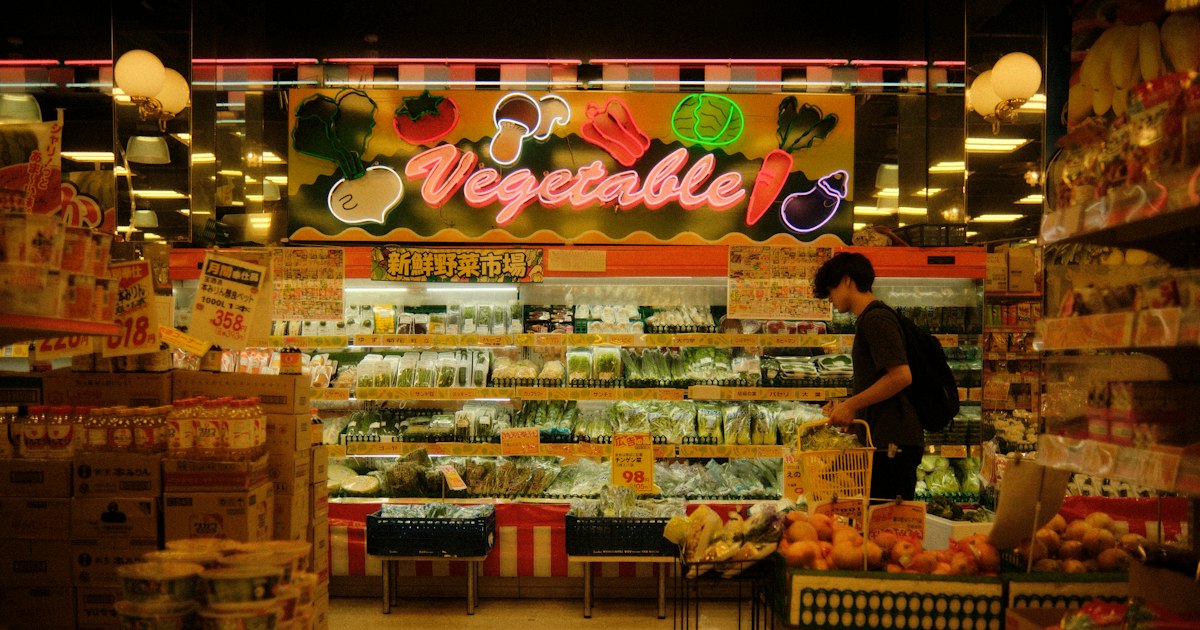
Photo by Joschka Silzle on Unsplash
Skip the souvenir shops for an afternoon and walk into a Japanese supermarket instead. Between the frozen gyoza, the wall of instant ramen, and the seasonal fruit displays, you’ll get a more honest snapshot of daily life here than most museums offer — and you’ll walk out with snacks, cosmetics, and kitchen finds at a fraction of department store prices. Here’s how to shop them like someone who actually lives here.
What Makes Gyomu Super Different
Gyomu Super (業務スーパー, “business supermarket”) started as a wholesale supplier for restaurants and now has over 1,000 locations nationwide open to the public. The appeal is volume and price: 1kg bags of frozen mango or blueberries for around ¥500–700, blocks of cheese and butter at prices well below convenience stores, and imported goods (Thai curry paste, Italian pasta, Korean tteokbokki) that are hard to find elsewhere at this cost. Portions run large — many products are restaurant-sized — so it’s better for self-caterers staying a week or more, or for stocking a vacation rental kitchen, than for someone who just wants a single snack.
Stores are usually plain, warehouse-style buildings with fluorescent lighting and stock piled on pallets rather than pretty shelving. Don’t expect English signage or tax-free service — Gyomu Super is a discount grocery chain, not a tourist shop, and that’s exactly why it’s worth visiting.
The Other Chains Worth Knowing
Gyomu Super is one piece of a much larger landscape. A few chains you’ll run into repeatedly:
- Aeon / Aeon Style / MaxValu — Japan’s largest retail group, found everywhere from city neighborhoods to rural roadsides. Large Aeon Malls often have tax-free counters and English-speaking staff.
- Life, Summit, Ito-Yokado, Maruetsu — mid-range regional chains, the equivalent of a normal neighborhood grocery store. Reliable, no-frills, good for produce and bento boxes.
- Seijo Ishii — a step up in price and curation, popular for imported wine, cheese, and its own line of frozen gourmet meals (the frozen beef curry is a cult favorite among residents).
- Don Quijote (“Donki”) — technically a discount variety store rather than a supermarket, but it stocks groceries, cosmetics, and snacks 24 hours a day and often has a tax-free desk, making it useful late at night when regular supermarkets are closed.
If you’re road-tripping between regions, also keep an eye out for michi-no-eki roadside stations, which sell local produce and regional specialties you won’t find in city supermarkets at all.
What to Buy
Supermarkets are one of the best places to build a souvenir haul without spending much. Good picks: boxed matcha or hōjicha KitKats (¥300–500 for multi-packs, cheaper than airport prices), furikake rice seasoning packets, dashi packs, small bottles of soy sauce or ponzu, and regional instant ramen you can’t get at home. Prepared food counters are worth a look too — pick up an onigiri for a cheap, filling snack (typically ¥120–180), and in season, check the fruit section for a taste of Japan’s famous premium produce culture before splurging on a proper fruit sando at a specialty shop. Evenings are prime time for bento and prepared-food discounts, as stores mark items down 20–50% starting around 7–8pm ahead of closing — look for stickers reading 半額 (half price) or a percentage-off tag.
Prices, Hours, and Getting There
Most neighborhood supermarkets open around 9 or 10am and close between 9pm and midnight; Aeon and Donki locations are frequently open until midnight or 24 hours. Gyomu Super stores typically run 9am–8pm and are closed a few days per year around New Year’s. None of these chains cluster near train stations the way convenience stores do — they’re built for local residents doing a weekly shop, so they’re often a 5–15 minute walk from a station in a residential area, or reachable by the bicycles you can rent through Kyoto and Tokyo’s city bike-share systems. Search “Gyomu Super” or “業務スーパー” in Google Maps or Apple Maps and locations near your hotel will show up with hours and reviews.
Budget travelers can realistically eat well on ¥1,500–2,000 a day buying breakfast and snacks from supermarkets rather than restaurants. Mid-range travelers might spend ¥3,000–4,000 on prepared meals, fruit, and drinks for two. If you want to splurge, department store basement food halls (depachika) sell beautifully packaged sweets and gourmet items at prices several times higher than a regular supermarket — worth it once for the presentation, not for everyday shopping.
Checkout Etiquette and Common Mistakes
A few things trip up first-time visitors:
- Plastic bags cost extra — usually ¥3–5 — since a 2020 nationwide law. Bring a foldable tote or be ready to carry items by hand.
- Bag your own groceries — the cashier scans and moves items to a tray or basket; you then carry it to a separate packing counter to bag things yourself. Don’t linger at the register once you’ve paid.
- IC cards work at most chains — Suica, Pasmo, and Icoca are widely accepted, along with major credit cards, though small local shops may be cash-only.
- Weigh-and-label produce at some stores requires using a self-service scale before checkout — look for signage or ask staff (店員, “ten-in”) if unsure.
- No tax-free shopping at most standalone supermarkets, since groceries for immediate consumption don’t qualify the way department store souvenirs do; Aeon Mall and Donki locations with tax-free counters are the exception.
Best Time to Go
Any season works, but timing your visit around Japan’s produce calendar pays off: strawberries peak from December to April, cherries in June, peaches in July–August, and grapes and persimmons in autumn — all showing up in supermarket displays at a fraction of specialty fruit shop prices. Late December and early January are worth avoiding for Gyomu Super and smaller chains specifically, since many close for a few days around New Year’s, similar to closures you’ll see at other small retailers nationwide.
Buying more than you can eat before flying home? A number of shelf-stable snacks, sauces, and seasonings travel well in checked luggage, but if you’ve gone overboard, it’s worth reading up on shipping souvenirs home from Japan before you start stress-packing at the airport.