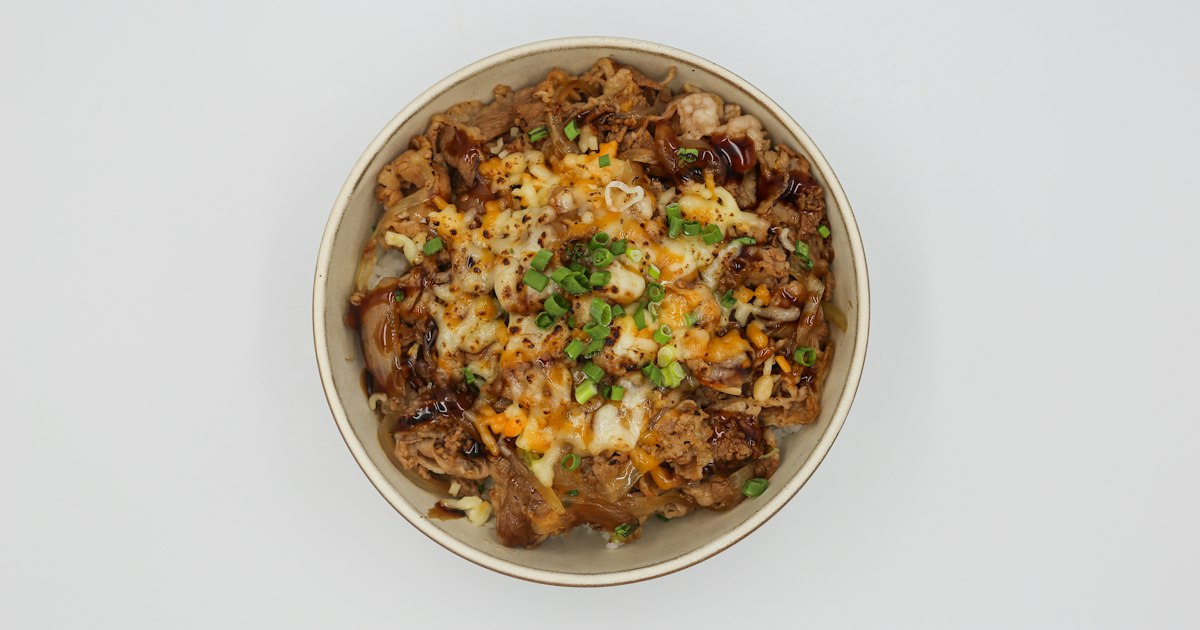
Photo by Xavier Chng on Unsplash
Walk into almost any donburi shop, soba joint, or train station counter in Japan and you’ll find two bowls doing most of the heavy lifting: oyakodon, a soft simmer of chicken and egg over rice, and katsudon, a crispy pork cutlet drowned in sweet-savory egg and onion. Both are cheap, fast, and deeply satisfying, but they’re also easy to mix up or order clumsily if you don’t know the shorthand. Here’s what each one actually is, where to get a good one, and how to order without hesitating at the counter.
What Oyakodon and Katsudon Actually Are
Oyakodon (親子丼) literally means “parent-and-child bowl” — the parent being chicken, the child being egg, cooked together. Thin-sliced chicken thigh simmers in a dashi-soy-mirin broth with onion, then beaten egg is poured in and cooked just until set, so it stays glossy and a little runny. The whole thing goes over a bowl of rice, sometimes with a scattering of mitsuba (Japanese parsley) or nori strips.
Katsudon (カツ丼) starts with tonkatsu — a breaded, deep-fried pork cutlet — which is then simmered briefly in the same kind of sweet soy-dashi sauce with egg and onion, so the crispy coating softens into something closer to a savory custard crust. It’s heavier and richer than oyakodon, and the cutlet itself is usually pork loin (rosu) or fillet (hire).
Both are a subcategory of donburi (rice bowl dishes), and both are considered comfort food rather than fine dining — though some specialty shops treat them with real craft and charge accordingly.
Where to Eat Them: Budget, Mid-Range, and Splurge
Budget (¥500–¥900): Chain restaurants are the fastest, cheapest route. Yoshinoya, Sukiya, and Matsuya all serve both dishes, with oyakodon typically ¥500–¥650 and katsudon ¥600–¥800. Ordering is often via a ticket machine at the entrance — insert cash or a card, press the picture button, hand the ticket to staff. Soba and udon chains like Fuji Soba also sell a small katsudon or oyakodon as a set alongside noodles, which is a good way to try both in one sitting.
Mid-range (¥900–¥1,500): Standalone donburi-ya (rice bowl specialty shops) and tonkatsu restaurants that also do katsudon tend to use better cuts of pork, free-range or brand-name eggs, and house-made sauce. Look for shops with a lunch set that includes miso soup and pickles.
Splurge (¥1,800–¥3,500+): Some tonkatsu specialists — especially in Tokyo’s older neighborhoods — use heritage pork breeds (kurobuta, or black pig) and finish katsudon with a soft-cooked egg rather than fully set, served at lunch only in limited quantities. Oyakodon has its own high end too: a handful of old Tokyo and Osaka restaurants are known almost exclusively for one superlative version, using a specific chicken breed and a near-raw egg finish, often costing ¥1,500–�r2,500 for a single bowl with a line out the door.
How to Order at the Counter
At a ticket-machine chain, just press the button matching the photo — no Japanese needed. At a counter-service restaurant without a machine, these phrases cover almost every situation:
- “Oyakodon, hitotsu” (親子丼、ひとつ) — “One oyakodon, please.”
- “Katsudon, onegaishimasu” (カツ丼、お願いします) — “Katsudon, please.”
- “Namitsuyu de” / “Ōmori de” — “regular size” / “large size” (ōmori often costs ¥100–¥150 more).
- “Tamago wa han-juku de” — “half-cooked egg, please,” if you want the softer, runnier style some shops offer as an option.
Most shops bring water or tea automatically and expect no tipping. If there’s a line of regulars and no English menu, pointing at a photo on the wall or a plastic food model in the window works fine — nobody will mind.
Common Mistakes Visitors Make
The biggest mix-up is confusing katsudon with katsu curry or tonkatsu teishoku (a cutlet served plain alongside rice and sides) — these are different dishes with different flavor profiles, so check the picture menu carefully if you specifically want the egg-simmered version. Another common error is assuming oyakodon is always served cold or “raw” — some versions do use a barely-set egg, which can look underdone to first-timers but is standard and safe at any reputable shop, since the chicken and egg are cooked together in hot broth. Finally, don’t expect a fork; a spoon is sometimes offered for the sauce, but these bowls are built to be eaten with chopsticks, mixing the egg and rice as you go rather than eating them separately.
Best Time to Go and How to Avoid Waiting
Lunch (roughly 11:30am–2pm) is when both dishes shine, since many specialty shops only serve their best katsudon or oyakodon sets at lunchtime and switch to a different, pricier dinner menu afterward. Famous single-dish specialists in Tokyo and Osaka often sell out their limited daily portions by 1pm, so arriving right at opening (usually 11am or 11:30am) is the only reliable way to avoid a sold-out sign. Chain restaurants have no such limits and serve both dishes all day, including late at night, making them the reliable fallback if you’re traveling off the typical lunch schedule — for instance after getting off a late Shinkansen, when onboard food options have already run thin.
Pairing and Variations Worth Trying
Many donburi shops serve oyakodon or katsudon as part of a teishoku (set meal) with miso soup, pickles, and sometimes a small side of soba — a good way to sample a second regional specialty, like hiyashi chuka in summer, in the same sitting. If you’ve already tried the fried-pork route in sandwich form via a konbini katsu sando, katsudon is the hot, saucier cousin worth comparing. And if you’re near a train station with limited time, many stations have a quick-service counter nearby serving a simplified katsudon alongside standing noodle stalls — worth checking next time you’re navigating eki soba counters for a fast meal between trains.
Regional variations exist too: Nagoya does a version with miso-based sauce instead of the standard soy-dashi, and some Kansai shops serve katsudon without simmering the egg at all, laying a freshly fried cutlet directly over rice with sauce poured on top — closer to a katsu-don hybrid than the classic Tokyo style. Neither is wrong; it’s worth trying both if your itinerary covers more than one region.