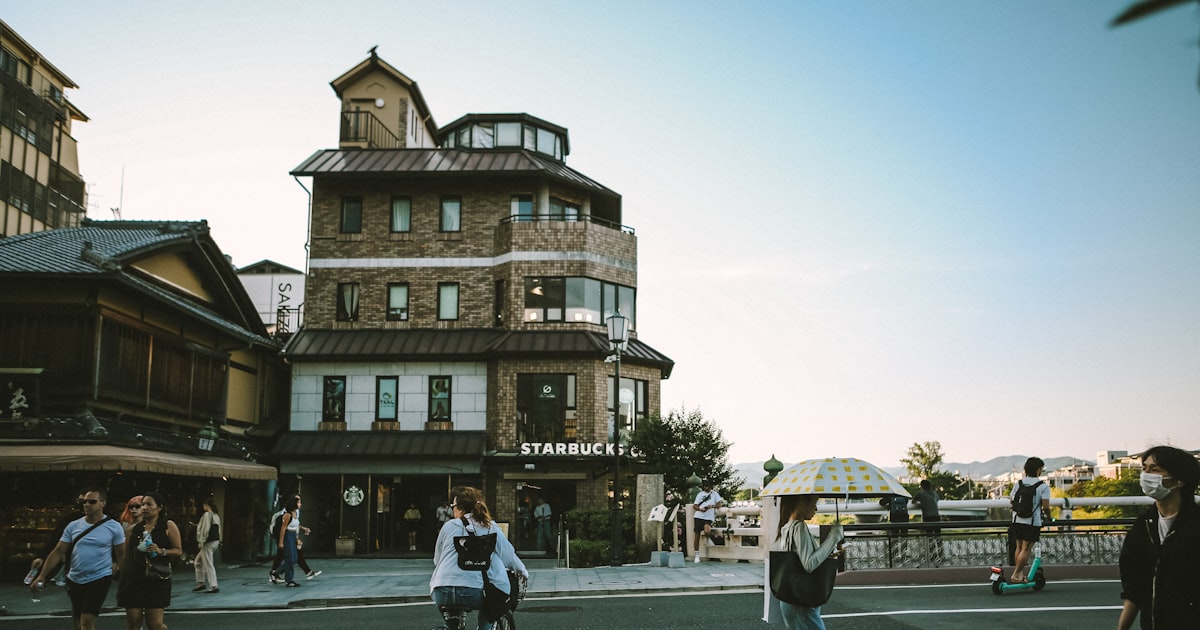
Photo by HANVIN CHEONG on Unsplash
Japan’s trains are famously punctual, but they can’t take you down a quiet backstreet lined with machiya townhouses or along a river path lit up at dusk. A rental bike can. Both Kyoto and Tokyo now have dense, easy-to-use bike-share networks aimed squarely at tourists, and pairing them with a day of walking or subway-hopping is one of the best low-cost upgrades you can make to a Japan itinerary. Here’s how the systems actually work, what they cost, and where they shine.
Two Different Systems, One App
Kyoto and Tokyo both run on the same underlying network — Docomo Bike Share, branded locally as PiPPA in Kyoto and simply “Docomo Bike Share” in Tokyo’s central wards (Chiyoda, Chuo, Minato, Shinjuku, Shibuya, Koto, Sumida, and several others). These are dock-based systems: you unlock a bike from a docking port using a smartphone app, ride it, and return it to any port in the network — not necessarily the one you started at. This is genuinely convenient for one-way sightseeing, like riding from Kyoto Station up to Nijo Castle and returning the bike there instead of pedaling back.
Alongside the app-based network, both cities also have old-school rental shops that hand you a bike for the day and expect it back at closing time. These tend to have better bikes (including proper e-bikes and road bikes), sometimes offer guided tours, and are worth it if you want one long ride rather than short hops between sights.
Setting Up: The App, Registration, and Unlocking
Download the “Docomo Bike Share” app (available in English) before you land, and register a credit card in advance — doing this on Kyoto Station wifi with a jetlagged brain is annoying. Once registered, you reserve a bike at a nearby port through the app, which sends a unique unlock code or lets you scan a QR code on the bike’s handlebar-mounted lock box. Returning is just as simple: slot the bike into any empty dock in the network and the app confirms the return and shows the final charge.
A few practical notes: ports do run out of bikes (and out of empty slots to return to) during busy periods, so check availability in the app before you commit to a route. Baskets are standard, but bike sizes are limited — these are city bikes, not built for anyone much over 185cm or for serious hills.
Kyoto: Where It Works Best
Kyoto is close to ideal for cycling — mostly flat, laid out on a grid in the central city, and full of temples and gardens that sit awkwardly far from the nearest subway stop. PiPPA ports cluster around Kyoto Station, Gion-Shijo, Kawaramachi, Nijo Castle, and up toward Kinkaku-ji and Ginkaku-ji, so you can string together a route — say, Nijo Castle to the Philosopher’s Path — without backtracking to a train.
For a full day out, the Kyoto Cycling Tour Project (KCTP), a short walk from Kyoto Station’s south (Nara-guchi) exit, rents traditional city bikes from around ¥1,000/day and e-bikes from roughly ¥1,800–2,000/day, and also runs guided cycling tours if you’d rather not navigate solo. Arashiyama, the Fushimi Inari approach, and Nishiki Market are all better done on foot once you arrive — narrow lanes, stairs, and heavy foot traffic make cycling there impractical or against local rules.
Tokyo: Where It Works Best
Tokyo’s network is much larger — well over 500 ports across the central wards — which makes it more useful for connecting neighborhoods than for touring any single district. A popular loop links the Imperial Palace, Ginza, and Tsukiji Outer Market; another covers Asakusa across the Sumida River to the newer riverside parks near Kiyosumi. Because coverage is ward-by-ward, double-check the app’s map before setting off — a route that drifts into a ward without ports can leave you stuck without a place to dock the bike.
Tokyo traffic is heavier and less forgiving than Kyoto’s, so stick to wide arterial roads with painted bike lanes or genuinely quiet backstreets, and avoid rush hour (roughly 7:30–9:30am and 5:30–7:30pm) if you can.
What It Costs: Budget to Splurge
- Budget — bike-share pay-as-you-go: Roughly ¥165 for the first 30 minutes on Docomo Bike Share/PiPPA, with the same rate charged per additional 30-minute block. Fine for short hops between sights.
- Mid-range — bike-share day pass or shop rental: A 1-day pass on the bike-share app runs around ¥1,600–1,700 (each individual ride is capped at 30 minutes before extra charges kick in, so you re-dock and re-unlock for longer outings). A standard mama-chari from a rental shop like KCTP costs about ¥1,000–1,300/day with no time-block restrictions.
- Splurge — e-bikes and guided tours: E-bike rental runs roughly ¥2,000–3,500/day, well worth it for Kyoto’s temple hills or a longer Tokyo river route. Guided half-day or full-day cycling tours (English-speaking) typically start around ¥8,000–12,000 per person and include route planning, a knowledgeable guide, and often a rest stop or two.
If you’re already planning long-distance cycling rather than city sightseeing, the dedicated route on the Shimanami Kaido is a completely different — and spectacular — kind of ride, worth building a separate day or two around.
Rules, Etiquette, and Common Mistakes
- Ride on the road, keep left. Japan drives on the left, and bicycles are legally vehicles that belong on the road unless a sidewalk is specifically marked for shared use.
- Helmets are recommended, not required. Since a 2023 law change, wearing a helmet is an “effort obligation” for all cyclists in Japan — encouraged but not enforced for adults. Rental shops rarely provide them by default; ask if you want one.
- No phone use, no umbrella-holding, no riding while intoxicated. These are actively enforced and carry real fines.
- Don’t assume free-floating return. Bike-share bikes must go back into a designated dock, not just be left on a street corner — leaving one outside a port can trigger a fee or a lockout on your account.
- Check port availability before you ride, not after. Arriving at a temple to find every dock full (or arriving to rent and finding no bikes) is the single most common frustration; the app shows live counts.
Best Season and Timing
Spring (late March–May) and autumn (October–November) are the sweet spot — mild temperatures and, in Kyoto especially, cherry blossoms or fall foliage along canal and river paths that are genuinely better seen by bike than by bus. Summer (July–August) means high heat and humidity that make cycling uncomfortable by midday; if you ride then, go early morning or after 4pm. The rainy season (tsuyu), roughly mid-June to mid-July, makes bike-share far less appealing — Japan’s convenience stores sell cheap umbrellas, but riding in rain on an unfamiliar city bike isn’t worth the hassle. Whatever the season, aim to start by mid-morning; both networks get heavily used by commuters before 9am, which can mean empty docks right when you’re hoping to start your day.