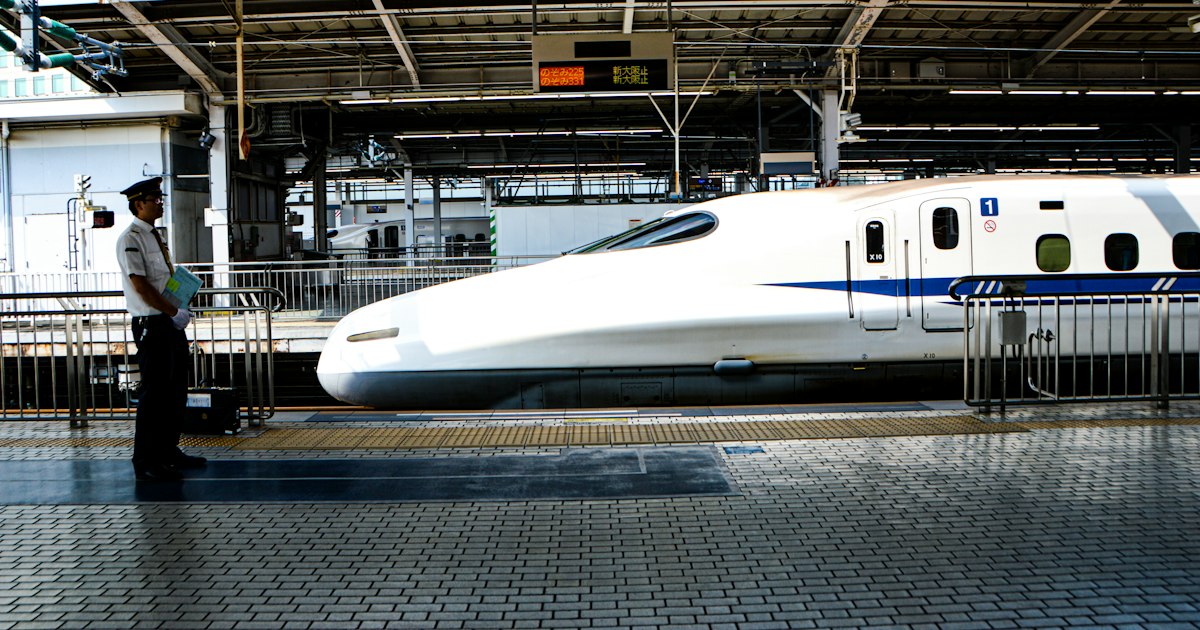
Photo by henry perks on Unsplash
If you’re packing a full-size suitcase for Japan — especially if you plan to shop your way across the country — there’s a Shinkansen rule that catches a lot of first-time visitors off guard. Since 2020, some bullet trains require you to reserve a specific seat if your bag is “oversized,” and showing up without one can mean an on-the-spot fee or an awkward conversation with a conductor. Here’s exactly what the rule covers, how to book around it, and how to avoid getting caught out.
Which Shinkansen Lines This Applies To
The oversized luggage reservation system applies specifically to the Tokaido, Sanyo, and Kyushu Shinkansen — the lines run by JR Central, JR West, and JR Kyushu that connect Tokyo, Nagoya, Kyoto, Osaka, Hiroshima, and Hakata/Fukuoka. This covers the Nozomi, Hikari, Kodama, Sakura, and Mizuho services, which is the route most tourists actually use.
The Tohoku, Joetsu, and Hokuriku Shinkansen (JR East’s lines heading north to Sendai, Niigata, and Kanazawa) don’t enforce this mandatory reservation system, though you should still be considerate about where you stow large bags since space is limited on any train.
What Actually Counts as “Oversized”
This is the part people get wrong most often. The rule isn’t about weight or how a bag “looks” — it’s a specific measurement: the sum of a bag’s three dimensions (length + width + height, including wheels and handles).
- Under 160cm total: No reservation needed. Most carry-on bags and even many mid-size suitcases fall here.
- 160cm–250cm total: This is “oversized” and requires the special seat reservation. A typical large checked suitcase (the kind airlines cap around 158cm) very often lands in this zone.
- Over 250cm total: Not allowed onboard at all. This covers things like large musical instrument cases, bicycles (unless properly bagged), and oversized sports equipment — you’ll need a delivery service instead.
A quick gut check: if your suitcase is the kind you’d check on an international flight rather than carry on, assume it needs a reservation. Grab a tape measure before you go if you’re unsure — station staff have measured bags at the platform gate during spot checks.
How to Reserve an Oversized-Luggage Seat
The good news: the reservation itself is free. You’re not paying extra for the bag, just booking a seat in a row that has extra space behind it — usually the last row of a reserved car, where there’s no seat reclining into the gap behind you.
You can reserve one when you book your Shinkansen ticket through:
- Ticket counters (Midori no Madoguchi) at any JR station — just tell staff you have oversized luggage.
- Ticket vending machines with English-language options at major stations.
- Online via EKINET, SmartEX, or the JR West/JR Central reservation portals, where you select an “oversized baggage” seat during booking.
Book as early as you can — ideally a few days ahead. Each train only has a limited number of these seats (often just one row of 3–5 seats per car), and they fill up fast during peak travel windows like Golden Week (late April–early May), Obon (mid-August), and the New Year holidays. If you’re traveling then, treat this reservation like you would any other in-demand travel booking and lock it in as soon as your dates are set.
What Happens If You Don’t Reserve
If you board with an oversized bag and no reservation, conductors can charge an on-the-spot fee of 1,000 yen. In practice, enforcement varies — some conductors are lenient with confused tourists, but on busy trains where the oversized seats are already occupied, you may simply be asked to move, store the bag elsewhere, or pay up. It’s a small fee in the scheme of a Japan trip, but it’s an easy one to avoid entirely with a two-minute reservation.
Common Mistakes to Avoid
- Assuming your bag is fine because it fit as carry-on at home. Airline “cabin bag” limits and this rule use different math — many airline-legal cabin cases are still over 160cm by this measurement.
- Not accounting for shopping hauls. If you’re leaving Japan with a stuffed suitcase after buying things like a rice cooker or other bulky souvenirs, your bag’s dimensions (and weight) may have changed since you packed it — remeasure before your Shinkansen leg.
- Booking a seat but forgetting it must be in a car with oversized space. Not every reserved car has one; the booking system should route you correctly, but double-check the seat row shown on your ticket.
- Trying to reserve at the last minute during peak season. If oversized seats are sold out, your options shrink to arriving very early to try standby space or using a luggage delivery service instead.
Alternatives If You Can’t Get a Reservation
If the oversized seats are booked out, or you’d rather not deal with hauling a huge suitcase through stations at all, Japan’s luggage forwarding services (takkyubin) are a genuinely good option. Companies like Yamato Transport (kuro neko) will pick up your bag from a hotel and deliver it to your next hotel, usually overnight, for roughly 2,000–3,000 yen per large bag. It’s a favorite trick among experienced Japan travelers for exactly this kind of situation — you travel light on the train and your suitcase meets you at the next city.
For shorter stints — say, you want to explore a city car-free for a day before a Shinkansen leg — check out our guide to coin lockers in Japan, which covers sizes, prices, and locker-finding apps for stashing bags at the station while you sightsee nearby.
The bottom line: measure your bag, reserve early if it’s over 160cm, and you’ll breeze through what’s otherwise one of the more confusing rules for first-time Shinkansen riders.