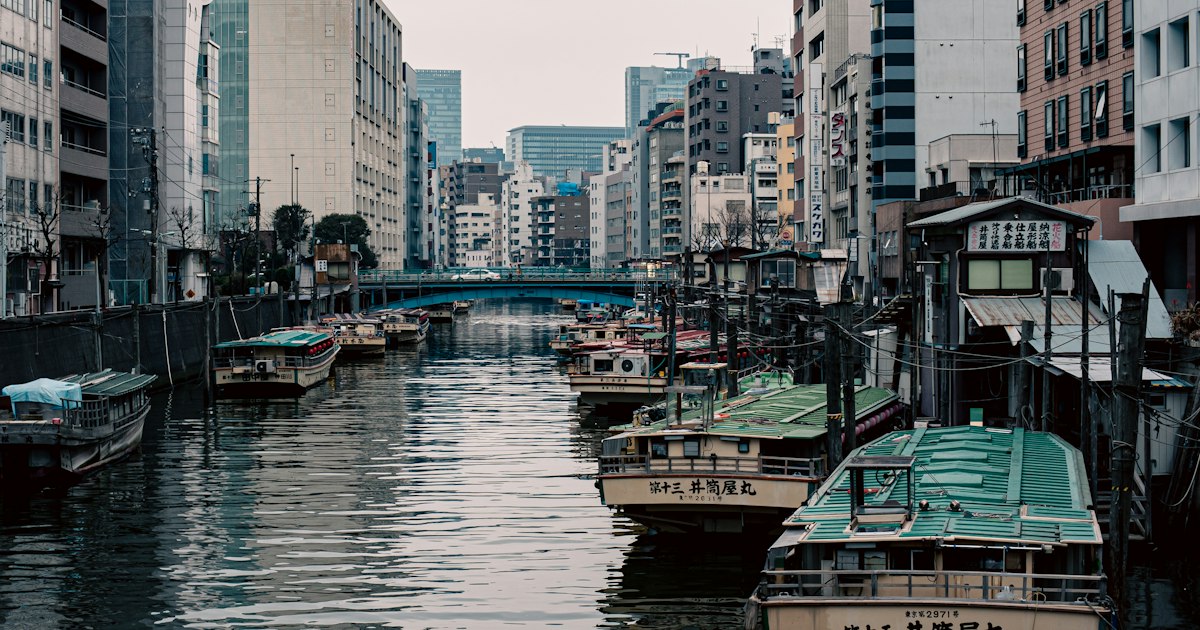
Photo by katsuma tanaka on Unsplash
Stuck between seeing Asakusa’s temples and Odaiba’s bay-front sights, most visitors default to the subway — but there’s a far more scenic option gliding right past both neighborhoods. The Tokyo Water Bus (also called the Sumida River cruise or Tokyo Cruise) lets you swap train windows for open water, watching the city’s bridges, skyline, and harbor slide by at a relaxed pace. It’s not just a novelty ride; for a trip between Asakusa and Odaiba it’s a genuinely practical way to get around, often cheaper in time-value than it sounds and more memorable than any train transfer.
What Is the Tokyo Water Bus?
The Tokyo Water Bus is a public ferry service run by Tokyo Cruise (also marketed under the Tokyo Mizube Line brand) that travels the Sumida River from Asakusa down through central Tokyo to Hinode Pier near Hamamatsucho, then continues across Tokyo Bay to Odaiba. It’s a legitimate transit option, not just a sightseeing charter — locals use it, it’s covered by the same IC cards (Suica/Pasmo) you use on trains, and it runs on a fixed timetable every day of the year, weather permitting.
There are two ways to do the Asakusa–Odaiba route: transfer once at Hinode Pier on a standard ferry, or take the direct futuristic-looking boat straight through. Both are worth knowing about because they suit different budgets and timeframes.
Routes, Fares, and Timetables
On the standard (non-direct) service, Asakusa to Hinode Pier runs roughly every 30–60 minutes and takes about 40 minutes, with one-way adult fares around ¥780 (child around ¥390). From Hinode Pier, a separate short hop over to Odaiba Seaside Park costs roughly ¥460 one way and takes about 20 minutes. Boats generally start around 9:30–10:00 AM and the last departures are in the late afternoon to early evening, with the exact schedule shifting by season — always check the current timetable on the Tokyo Cruise website or at the pier ticket counter before planning your day around it, since winter hours run shorter than summer.
IC cards work for standard fares at some piers, but it’s safest to buy a paper ticket at the counter, especially for the direct Odaiba boats, which require advance reservation of a numbered seat rather than tap-and-go boarding.
The Himiko and Hotaluna: Riding the “Anime” Boats
If you only remember one detail about this cruise, it’s probably the boats themselves. The direct Asakusa–Odaiba service uses the Himiko and Hotaluna, two spaceship-like vessels designed by manga artist Leiji Matsumoto (creator of Galaxy Express 999 and Space Battleship Yamato). With smoked-glass domes, curved metallic hulls, and mood lighting inside, they look nothing like a typical river ferry — half the appeal is simply boarding one.
The direct route takes about an hour and costs roughly ¥2,000 one way for adults, which is more than double the transfer route but skips the wait and walk at Hinode Pier, and gives you reserved, air-conditioned seating with big windows. Seats sell out on weekends and during cherry blossom season, so reserve online a few days ahead rather than showing up and hoping.
Best Time to Ride and What You’ll See
Late morning to early afternoon gives the clearest views and the most comfortable boarding experience, since piers get crowded on weekend afternoons. For photography, an hour before sunset on a clear day is hard to beat — you’ll pass under Tokyo’s low bridges just as the Tokyo Skytree and the city lights start to glow, and arrive in Odaiba in time to see the Rainbow Bridge lit up.
Cherry blossom season (late March to early April) is the single most popular window, since the Sumida River banks near Asakusa are lined with sakura trees — book ahead if you’re riding then. Summer evenings bring fireworks-festival crowds on specific nights, which is fun if you’re in on it and frustrating if you stumble into a sold-out boat by accident. Winter rides are quieter and the air is often clearer for skyline photos, but dress warmly — the open-deck sections get cold on the water.
How to Get to the Piers
The Asakusa pier (Azumabashi) sits a short walk from Asakusa Station, right near the Sumida River and in clear view of the Asahi Beer headquarters’ golden flame sculpture — easy to combine with a temple visit at Senso-ji beforehand. Hinode Pier is a few minutes’ walk from Hinode Station on the Yurikamome line or a slightly longer walk from Hamamatsucho Station on the JR Yamanote/Keihin-Tohoku lines. On the Odaiba side, boats dock at Odaiba Seaside Park, a two-minute walk from Daiba Station on the Yurikamome, putting you right next to the beach, the Fuji TV building, and the shopping malls.
If you’re the type who likes stacking unusual transit experiences into a trip, this pairs naturally with other Tokyo-area routes that trade speed for scenery — the ferry day trip out to Mount Nokogiri in Chiba is a similar idea on a bigger scale, and the Enoden seaside railway near Enoshima is the train equivalent of this boat ride’s “the journey is the point” appeal.
Common Mistakes to Avoid
- Assuming it’s faster than the subway. It isn’t. The Asakusa–Odaiba subway-and-train combination takes about 30–40 minutes; the water bus takes 60–90 minutes depending on which service you choose. Ride it for the experience, not to save time.
- Not checking for operational suspensions. Service can be cancelled or shortened in strong wind, heavy rain, or unusually high tides, which affect clearance under the Sumida’s low bridges. Have a backup transit plan if you’re on a tight schedule.
- Showing up without a reservation for the Himiko/Hotaluna. These sell out, particularly on weekends and holidays — book your seat in advance through the official site.
- Forgetting cash or a working IC card balance. Not every pier counter takes credit cards smoothly, and ticket machines are limited; carry cash as backup.
- Skipping the open deck. Many riders stay seated inside the whole way and miss the best photo spots — step out onto the open-air deck when passing under bridges or crossing the bay.
Budget, Mid-Range, and Splurge Options
For a budget trip, take the standard ferry with a transfer at Hinode Pier — total cost around ¥1,200–1,300 one way, functional and still scenic. For a mid-range experience, book the direct Himiko or Hotaluna one-way (~¥2,000) and return by subway, getting the signature boat experience without paying for it twice. For a splurge, some operators run evening dinner or illumination cruises with food service and bay views — check current offerings on the Tokyo Cruise site, since these run as special or seasonal departures rather than the standard timetable, and price well above a one-way ticket.
However you ride it, build in a loose afternoon rather than a tight connection — the whole point of the water bus is slowing down long enough to actually look at the city instead of rushing past it underground.