Some links below are affiliate links. If you buy through them, Japan Trove may earn a small commission at no extra cost to you.
A Japanese tea set is a beautiful, practical souvenir — and if you’ve fallen for matcha or sencha on your trip, the right gear makes brewing at home a joy. Here’s what to look for, whether for matcha or everyday green tea.
For matcha
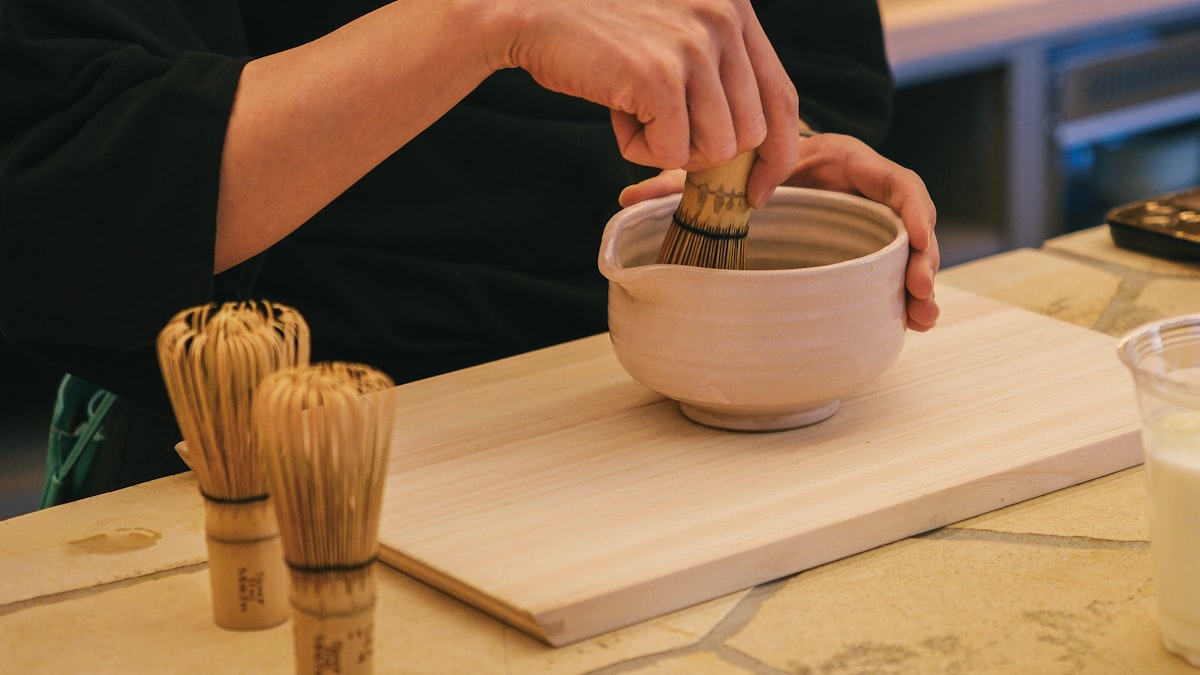
To whisk matcha properly you’ll want a small kit:
- Chawan — a wide tea bowl to whisk in.
- Chasen — a bamboo whisk (the key tool for a good froth).
- Chashaku — a bamboo scoop.
- A fine sifter — sift the powder to avoid clumps.
Pair it with good ceremonial-grade matcha — see our green tea guide.
For sencha & everyday tea
- Kyusu — a side-handled teapot, often with a built-in mesh filter; the classic for leaf tea.
- Yunomi — everyday teacups (no handles).
- Houhin — a handleless pot for delicate, cooler-brewed teas like gyokuro.
Styles & pottery to know
Japanese ceramics are a whole world: Tokoname (famous for kyusu), Hagi, Mino, and Arita/Imari porcelain among them. A handmade piece from a known kiln makes a special gift; a simple, sturdy set is perfect for daily use.
Buying tips
- Match the tool to your tea: kyusu for leaf tea, chawan + chasen for matcha.
- Pack carefully — wrap ceramics well; a furoshiki cloth doubles as padding and a gift wrap.
- Care: rinse the bamboo whisk and air-dry; hand-wash ceramics.
Where to buy
In Japan: department-store housewares floors, specialty tea and pottery shops, and Loft/Tokyu Hands. From abroad: matcha kits and kyusu are available on Amazon , or use a proxy service for specific artisan pieces. A tea set makes a memorable gift from Japan.
What a tea set typically costs
- A basic matcha starter kit (chawan, chasen, chashaku, sifter) runs JPY 4,000-8,000, while a handmade chawan from a named kiln alone can run JPY 5,000-30,000+ depending on the artisan and glaze technique.
- A simple Tokoname kyusu teapot runs JPY 3,000-8,000, and a full everyday set (teapot plus 4-5 yunomi cups) runs JPY 8,000-20,000 for a cohesive, gift-worthy set.
- Department store housewares floors typically price fairly consistently, while specialty pottery shops and artisan studios can vary widely based on the maker’s reputation — ask about the kiln and maker’s name if you want to understand what you’re paying for.
Common mistakes to avoid
- Buying a chasen (bamboo whisk) without checking the tine count — different whisks suit different matcha grades and whisking styles; a shop selling matcha can usually recommend a matching whisk if you mention which matcha you bought.
- Skipping the sifter as an unnecessary extra — clumped matcha powder is one of the most common reasons home-brewed matcha tastes worse than what you had in Japan; the sifter genuinely matters for a smooth result.
- Packing ceramics loosely — wrap each piece individually and pack centrally in your suitcase; a broken chawan is a disappointing way to end an otherwise great purchase.
Learning to whisk matcha properly
Many tea shops and some hotels offer a short matcha-whisking demonstration or mini lesson, often free with a purchase — worth asking about, since the wrist motion (a brisk “M” or “W” shape, not stirring) makes a genuine difference to the froth and is far easier to learn by watching than from written instructions alone.
Caring for your set once home
Bamboo chasen whisks should be rinsed immediately after use and air-dried on their stand (included with most kits) to prevent mold and preserve the tines, while ceramic chawan and kyusu should be hand-washed without harsh detergent — a little ongoing care keeps handmade pieces looking good for years rather than treating them as disposable souvenirs.