Japan Trove

Author: JapanTrove Editorial

  • Noto Peninsula: Ishikawa’s Rugged Coastline and Its Rebuilding Fishing Towns

    Noto Peninsula: Ishikawa’s Rugged Coastline and Its Rebuilding Fishing Towns

    Photo by Zion C on Unsplash

    The Noto Peninsula juts out from Ishikawa Prefecture into the Sea of Japan like a crooked finger, lined with pine-covered cliffs, terraced rice fields that run down to the water, and fishing towns that have made lacquerware, salt, and squid for centuries. It’s one of the least-visited corners of Honshu — which is exactly the appeal — but it’s also a place still working through the aftermath of the magnitude 7.6 earthquake that struck on January 1, 2024, badly damaging Wajima, Suzu, and much of the peninsula’s northern coast. Visiting now means seeing both sides of Noto: a genuinely wild, uncrowded coastline, and a region rebuilding in real time. Travelers who loved the raw, far-flung drama of Hokkaido’s Shiretoko Peninsula will recognize the same appeal here, just a lot closer to Tokyo and Kyoto.

    A Coastline Still Finding Its Footing

    The 2024 earthquake and the tsunami warnings that followed caused major damage across the northern half of the peninsula, especially in Wajima and Suzu. Roads buckled, the port areas were hit hard, and a fire that broke out near Wajima’s morning market destroyed a large stretch of the old town center. Reconstruction has been ongoing through 2025 and into 2026, and it’s uneven: some stretches of coast road and some businesses are back to normal, while others — particularly parts of Suzu and the far northern tip — are still visibly working through repairs. This isn’t a reason to skip Noto, but it is a reason to check current conditions before you go, keep your itinerary flexible, and not expect every shop, inn, or road to be open exactly as described in older guidebooks.

    Getting There and Getting Around

    Kanazawa is the gateway. From Tokyo, the Hokuriku Shinkansen reaches Kanazawa in about 2 hours 30 minutes (roughly ¥14,000 one-way, more with a reserved seat). From there, Noto is best explored by rental car — public transport thins out fast once you leave the Kanazawa area. The JR Nanao Line runs from Kanazawa to Wakura Onsen (about 1 hour), and the Noto Railway continues from there to Anamizu; beyond that, buses (run by Hokutetsu and local municipal services) cover the rest of the peninsula, but on limited, infrequent schedules that aren’t built around tourist sightseeing. A rental car from Kanazawa Station (budget ¥7,000–¥12,000/day for a compact car) gives you the freedom to actually see the coastline at your own pace, and it’s the only realistic way to reach some of the more remote viewpoints and rice terraces. Expect winding, narrow roads, and build in extra time — some sections near Suzu may still be under repair, so it’s worth checking recent road status before setting out rather than trusting an old map app blindly.

    Wajima: Lacquerware, the Morning Market, and the Long Road Back

    Wajima is the peninsula’s best-known town, famous for Wajima-nuri, a lacquerware tradition built on an unusually durable, multi-layered technique that’s been refined here for over 500 years. Before the fire, the Wajima Morning Market (Asa-ichi) was ranked among Japan’s three great morning markets, with vendors selling fresh seafood and local crafts along a street that had operated daily for generations. That street was largely destroyed, and the market has been rebuilding in phases, with vendors operating from temporary stalls as the area is reconstructed — a moving thing to see in person, but worth checking current status on, since hours and exact locations have shifted repeatedly since 2024. Lacquerware workshops and the Wajima Kiriko Art Museum (dedicated to the elaborate lantern floats used in the town’s summer festival) are good anchors for a visit regardless of what’s open on the market street that day. If you’re drawn to regional craft towns, this fits alongside day trips like Seki’s blade workshops or Mino’s pottery kilns — small towns where a single traditional craft defines the whole place.

    The Noto Kongo Coast and Shiroyone Senmaida Rice Terraces

    The western coastline, known as Noto Kongo, is the peninsula’s visual highlight: wind-carved rock formations, sea caves, and cliffs facing directly into the Sea of Japan. Ganmon, a natural rock arch near the town of Monzen, is the best-known stop and easily reached by car with roadside parking. Further north, Shiroyone Senmaida is a set of roughly 1,000 small terraced rice paddies cut into a hillside that drops straight to the ocean — one of the most photographed rural scenes in Ishikawa. In the colder months (typically October through March), the terraces are lit up at night with thousands of small solar-powered lights, a popular and free evening stop if you’re staying nearby. Both sites survived the 2024 quake without major structural loss, though access roads in the area have seen intermittent repair work, so build slack into your schedule.

    Best Time to Visit

    Late spring (May–June) and early autumn (September–October) offer the mildest weather and the clearest coastal views. Summer brings Noto’s lively local festivals, including Wajima’s Kiriko lantern float festival, but also Japan’s typhoon season, which can disrupt coastal roads and ferry access to nearby islands — worth checking forecasts closely if you’re visiting August through September. Winter (roughly November through March) is prime season for zuwaigani snow crab, which Noto’s fishing ports are known for alongside Fukui and the rest of the Hokuriku coast — many local inns build their winter menus entirely around it. Winter also means rougher seas, grayer skies, and a real chance of snow inland, so it suits travelers more interested in food than coastal photography.

    Where to Stay and What to Budget

    Lodging options have thinned since 2024 as some properties remain closed for repairs, so book further ahead than you would for most of Japan. On a budget, minshuku (family-run guesthouses) around Wajima or Wakura Onsen run roughly ¥7,000–¥10,000 per person with breakfast. Mid-range travelers can find onsen ryokan in Wakura Onsen, Noto’s main hot spring town, from around ¥18,000–¥28,000 per night including a seafood-heavy dinner. For a splurge, a handful of high-end ryokan serving kaiseki built around the day’s catch — crab in winter, local squid and sea bream the rest of the year — run ¥35,000 and up per person per night. Cash is still king in smaller fishing towns; while QR code apps like PayPay are spreading in Japanese cities (see our guide to using PayPay and Rakuten Pay as a tourist), don’t count on card or app payment at small markets, family-run inns, or roadside stalls out here — carry enough yen for a day or two at a time.

    Common Mistakes to Avoid

    The biggest mistake is treating Noto like a normal, fully-serviced tourist region — it isn’t right now, and that’s worth respecting rather than working around. Don’t assume a train or bus will get you everywhere; without a car, you’ll miss most of the coastline. Don’t assume every restaurant, inn, or market stall listed online is currently operating — call ahead or check recent reviews, since recovery status changes month to month. Don’t rush the drive: coastal roads are narrow and slower than GPS estimates suggest, especially after rain. And don’t skip talking to locals if you get the chance — many Wajima and Suzu residents are glad to share what’s reopened and what’s worth seeing, and it’s often more current than anything online.
  • Lake Biwa: Shiga’s Easy Day Trip from Kyoto and Japan’s Largest Lake

    Lake Biwa: Shiga’s Easy Day Trip from Kyoto and Japan’s Largest Lake

    Photo by Wu Hsien Yu on Unsplash

    Most visitors glimpse Lake Biwa for about ninety seconds, through a shinkansen window somewhere between Kyoto and Maibara, and never think about it again. That’s a shame, because Japan’s largest lake — big enough to have its own weather, its own fishing culture, and a 200-kilometer shoreline — starts practically at Kyoto’s back door. You can be standing on a national-treasure castle keep or riding a canal boat through a 400-year-old merchant town less than an hour after leaving Kyoto Station, and be back in time for dinner in Pontocho. Shiga Prefecture, which wraps almost entirely around the lake, is one of the easiest “second day” additions to a Kyoto itinerary and one of the least crowded with foreign tourists.

    Why Lake Biwa Is Kyoto’s Easiest Big Day Trip

    Lake Biwa covers about one-sixth of Shiga Prefecture and supplies drinking water to much of the Kyoto-Osaka region, which is part of why the area feels so well connected by rail. The lake is roughly 235 km around, so “doing Lake Biwa” in a day doesn’t mean circling it — it means picking one or two towns along the southern or western shore and going deep rather than wide. Unlike Nara or Arashiyama, you won’t be shuffling through crowds; even on a weekend, Hikone Castle or the Omi-Hachiman canals feel unhurried. The trade-off is that sights are spread out, so decide on a theme (castle town, canal town, sacred island, cycling) before you leave Kyoto rather than trying to improvise on the day.

    Getting There From Kyoto

    Everything in this guide runs off the JR Biwako Line, which is simply the Kyoto–Maibara stretch of the Tokaido Line, plus its northward extension, the JR Kosei Line, which hugs the lake’s west shore up toward Nagahama. From Kyoto Station:

    • Otsu (south tip of the lake): about 10 minutes, roughly ¥240 — the closest and easiest stop, good for a lakeside cruise or a quick look at the water.
    • Hikone (castle town): 45–55 minutes on a shinkaisoku (special rapid) train, around ¥1,200.
    • Omi-Hachiman (merchant/canal town): about 40–45 minutes on the shinkaisoku, around ¥990.
    • Omi-Imazu / Omi-Takashima (north shore, boats to Chikubushima, Shirahige Shrine): 50–70 minutes via the Kosei Line.

    An IC card (ICOCA/Suica) works on every train and bus in this guide, and increasingly at shop registers too, though smaller lakeside restaurants and souvenir stalls in places like Omi-Hachiman still sometimes prefer cash or a QR code app — if you’re relying on your phone for payment, it’s worth skimming our guide to using PayPay and Rakuten Pay as a tourist before you go, since signal and setup are easier to sort out in Kyoto than in a small rural town.

    Hikone Castle: The Must-See Highlight

    Hikone Castle is the headline attraction on the lake, and for good reason — it’s one of only twelve Japanese castles with a keep that survives in its original Edo-period wood (not a postwar concrete rebuild), and one of just five castle keeps nationwide designated a National Treasure, alongside Himeji, Matsumoto, Matsue, and Inuyama. The compact hilltop keep is steep and low-ceilinged inside, which is part of the appeal — it still feels like a functioning fortress rather than a museum piece. Admission runs around ¥800 for the castle alone, with a combination ticket covering Genkyu-en, the Edo-period garden at the base of the hill, for a bit more. The castle grounds are typically open from around 8:30am to 5pm (last entry 4:30pm), and the moat is still patrolled by a small fleet of boats you can ride for a different angle on the walls. Hikone’s old town, just outside the castle moat, has a handful of Omi-beef restaurants worth timing your visit around — Shiga is one of the lesser-known producers of wagyu-grade beef, alongside Kobe and Matsusaka.

    Omi-Hachiman’s Canal Boats and Merchant Streets

    Omi-Hachiman was built in the 1580s as a planned merchant town, and the Omi merchants who trained here went on to found businesses that still exist today (Takashimaya and Itochu both trace roots back to Omi trading families). The draw now is the Hachiman-bori, a willow-lined canal that once carried cargo boats to and from the lake, now plied by small sightseeing boats (roughly ¥1,000–1,500 for a 30–35 minute ride) past white-walled storehouses and samurai-era residences. It’s a quieter, smaller-scale cousin of Kurashiki or Omihachiman’s own castle-town neighbors, and far less visited than Kyoto’s canal-adjacent streets. Climb (or take the ropeway up) Hachiman-yama for a wide view over the old town and the lake beyond — it’s a good 20–30 minute add-on if you’ve got the legs for it.

    Shirahige Shrine, Chikubushima, and the North Shore

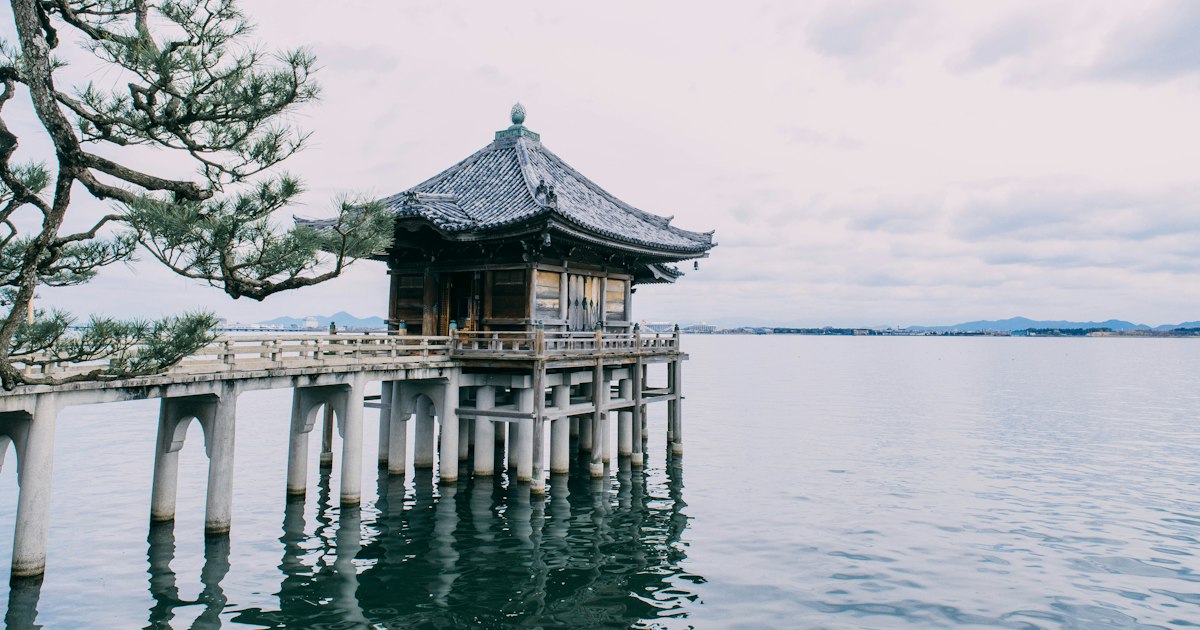
    If you have more than half a day, the north shore has two sights found almost nowhere else in Japan. Shirahige Shrine, near Omi-Takashima station, is one of Japan’s oldest Shinto shrines and is known for a vermillion torii gate standing out in the lake itself — it’s often described as a smaller, quieter version of Miyajima’s floating gate, and unlike Miyajima it’s free to visit any time, though the best photos are from the road above rather than the shrine grounds. Chikubushima, a small sacred island near the lake’s north end, is reachable by sightseeing boat from Imazu port or Nagahama (round trip roughly ¥3,000–4,000, about 25–40 minutes each way) and holds Hogon-ji Temple, part of the Saigoku Kannon pilgrimage route, plus a shrine built partly over the water. Boats run a limited number of departures per day and don’t operate in rough weather, so check the return time before you commit — getting stuck on the island overnight is a real (if rare) possibility.

    Best Season, Food to Try, and Common Mistakes

    Spring (late March–early April) is the standout season: the Kaizu-Osaki stretch on the northwest shore has roughly 800 cherry trees forming a tunnel along the lakeside road, and it’s far less congested than Kyoto’s cherry blossom spots. Early autumn is pleasant for cycling the lake’s flatter southern sections, but late summer brings the same humidity and typhoon risk as the rest of central Japan — if you’re planning a visit between August and October, it’s worth checking our rundown of typhoon season timing, since boat services to Chikubushima are the first thing to get cancelled when weather turns. On the food side, don’t leave without trying funazushi, a pungently fermented crucian-carp sushi that predates the vinegared sushi most visitors know — it’s an acquired taste but a genuine piece of culinary history, served in small portions at Omi-Hachiman and Otsu restaurants.

    The most common mistake is treating Lake Biwa as a single destination rather than several separate towns strung along two different rail lines — trying to combine, say, Hikone and the north-shore boats in one day usually means over an hour of extra train time eaten into sightseeing. Pick a southern-shore day (Otsu, Omi-Hachiman) or a day centered further north (Hikone, Chikubushima) rather than both. Budget travelers can see a lot for well under ¥3,000 in train fares and entry fees; a splurge day adds a canal boat ride, the castle-and-garden combo ticket, and an Omi-beef lunch for closer to ¥8,000–10,000 per person. Either way, book your return train loosely rather than tightly — boats and ropeways here run on their own schedules, and missing the last direct train back to Kyoto from the north shore means a longer, less convenient transfer.

  • Seki: Gifu’s Blade City for Samurai Swords and Kitchen Knives

    Seki: Gifu’s Blade City for Samurai Swords and Kitchen Knives

    Photo by Richard Iwaki on Unsplash

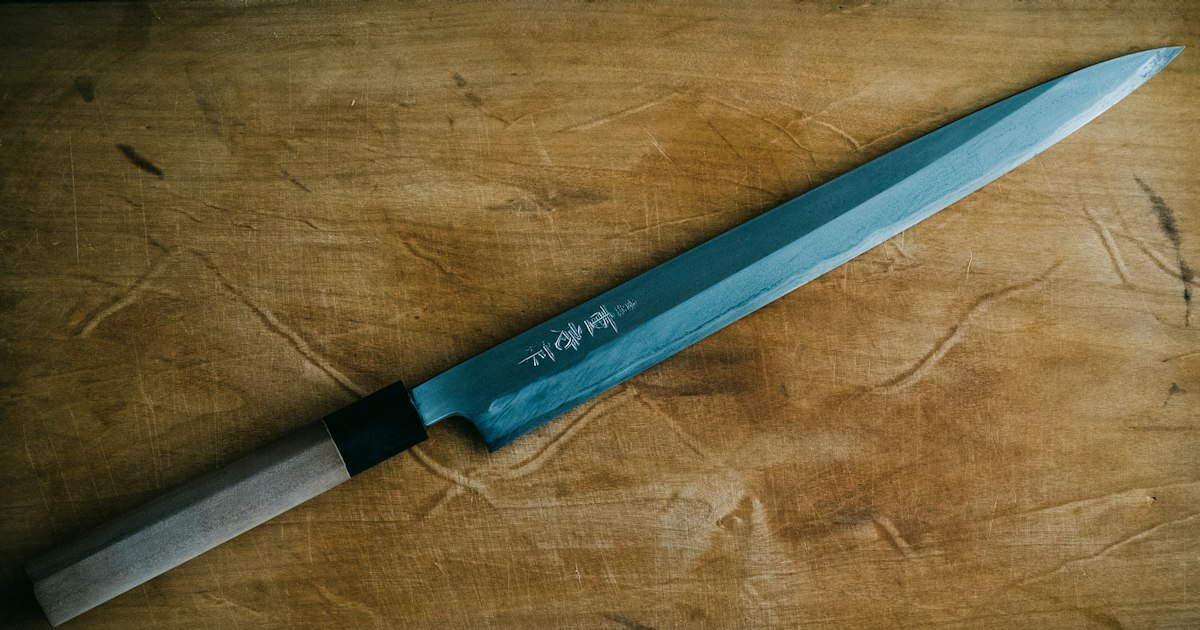
    An hour from Nagoya by train, the quiet city of Seki in Gifu Prefecture has been hammering out blades since the Kamakura period. Swordsmiths settled here 700 years ago because the Nagara River provided clean water for tempering, the surrounding mountains supplied charcoal and clay, and the trade routes made it easy to sell. That lineage never really stopped — it just changed shape. Today Seki forges some of the best kitchen knives in the world, alongside a small, serious community of licensed swordsmiths still making authentic nihontō by hand. If you care about blades, whether for cooking or collecting, this is one of the most rewarding day trips in central Japan.

    Why Seki Became Japan’s Blade City

    Seki’s swordsmiths reached their peak during the Warring States period, when demand for battle-ready katana was high and the “Seki-mono” reputation for blades that wouldn’t chip or bend spread across Japan. When swordmaking declined after the Meiji Restoration banned the public carrying of swords, Seki’s craftsmen redirected their metallurgy skills into cutlery, scissors, and razors. That pivot is why a city of roughly 85,000 people is now home to major cutlery manufacturers, including Kai Corporation (the company behind the Shun and Kai House knife lines sold worldwide) and smaller family-run forges like Moritaka Hamono, Fujitora, and Zenpachi.

    Where to Buy: Museum Shops, Hamono Kaikan, and Factory Outlets

    The easiest place to start is the Hamono Kaikan (Cutlery Center), a retail hall near Seki-shi Station that gathers products from multiple local makers under one roof, so you can compare brands without hopping between factories. Staff are used to foreign visitors and many can explain steel types (stainless vs. carbon, Damascus-pattern laminates) in simple terms.

    For a more specialized visit, several forges run their own small shops, and some will do a basic blade engraving or sharpening while you wait — ask at the counter, since this isn’t always advertised. Budget ranges to expect:

    • Budget (¥2,000–¥6,000): single-bevel paring knives, basic stainless petty knives, and sharpening stones from local makers.
    • Mid-range (¥8,000–¥25,000): a proper Gyuto (chef’s knife) or Santoku in VG-10 or similar steel from a recognized brand like Kai or Fujitora — the sweet spot for most home cooks.
    • Splurge (¥30,000–¥150,000+): hand-forged Damascus-pattern knives, custom-fitted handles, or a signed piece from an independent smith. Genuine hand-made nihontō from a licensed swordsmith run well into the millions of yen and are a different purchase entirely (see the mistakes section below).

    Most shops accept credit cards, but smaller forge outlets may be cash-only or IC-card only — it’s worth having PayPay set up as a backup since it’s spreading even into traditional craft towns; see our guide to QR Code Payments in Japan if you haven’t used it before.

    The Seki Hamono Matsuri (Cutlery Festival)

    If your trip is flexible, time it around the Seki Hamono Matsuri, held annually over the first weekend of October in front of Seki City Hall. Dozens of manufacturers set up factory-direct outlet stalls with discounts of 20–50% off retail, and there are live demonstrations of traditional sword forging and blade-sharpening. It’s free to attend and draws serious knife buyers from across Japan, so arrive early on the first morning for the best selection — popular models from well-known brands can sell out by midday. Exact dates shift slightly year to year, so confirm with the Seki City tourism site before booking travel.

    Seki Swordsmith Museum and Watching a Real Forging Demonstration

    The Seki Swordsmith Museum (Seki Kaji Denshokan) displays finished swords, forging tools, and tamahagane steel, with English-language panels explaining the multi-week process of folding and tempering steel into a katana. It’s typically open from around 9:00 to 16:30 and closed on Mondays, with admission in the few-hundred-yen range. On select days, licensed swordsmiths perform live forging demonstrations in the attached smithy — these draw crowds, so check the current schedule locally rather than assuming a fixed date, since smiths rotate and sessions aren’t held every week.

    Getting There and Planning Your Visit

    From Nagoya, take a JR or private-line train to Mino-Ota Station, then transfer to the Nagaragawa Railway’s Etsumi-Nansen Line to Seki-shi Station — the whole trip takes roughly an hour and a half with the transfer. Alternatively, a direct highway bus runs from Meitetsu Bus Center in Nagoya to Seki in under an hour, which is often simpler if you’re not planning to use a rail pass that day. From Gifu Station, a local bus to Seki takes about 30–40 minutes. The city itself is compact enough to cover on foot or by rental bicycle once you arrive, with the museum, Hamono Kaikan, and several forge shops all within a 20-minute walk of each other.

    Seki pairs naturally with a broader Gifu itinerary. Mino City’s old paper and pottery quarter is a short trip away if you also want to see Mino ware pottery being made, and since Nagoya is your gateway in and out, it’s worth saving an appetite for Nagoya’s tebasaki chicken wings before or after your blade shopping. Spring and autumn are the most comfortable seasons to walk around; summer in the Nagara valley gets hot and humid, so go early in the day if you visit between July and August.

    Common Mistakes to Avoid

    • Trying to carry a knife in hand luggage. Any bladed item, regardless of length, must go in checked baggage on flights out of Japan. Ask the shop to wrap and box it securely for transport.
    • Not checking your home country’s import rules. Countries including the UK and Australia restrict certain blade lengths, locking knives, or sword imports. Research your destination’s customs rules before buying an expensive piece.
    • Assuming any “katana” is a genuine antique or hand-forged sword. Decorative and display swords are sold freely as souvenirs, but authentic nihontō made by a licensed swordsmith come with a required registration certificate (Tōken Shoyū Shōmeishō) issued by the prefecture. Reputable sword shops handle this paperwork and export shipping for you — never buy a “real” sword from a stall that can’t explain the certificate.
    • Overpaying for a mass-market knife mistaken for a handmade one. Ask explicitly whether a blade is machine-stamped or hand-forged (tanzo); prices and sharpening needs differ significantly, and staff will tell you honestly if you ask directly.

    Seki rewards a slower visit — budget at least half a day, more if you want to watch a forging demonstration or attend the autumn festival. Few places let you walk from a 700-year-old sword tradition straight into a shop selling the kitchen knife you’ll actually use every day back home.

  • Mino Ware: Gifu’s Everyday Pottery Capital and Where to Buy It

    Mino Ware: Gifu’s Everyday Pottery Capital and Where to Buy It

    Photo by Taylor Heery on Unsplash

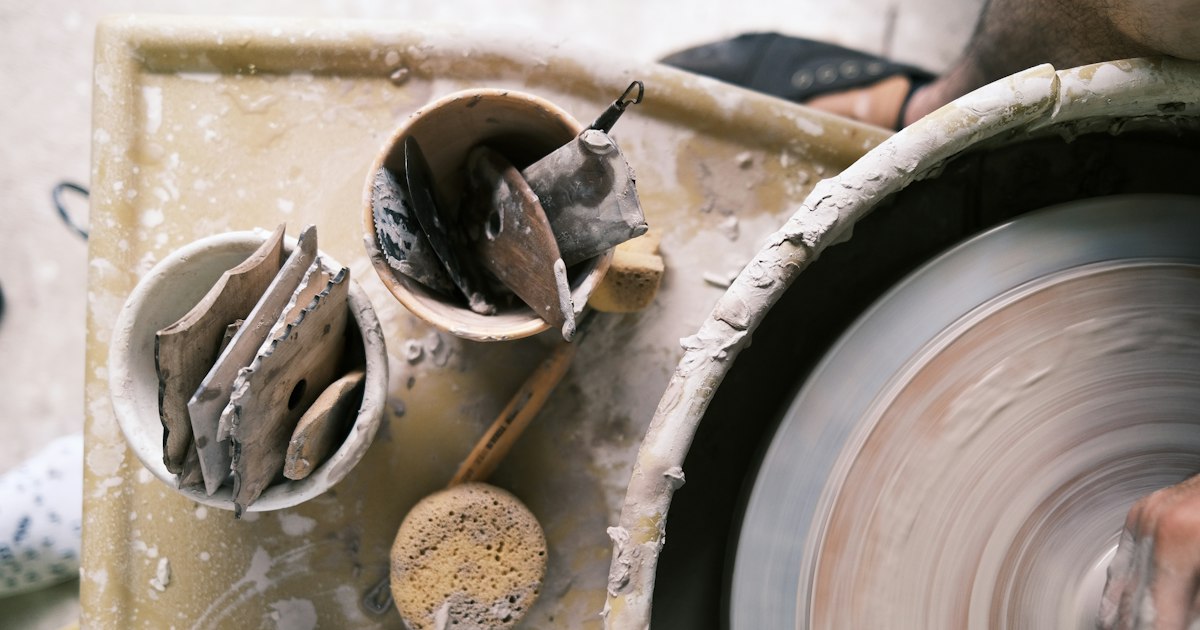
    If you’ve ever eaten off a plate in Japan — at a ramen shop, a ryokan breakfast, or a friend’s dining table — there’s a good chance it was Mino ware. Produced in the hills east of Nagoya, Mino ware (美濃焼, Minoyaki) supplies more than half of all the ceramic tableware made in Japan, yet almost no foreign visitors make the short trip to see where it comes from. That’s good news for you: it means wholesale prices, quiet showrooms, and a working pottery town instead of a souvenir circuit.

    What Makes Mino Ware Different

    Mino ware isn’t one look — it’s a production region, not a single style, which is exactly why it ended up on so many Japanese tables. The area around Tajimi, Toki, and Mizunami in eastern Gifu Prefecture has been firing clay for over a thousand years, but its signature styles emerged in the Momoyama period (late 1500s), when tea ceremony culture demanded bolder, more expressive pottery than the refined wares coming out of Seto nearby. Four classic glazes came out of that era and are still produced today:

    • Shino — thick, milky-white glaze with a soft, almost cratered texture and reddish “fire marks” (hi-iro) where it meets the clay.
    • Oribe — bold copper-green glaze, often paired with asymmetrical, deliberately irregular shapes.
    • Kiseto — a warm, understated yellow glaze.
    • Setoguro — glossy black, achieved by pulling pieces from the kiln while still red-hot.

    Mino ware was designated a traditional craft (dentō kōgei) by the Japanese government in 1978, but unlike many crafts with that label, it never stopped being everyday, mass-produced tableware — which is exactly why it’s worth buying here rather than at a department store back home.

    Where It’s Made — and How to Get There

    The production area is known as the Tōno region: Tajimi City is the heart of it, with Toki and Mizunami close behind. From Nagoya Station, take the JR Chuo Line rapid train to Tajimi Station — it’s about 30–40 minutes and costs roughly ¥680–770 one way. Tajimi’s old merchant quarter, Ichinokura, is a short walk from the station: a cluster of Edo- and Meiji-era storehouses (kura) and narrow lanes now holding small galleries, kilns-turned-shops, and the occasional café. It’s compact enough to cover on foot in an hour or two, longer if you start browsing.

    If you’re coming through Nagoya anyway, it’s worth timing your day trip around a meal — Nagoya’s tebasaki fried chicken wings make a solid dinner before or after the pottery hunting.

    The Best Time to Go: Festival Season

    The single best time to buy Mino ware is the annual Minoyaki Matsuri (Mino Ware Festival), held in Tajimi over a weekend in mid-April. Dozens of manufacturers and wholesalers set up direct-sale tents selling overstock, seconds, and discontinued lines at a fraction of retail — mugs and small bowls for ¥100–¥500, sets that would run ¥5,000+ in a shop going for a third of that. It draws big crowds from across the Chubu region, so arrive early on the first morning if you want first pick of the good stuff, and bring cash and a sturdy bag — boxes and bubble wrap run out fast by afternoon. Exact dates shift slightly year to year, so check the current schedule before you plan a trip around it.

    Outside of festival weekend, late spring and autumn are the most comfortable seasons to wander Ichinokura’s outdoor lanes — summers in this part of Gifu get hot and humid, and if you’re visiting in late summer or early autumn it’s worth checking the typhoon season guide before locking in dates, since this is a day trip you’ll want clear weather for.

    Where to Buy It

    You don’t need festival timing to find good deals — Tajimi and Toki have a permanent layer of outlet-style shops built around the industry’s own overstock:

    • Factory outlet shops (B-hin/kata-ochi stores) sell “B-grade” pieces — ones with a minor glaze flaw or slight warp invisible to most buyers — at 30–70% off. This is where budget-minded shoppers should start.
    • Ichinokura’s small galleries in Tajimi carry individually made pieces from local potters, including contemporary takes on Shino and Oribe glazes, at prices closer to craft-market than factory-outlet.
    • Toki and Mizunami have larger wholesale-adjacent showrooms aimed at restaurant buyers, which also sell to walk-in visitors — useful if you want to buy a matching set of ten rather than a single souvenir bowl.

    Most small shops and festival stalls in this area still lean cash-heavy, though card and QR acceptance has grown; if you’re relying on your phone to pay, it’s worth knowing how PayPay and Rakuten Pay work for tourists before you go, and carry backup cash regardless.

    Budget, Mid-Range, and Splurge Picks

    Budget (¥300–¥1,500): A single rice bowl or small Oribe-glazed dish from an outlet store or festival stall. Great for a light souvenir that still packs some weight and story.
    Mid-range (¥2,000–¥6,000): A Shino-glazed mug, a pair of matching sake cups, or a mid-size serving plate from an Ichinokura gallery — the sweet spot for something you’ll actually use at home and that looks clearly handmade.
    Splurge (¥10,000–¥30,000+): A signed piece from an established potter’s studio — a full Oribe tea bowl or a larger Shino vase. These are sold with a maker’s name and sometimes a certificate, and are the ones worth the extra care in packing for the flight home.

    Common Mistakes to Avoid

    • Assuming Tajimi has one central pottery mall. It doesn’t — the shops are spread across Ichinokura’s lanes and scattered outlet buildings, so a rough plan (or a shopkeeper’s recommendation for “where else to look”) saves time.
    • Skipping the breakage check. Ask shops about shipping — many outlet stores and galleries can ship within Japan, which is far safer than packing stoneware in carry-on luggage yourself.
    • Confusing Mino ware with Seto ware. The two regions are neighbors and share glaze names (Oribe, Kiseto) because of shared history, but they’re distinct production areas — don’t assume Seto souvenirs are the same product.
    • Going on a weekday expecting galleries to be open. Some of the smaller Ichinokura shops and studios keep irregular hours or close certain weekdays; a quick call or a look at posted hours before walking across town saves a wasted trip.
    • Treating it purely as a shopping trip. If you enjoy tracking down a specific Japanese craft and the culture around it, this pairs well with other specialist-shopping detours — the Omiya Bonsai Village guide covers a similar deep-dive shopping trip near Tokyo if you want the same kind of day elsewhere in Japan.

    Mino ware rewards exactly the kind of traveler who’s willing to go one town past the obvious stop. Nagoya gets you most of the way there in under an hour, and what you bring home — a bowl with a real maker and a real kiln behind it — beats anything stacked on a souvenir shelf.

  • Japanese Craft Gin Guide: Ki No Bi, Roku & the Botanical Gin Boom

    Japanese Craft Gin Guide: Ki No Bi, Roku & the Botanical Gin Boom

    Photo by Yuri Li on Unsplash

    Ten years ago, “Japanese gin” wasn’t really a category. Today it’s one of the fastest-growing souvenirs leaving Narita and Kansai airports, with bottles like Ki No Bi and Roku showing up on cocktail menus from London to Los Angeles. If you’re planning a Japan trip and want to understand what’s actually worth drinking or packing home, here’s how the boom started, which bottles matter, and how to shop for them without overpaying.

    Why Japan Suddenly Makes World-Class Gin

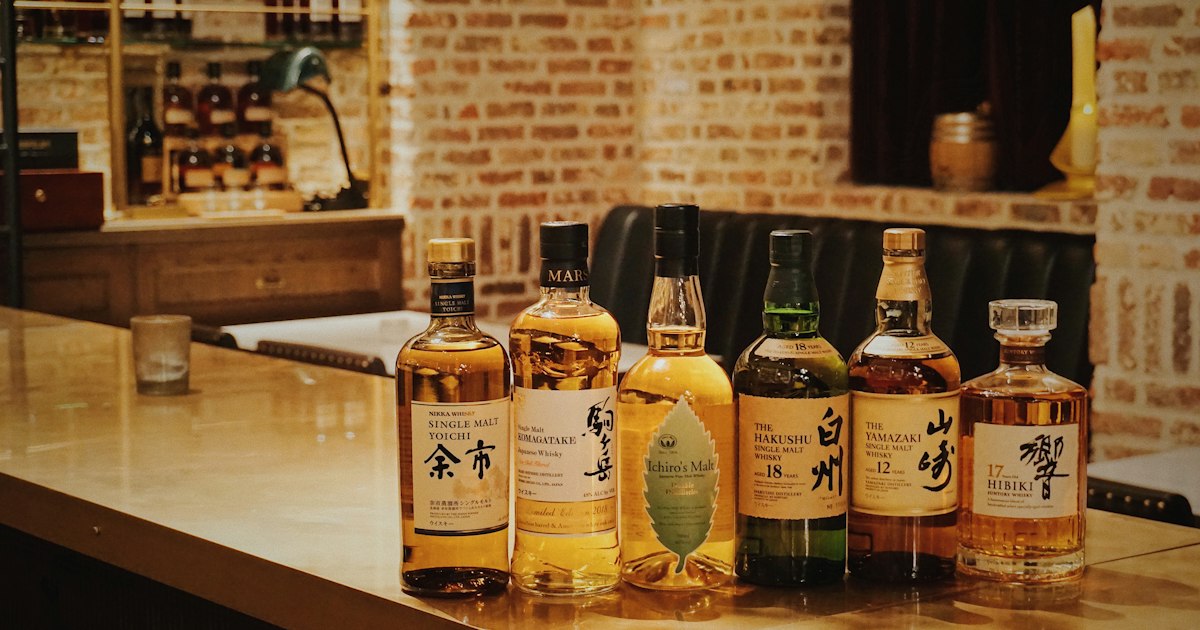
    Japan’s gin boom is really a whisky boom in disguise. When Suntory and other distillers saw global whisky stocks tighten and demand for Japanese spirits spike in the mid-2010s, gin became the obvious side door: it doesn’t need years of barrel aging, it can use the same stills and distilling talent already on-site, and it lets a brand showcase distinctly Japanese botanicals — yuzu, sansho pepper, green tea, hinoki (Japanese cypress) — in a format Western drinkers already understood. Kyoto Distillery released Ki No Bi in 2016 as Japan’s first dedicated craft gin, and Suntory followed with Roku in 2017. Dozens of regional distilleries, from Hokkaido to Okinawa, have since launched their own.

    Ki No Bi: Kyoto’s Craft Pioneer

    Ki No Bi (“the beauty of the seasons”) is distilled by the Kyoto Distillery in Fushimi, the same southern Kyoto district famous for sake brewing because of its soft, iron-free groundwater — the distillery uses that water too. It’s a six-still, small-batch operation using eleven botanicals distilled separately and blended, including yuzu, hinoki wood chips, gyokuro green tea, bamboo, and sansho pepper, giving it a drier, more savory, almost tea-like profile than a typical London Dry.

    A standard 700ml bottle of Ki No Bi Kyoto Dry Gin runs roughly ¥4,000–4,800 at retail in Japan; the distillery also sells a higher-proof Ki No Tea and limited cask-finished editions that run considerably more. The distillery itself offers paid tastings and occasional tours by advance reservation through its website — book before your trip, as slots are limited and English availability varies. If you’re based in Kyoto, Fushimi is a short train ride (Keihan Line to Fushimi-Momoyama or Momoyama-Minamiguchi) from the city center and pairs naturally with an afternoon at the sake breweries nearby, or an evening afterward at Pontocho Alley, where several bars stock Ki No Bi by the glass.

    Roku: Suntory’s Gateway Gin

    Roku means “six,” referring to its six core Japanese botanicals — sakura flower, sakura leaf, yuzu peel, sencha, gyokuro, and sansho pepper — each distilled at different times of year to capture peak seasonal character, then blended. It’s made at Suntory’s Osaka facility and designed to be more approachable and floral than Ki No Bi, with a lighter, citrus-forward finish that works well in a simple gin and tonic.

    Roku is the easier bottle to find and the better value: expect around ¥2,200–2,900 for 700ml at a Japanese supermarket, drugstore, or convenience-store liquor section, and often a bit less at airport duty-free. It’s also the gin most likely to appear pre-mixed in canned highballs in convenience store fridges, which is a cheap, no-commitment way to try the flavor profile before buying a full bottle.

    Beyond the Big Two: Other Bottles Worth Seeking Out

    • Nikka Coffey Gin — distilled in Nikka’s distinctive Coffey column stills, with a noticeably citrus-heavy, almost fruity profile; roughly ¥4,500–5,500 for 700ml.
    • Sakurao Gin (Hiroshima) — uses local botanicals like wasabi and sea salt from the Seto Inland Sea; usually ¥3,500–4,500, and sold at the distillery’s visitor center near Hiroshima.
    • Wa Bi Gin — a boutique small-batch gin that’s harder to find outside specialist shops and sells closer to ¥6,000–8,000.
    • Okinawan options — some southern distillers are now blending gin botanicals with local citrus; if you’re island-hopping, it’s worth comparing to the region’s traditional spirit, awamori, for a sense of how differently Okinawa and mainland Japan approach distilling.

    Where and How to Buy Gin in Japan

    Budget: Supermarkets, Don Quijote, and convenience stores carry Roku and a few other mainstream bottles at normal retail price — no markup, and a reliable backup if a specialty shop is closed.

    Mid-range: Department store liquor floors (the basement food halls at Isetan, Takashimaya, or Daimaru) carry the widest range, including Ki No Bi and regional craft bottles, often with gift boxing included at no extra charge — useful if you’re bringing a bottle home as a present.

    Splurge: Limited editions, cask-finished Ki No Bi, and small-batch releases are sold directly through distillery shops or specialist bottle shops in Tokyo (Shibuya and Nihonbashi have good concentrations) and tend to sell out fast around year-end gift season.

    Airport duty-free (Narita, Haneda, Kansai) is worth checking last — prices on Roku specifically are often a little lower than in-town retail, and it saves carrying a heavy bottle around for the rest of your trip. Most shops now take IC cards and QR payment apps; if you haven’t set one up yet, our guide to using PayPay and Rakuten Pay as a tourist covers how to get started before you shop.

    Best Ways to Drink It Like a Local

    A gin and tonic is the default order at almost any Japanese bar, but ask for it “Japanese style” and many bartenders will build it with a single large ice sphere, a twist of yuzu instead of lime, and a slow pour of tonic down the side of the glass to preserve carbonation — a technique borrowed from highball service. Standing bars and hotel lounges in Tokyo’s Jiyugaoka and Nakameguro neighborhoods have leaned into the craft gin trend with multi-page gin menus; if you’re already exploring boutique shopping streets, Jiyugaoka is a pleasant place to combine both in one afternoon. Expect to pay ¥1,200–2,000 for a well-made gin and tonic at a proper bar, less at a casual izakaya.

    Common Mistakes to Avoid

    • Assuming “Japanese gin” means it tastes light or neutral. Ki No Bi and several craft bottles lean savory and botanical-forward — taste before committing to a full bottle as a gift for someone who only drinks London Dry.
    • Buying at the first souvenir shop you see. Prices on the same bottle can vary by ¥1,000 or more between a tourist-area shop and a department store basement or duty-free.
    • Forgetting duty-free liquid limits. If you’re flying onward internationally, duty-free gin bought in Japan may need to go in checked luggage or be repackaged at a connecting airport — check your onward carrier’s rules before buying multiple bottles.
    • Skipping the tasting menu at distilleries. Kyoto Distillery and several regional producers offer flighted tastings for a modest fee, which is a far better way to find a bottle you’ll actually like than buying blind.

    Japan’s gin boom shows no sign of slowing, and the quality gap between the early leaders and newer regional distillers keeps narrowing. Start with a Roku and tonic to calibrate your palate, then work up to Ki No Bi or a regional bottle — by the end of a two-week trip, most visitors leave with a much clearer sense of which flavor profile is actually theirs, rather than just the one on the airport shelf.

  • Yakisoba: Japan’s Stir-Fried Festival Noodles and How to Order Them

    Yakisoba: Japan’s Stir-Fried Festival Noodles and How to Order Them

    Photo by Julien on Unsplash

    If you’ve ever walked through a Japanese summer festival and followed your nose to a smoking iron griddle piled with noodles, cabbage, and pork, you’ve found yakisoba. It’s one of the cheapest, most satisfying things you can eat in Japan, sold everywhere from neighborhood matsuri to convenience store coolers — but the name trips up a lot of visitors, and ordering at a crowded yatai stall has its own unwritten rules. Here’s how to find good yakisoba and order it without confusion.

    What Yakisoba Actually Is

    Despite the name, yakisoba isn’t made with soba (buckwheat noodles). It uses the same steamed, curly wheat noodles as ramen, stir-fried on a hot iron griddle (teppan) with shredded cabbage, carrot, onion, and thin strips of pork belly. The defining flavor is the sauce: a thick, dark, Worcestershire-based blend that’s sweet, tangy, and slightly smoky from the hot griddle — similar in spirit to okonomiyaki sauce but usually cooked into the noodles rather than drizzled on top. A finished plate gets topped with aonori (dried green seaweed powder), beni shoga (pickled red ginger), and sometimes a dusting of katsuobushi (bonito flakes) or a squiggle of mayonnaise.

    Where You’ll Actually Find It

    Yakisoba lives in three very different worlds, and the experience changes a lot depending on which one you’re in:

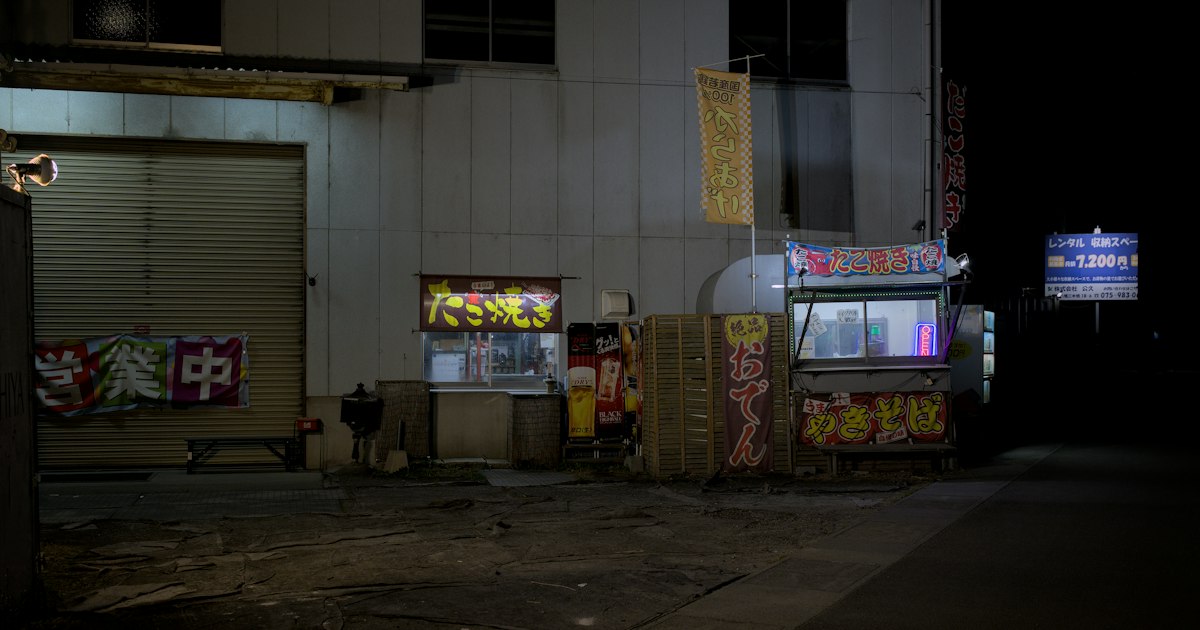
    • Festival yatai stalls: This is the classic setting — a griddle-cook working a mountain of noodles with two metal spatulas at a matsuri, hanami cherry-blossom gathering, or fireworks festival. A tray costs roughly ¥500–700 and comes in a paper boat you eat standing up.
    • Convenience stores: Lawson, 7-Eleven, and FamilyMart all stock refrigerated yakisoba packs (noodles plus a sauce sachet, ¥150–250) you microwave at the store, and instant cup versions like Peyoung (¥200–250). You’ll also find yakisoba-pan — the noodles stuffed into a hot dog-style bun — for around ¥150–250, a beloved only-in-Japan snack food.
    • Restaurants: Okonomiyaki and monjayaki restaurants, teppanyaki counters, and casual izakaya almost always have yakisoba on the menu, typically ¥700–1,200, cooked fresh in front of you.

    How to Order at a Festival Stall

    Yatai lines move fast and the cook is usually working several orders at once on the same griddle, so keep it simple. Queue up, and when you reach the window say “Yakisoba hitotsu kudasai” (one yakisoba, please) — hold up fingers for more than one. Most stalls only make one size, though some offer a “大盛り” (omori, large portion) for an extra ¥100–200. Pay when you order, not after; small stalls are frequently cash-only, so carry ¥1,000 notes and coins. Larger festivals increasingly take PayPay or other QR codes — our guide to QR code payments in Japan explains how to set one up before you go, but don’t count on it at every stall. You’ll eat standing at a shared table or on a curb nearby — there’s rarely seating, and lingering once you’ve finished isn’t the norm when a line is still forming behind you.

    Best Season and Timing

    Yakisoba is sold year-round, but it’s at its festival best during natsu matsuri (summer festival) season, roughly July through August, when towns across Japan hold evening festivals with fireworks, yukata-clad crowds, and rows of food stalls. Weekend and holiday-evening festivals draw the biggest stall lineups and the longest queues, so arrive right when stalls open (often 4–5pm) if you want to avoid a 20-minute wait. Late summer festivals can run into typhoon season, which can cancel or shorten outdoor events with little notice — check our guide to typhoon season in Japan if you’re planning a trip specifically around a summer matsuri. Outside summer, you’ll still find yakisoba stalls at New Year shrine fairs, autumn harvest festivals, and school or neighborhood sports days.

    Regional Styles Worth Seeking Out

    Yakisoba has real regional variation, and a few towns have built food tourism around their version:

    • Fujinomiya yakisoba (Shizuoka Prefecture) uses firmer, chewier noodles cooked with pork lard instead of oil, giving it a distinctly richer bite.
    • Moji yakisoba (Kitakyushu, Fukuoka) is cooked with a curry-spiced sauce, a holdover from the port city’s history as an import hub.
    • Yokote yakisoba (Akita Prefecture) is topped with a fried egg and a few slices of boiled pork, eaten with a side of pickles called fukujinzuke.

    If you’re already building a food-focused itinerary around regional specialties, pairing a yakisoba detour with something like Nagoya’s tebasaki chicken wings makes for a solid izakaya-crawl theme.

    Common Mistakes to Avoid

    • Assuming it’s vegetarian. The sauce and noodle broths frequently contain bonito (fish) extract, and pork belly is standard — always ask “butaniku nashi de onegaishimasu” (without pork, please) if you need it removed, though the sauce itself usually can’t be changed.
    • Confusing it with “soba.” If you order “soba” expecting the stir-fried dish, you’ll get cold or hot buckwheat noodles in broth instead — a completely different meal.
    • Expecting it to be bland. The sauce is assertively sweet-savory, closer to a thick teriyaki-Worcestershire hybrid than a light soy flavor.
    • Not bringing cash to festivals. Even in cities with heavy QR-code adoption, individual yatai operators often run cash-only, and ATMs aren’t nearby once you’re inside festival grounds.

    Budget, Mid-Range, and Splurge Options

    For budget eating, a convenience store microwave pack or cup noodle runs ¥150–250 and is available any hour. A festival yatai tray at ¥500–700 is the sweet spot for the authentic experience — smoky griddle flavor, eaten outdoors, part of the matsuri atmosphere. For a seated mid-range meal, an izakaya or okonomiyaki restaurant plate at ¥800–1,200 comes with more generous toppings and a drink menu alongside it — a cold beer or a glass of amazake if you’re at a shrine festival and want something non-alcoholic. For a splurge, some teppanyaki restaurants serve yakisoba made with premium wagyu scraps and seafood for ¥2,000–3,000, cooked table-side — a different league from the festival version but a fun way to see the same technique applied with higher-end ingredients.

  • Tebasaki: Nagoya’s Fried Chicken Wings and Where to Eat Them

    Tebasaki: Nagoya’s Fried Chicken Wings and Where to Eat Them

    Photo by Dean Zhang on Unsplash

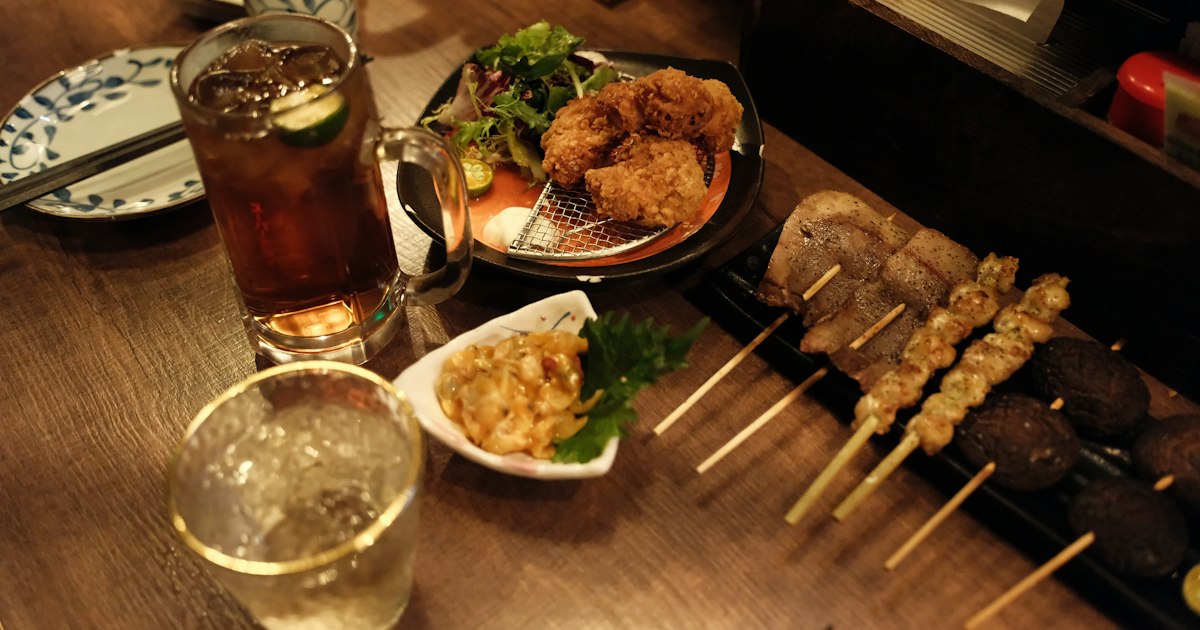
    If you ask someone from Nagoya what to eat in their city, tebasaki usually comes up before anything else. These double-fried chicken wings, glazed in a sticky-sweet soy sauce and dusted with black pepper and sesame, are the signature bar food of central Japan — crispy enough to crackle, messy enough that you’ll need both hands, and addictive enough that most people order a second round before finishing the first. This guide covers where tebasaki came from, which shops are worth your time, what to expect to pay, and the small mistakes that trip up first-time visitors.

    What Makes Tebasaki Different From Regular Fried Chicken

    Tebasaki are chicken wings — specifically the whole wing, not just the drumette — that are deep-fried twice without any batter. The first fry cooks the meat through and renders out fat; the second fry, done at a higher temperature, crisps the skin until it’s almost lacquered. While still hot, the wings are tossed or brushed in a glaze built from soy sauce, sugar, and sometimes mirin or garlic, then finished with a generous shake of black pepper and white sesame seeds.

    The result is sweet, salty, peppery, and sticky all at once, with a skin that shatters before the tender meat underneath. There’s no batter or breading, which is a key difference from American-style wings — the crunch comes purely from the skin itself.

    The Two Shops That Define Tebasaki

    Nagoya has dozens of izakayas serving tebasaki, but two chains are considered the originators and are the ones most visitors should try first.

    • Furaibo (風来坊) — Often credited as the inventor of modern tebasaki, dating back to the early 1960s. Furaibo’s wings are typically a touch milder and slightly less peppery than the competition, with a more balanced sweet-savory glaze. The chain has numerous branches around Nagoya Station and the Sakae district.
    • Sekai no Yamachan (世界の山ちゃん) — The better-known name internationally, thanks to branches that have expanded to Tokyo and even overseas. Yamachan’s wings lean spicier, with a heavier hit of black pepper. It started in Nagoya’s Imaike neighborhood and has since grown into a nationwide izakaya chain with a bright yellow sign and rooster mascot that’s easy to spot.

    Both are casual izakayas — noisy, bright, and built for drinking beer with friends — rather than quiet restaurants. Expect laminated menus, picture-based ordering, and staff shouting orders back toward the kitchen.

    Where to Find Them

    The easiest hunting ground is right around Nagoya Station. Several Yamachan and Furaibo branches operate within a 10-minute walk of the station’s central exits, making this a sensible first or last stop on a Nagoya day trip. The Sakae district, Nagoya’s other major downtown hub, has an even denser cluster of izakayas, including multiple tebasaki specialists tucked into the side streets around Sakae subway station.

    For something closer to the source, Yamachan’s original shop is in Imaike, a few subway stops east of Sakae on the Tsurumai Line — worth the detour if you want to see where the chain started before it spread across Japan. Most locations open for dinner around 17:00 and run late, often past midnight, which fits the after-work drinking crowd these places were built for. Lunch service is far less common; tebasaki is fundamentally an evening, beer-in-hand food.

    How Much Tebasaki Costs

    Pricing is consistent across most chains and genuinely budget-friendly:

    • Budget: A plate of 5–6 wings typically runs around ¥500–700. Pair that with a ¥500 draft beer and you’ve got a full snack for under ¥1,200.
    • Mid-range: A proper izakaya dinner — tebasaki plus a few other small plates like fried tofu, edamame, or grilled skewers, with a couple of drinks — lands around ¥2,500–4,000 per person.
    • Splurge: Many branches offer an all-you-can-drink (nomihodai) course bundled with a full food set for roughly ¥3,500–5,000 per person over a fixed 90–120 minute period, which is the standard way groups eat here.

    Tax and sometimes a small table charge are added, but tipping is not expected anywhere in Japan.

    How to Order and Eat Them

    Tebasaki are eaten with your hands, not chopsticks — restaurants know this and bring a small bowl of water or a wet towel (oshibori) for cleanup afterward. Pick up the wing, bite along the bone, and twist to strip the meat; it takes a wing or two to get the technique down, but staff won’t think twice if you make a mess.

    Portions are usually ordered as a shared plate for the table rather than one per person, so a group of three or four typically orders two or three plates to start and adds more as needed. Beer is the default pairing — the sweetness of the glaze and the saltiness of the skin are built around it — though lemon sours and highballs are common alternatives if you’d rather skip beer.

    If you have dietary restrictions, it’s worth preparing ahead, since izakaya staff in Nagoya aren’t always used to explaining ingredients in English. A printed card showing your allergy or restriction in Japanese, as covered in our guide to food allergy cards and menu translation in Japan, can save a lot of back-and-forth, especially since the glaze sometimes contains sesame.

    Common Mistakes to Avoid

    A few things trip up visitors who haven’t eaten tebasaki before:

    • Ordering too little. A single plate of 5–6 wings disappears fast between two people. Order in rounds rather than trying to guess the right quantity upfront.
    • Skipping the wet towel. The glaze is sticky, and your fingers will show it — use the oshibori provided rather than napkins.
    • Going at lunchtime. Many tebasaki specialists don’t open until the evening, so don’t plan this as a midday meal unless you’ve checked the specific branch’s hours.
    • Expecting a quiet meal. These are loud, casual izakayas built for groups and drinking — if you want a calmer dining atmosphere, this isn’t the venue, though it’s worth comparing to a more atmospheric option like Kyoto’s Pontocho Alley for a different kind of evening out.

    Most tebasaki izakayas in Nagoya now accept cashless payment, including QR code apps, so if you’re relying on your phone to pay, our guide to using PayPay and Rakuten Pay as a tourist is worth a quick read before you go.

    Planning Your Visit

    Nagoya is an easy stop on the Tokyo–Osaka Shinkansen route, roughly 100 minutes from Tokyo and 50 minutes from Osaka on the Tokaido Shinkansen, which makes it realistic as a day trip or a one-night stopover built around dinner. There’s no real seasonal angle to tebasaki — it’s served year-round and tastes just as good in August as it does in January — so the only real timing consideration is going in the evening when these izakayas actually open. If you’re building a Nagoya stop into a longer Japan itinerary, an evening of tebasaki and beer around Sakae or Nagoya Station is a reliable, inexpensive way to spend a few hours between bigger-ticket stops elsewhere in the country.

  • Kiritanpo: Akita’s Grilled Rice Stick Hot Pot and Where to Try It

    Kiritanpo: Akita’s Grilled Rice Stick Hot Pot and Where to Try It

    Photo by 0xk on Unsplash

    If you ask someone from Akita Prefecture what dish they miss most when they leave home, odds are good they’ll say kiritanpo. It’s rice, but not as most travelers know it: pounded and grilled onto cedar skewers, then simmered in a savory chicken broth with mushrooms, burdock root, and green onion until it’s soft on the outside and chewy within. It’s one of Japan’s great regional comfort foods, and almost unheard of outside Tohoku — which is exactly why it’s worth seeking out. Here’s what kiritanpo actually is, when to go for it, and where to eat a good bowl without wasting a meal on a mediocre one.

    What Is Kiritanpo, Exactly?

    Kiritanpo starts as freshly cooked short-grain rice that’s mashed in a mortar until about two-thirds of the grains are crushed — just enough to hold together, but not pounded smooth like mochi. The rice paste is molded around a cedar or Japanese cypress skewer in a cylinder shape and grilled over charcoal until the surface turns golden and lightly crisp. The name comes from its resemblance to a “tanpo,” an old-fashioned padded spear tip used in kendo practice.

    On its own, grilled kiritanpo is sometimes brushed with sweet miso and eaten as a snack — look for this version, called “miso tanpo,” at roadside stands and festivals. But the dish most visitors come to Akita for is kiritanpo-nabe, where the skewers are removed, the rice sticks are cut into bite-sized lengths, and they’re added to a hot pot at the table.

    Kiritanpo-Nabe: The Classic Hot Pot

    A proper kiritanpo-nabe is built on dashi made from Hinai-jidori, a prized local breed of free-range chicken, simmered with soy sauce into a clear, deeply savory broth. Into the pot go maitake mushrooms, burdock root (gobo), negi (Japanese leeks), konnyaku, and seri (a peppery wild parsley that’s a signature Akita winter vegetable), along with chicken pieces. The kiritanpo rice sticks go in last, only for a few minutes — just long enough to soak up the broth without dissolving into mush.

    Expect to pay roughly ¥1,500–¥2,500 for a single-serving kiritanpo-nabe set at a casual restaurant, and ¥3,000–¥6,000 per person at a specialty restaurant serving it as part of a multi-course meal with regional sake. Many places require a minimum of two diners for the hot pot version, since it’s traditionally cooked in a shared pot at the table — solo travelers should call ahead or ask if a single-portion nabe is available.

    Best Time to Visit for Kiritanpo

    Kiritanpo is a cold-weather dish through and through. Restaurants serve it from around October through March, with the richest flavor in November and December when the new rice harvest and fresh seri are both in season. Odate City, widely credited as kiritanpo’s birthplace, holds an autumn Kiritanpo Festival (usually in October) where a massive communal pot — large enough to feed hundreds — is cooked outdoors. If your trip lines up with this, it’s worth the detour; otherwise, aim for a December or January visit when nabe season is in full swing and most restaurants have it on the menu without needing advance notice.

    Outside this window — spring and summer — many restaurants quietly drop kiritanpo-nabe from the menu or only offer the grilled miso version, so don’t plan an Akita trip around it in warmer months.

    Where to Try It in Akita

    Budget: Izakaya and teishoku (set meal) restaurants around Akita Station and in the city’s Omachi nightlife district often list kiritanpo-nabe as a seasonal item for ¥1,500–¥2,000, usually sized for one or two people. This is the easiest way to try it without a reservation.

    Mid-range: Specialty kiritanpo restaurants, concentrated in Akita City and in Odate, serve it as a proper course with Hinai-jidori chicken sashimi or yakitori on the side, typically ¥3,000–¥4,500 per person. These are the places to go if you want to taste the difference good broth and real Hinai-jidori make.

    Splurge: Ryokan and kappo-style restaurants in Kakunodate or around Tazawa-ko pair kiritanpo-nabe with a full kaiseki spread and local Akita sake (the prefecture produces some of Japan’s best, including Yuki no Bosha and Takekuma), running ¥6,000–¥10,000+ per person. If you’re combining kiritanpo with a visit to Kakunodate’s samurai district, this is worth booking in advance.

    Getting to Akita from Tokyo is straightforward: the Akita Shinkansen (Komachi) takes about 3.5–4 hours directly from Tokyo Station, or you can fly to Akita Airport in roughly 1 hour 15 minutes from Haneda. For Odate specifically, Odate-Noshiro Airport has flights from Haneda in about 70 minutes, which is faster than the train if that’s your main destination.

    Cash is still common at small-town restaurants in Akita, though QR code payment is spreading — if you’re relying on your phone to pay, it’s worth reading up on QR Code Payments in Japan: Using PayPay & Rakuten Pay as a Tourist before you head somewhere rural, since not every kiritanpo restaurant takes cards.

    Where to Try It Outside Akita

    If your itinerary doesn’t reach Tohoku, Akita Furusatokan, the prefecture’s antenna shop in Nihonbashi, Tokyo, sells vacuum-packed kiritanpo rice sticks and nabe broth kits you can take home or cook in a rental kitchen, along with Hinai-jidori products when in stock. It’s a reasonable fallback, though the texture of fresh-grilled kiritanpo doesn’t fully survive packaging — treat it as a souvenir option rather than a replacement for eating it in Akita. A handful of Tohoku-regional restaurants in Tokyo and Osaka also run kiritanpo-nabe as a winter special, usually worth a quick search for “きりたんぽ” plus your city before you go.

    Common Mistakes to Avoid

    • Confusing it with mochi. Kiritanpo looks similar but isn’t pounded into the stretchy, gluey texture of mochi — it’s firmer and holds its shape in broth. Don’t expect mochi’s stretch.
    • Ordering it outside winter. If you visit Akita in summer, you may only find miso tanpo (the grilled skewer snack), not the hot pot. Check the season before building a trip around it.
    • Not checking the party size. Many restaurants serve kiritanpo-nabe as a shared pot with a two-person minimum. Solo travelers should ask ahead rather than assume it’s orderable for one.
    • Overlooking allergens in the broth. The soy-based dashi typically contains soy and sometimes sesame, and it’s built on chicken stock, so it isn’t suitable for vegetarian, vegan, or halal diets as traditionally made. If you’re traveling with dietary restrictions, our guide to Food Allergy Cards & Menu Translation in Japan is useful for checking ingredients at smaller restaurants that may not have English menus.
    • Treating it as a one-off curiosity instead of planning around it. Kiritanpo is best enjoyed as part of a winter Tohoku itinerary rather than a single detour. If you’re already chasing cold-season specialties, it pairs naturally with a trip built around other winter foods — see our guide to Zuwaigani: Japan’s Winter Snow Crab Season for how to structure a broader winter food trip.

    Kiritanpo won’t show up on most first-time Japan itineraries, which is exactly its appeal — it’s a dish you have to go looking for, in a prefecture most tourists skip entirely. If rice itself interests you as a travel subject, it’s worth noting Akita’s grain also turns up in other regional specialties; for a lighter, non-alcoholic rice drink elsewhere in Japan, see Amazake: Japan’s Sweet Fermented Rice Drink. But for the real thing, a cold night in Akita with a steaming pot of kiritanpo-nabe and a cup of local sake is hard to beat.

  • Zuwaigani: Japan’s Winter Snow Crab Season and Where to Eat It

    Zuwaigani: Japan’s Winter Snow Crab Season and Where to Eat It

    Photo by EMANUELE Ricciardi on Unsplash

    Every November, fishing ports along the Sea of Japan erupt into celebration as the first boats of the season haul in zuwaigani — snow crab — and restaurants from Kyoto to Hokkaido start chalking “kani” specials onto their boards. For visitors, it’s one of the most satisfying seasonal food experiences in the country: sweet, delicate crab meat eaten steamed, grilled, raw as sashimi, or simmered into a hot pot at the table. Here’s how to time it right, where to go, and how to avoid overpaying for a disappointing plate.

    What exactly is zuwaigani?

    Zuwaigani (ズワイガニ) is Japan’s most prized crab, distinct from the larger, spinier taraba-gani (king crab) and the squat kegani (hairy crab) also sold in winter. Zuwaigani has thinner legs and a more delicate, slightly sweet flavor that Japanese diners generally rank above king crab for quality, even though king crab is bigger and photographs better. Regional names add to the confusion for first-timers: crab landed in Fukui is branded echizen-gani, in Tottori it’s matsuba-gani, and in Hyogo/Kyoto it’s often called kasumi-gani or Tajima-gani. They’re all the same species — the branding reflects the port and the quality grading, not a different crab.

    The very best specimens are tagged with a small plastic ring on one claw, indicating they were certified by local fishing cooperatives for size, weight, and shell firmness. A tagged echizen-gani from Fukui can fetch tens of thousands of yen at auction for a single large male crab — these are the ones gifted in boxes at department stores.

    When is the season?

    Zuwaigani season on the Sea of Japan side runs from around November 6 to late March, with a closure in the summer months to protect stocks. The sweetest window for visitors is December through February, when the crab has fattened up for winter and meat yield is highest. Late January to mid-February is often considered the peak, coinciding with the egg-laying season for females (seko-gani or koubako-gani), which are smaller but prized for their roe and sold at a fraction of the price of males.

    This overlaps with peak ski season in places like Niseko, so if you’re already planning a Hokkaido powder trip (see our guide to Niseko, Hokkaido’s powder snow capital), it’s easy to build in a crab detour, since Hokkaido’s own crab markets in Sapporo and Otaru run through the same months. Just note that heavy snow and occasional winter storm delays can affect train and flight schedules into the San-in and Hokuriku coasts — check conditions before locking in a single-day crab pilgrimage.

    Best regions to eat it

    Fukui and Ishikawa (Hokuriku coast) — home of echizen-gani, considered by many the top-tier crab. Kanazawa’s Omicho Market has multiple crab stalls and sit-down counters where you can get a full crab set for lunch. Echizen Town itself holds a crab festival in November.

    Tottori — matsuba-gani country, and Tottori Prefecture lands more zuwaigani by volume than anywhere else in Japan. Kasumi Port in Hyogo (just over the Tottori border) is a famous, slightly less touristy base for crab-focused ryokan stays.

    Kyoto and Kobe — Kyoto doesn’t land crab itself, but its restaurants source heavily from the nearby San-in coast, and kani kaiseki (multi-course crab dinners) are common in traditional restaurants, including some tucked into the lantern-lit lanes of Pontocho Alley.

    Hokkaido — not the origin of “zuwaigani” branding culture in the same way, but excellent, affordable crab at Sapporo’s Nijo Market and Otaru’s canal-side shops, often sold by weight for take-away as well as eat-in.

    Tsukiji Outer Market, Tokyo — the easiest option if you can’t travel to the coast. Several stalls sell steamed crab legs and crab sashimi by the piece, though prices run higher than at the source.

    What it costs and how to order

    Prices vary a lot by grade, region, and whether it’s market, restaurant, or ryokan dining:

    • Budget (¥1,500–3,500): A few crab legs or a half-crab at a market stall, eaten standing or at a counter. Nijo Market and Omicho Market are good for this.
    • Mid-range (¥4,000–9,000): A set lunch with half or whole crab, rice, miso soup, and small sides at a dedicated crab restaurant. Many coastal towns have set-menu specialists that cater specifically to day-trippers.
    • Splurge (¥15,000–40,000+ per person): A kani kaiseki dinner or a one-night ryokan stay with a full crab course — sashimi, grilled, steamed, crab hot pot (kani nabe), and crab porridge (zogani) to finish the broth. Kasumi and Kinosaki Onsen are classic places for this kind of overnight crab-and-hot-spring trip.

    At markets, it’s normal and expected to ask for a price before pointing at a crab — many stalls display weight-based pricing per 100g rather than a flat price, and a live, uncooked crab bought whole will need cooking instructions if you plan to take it back to a kitchen. If you’re buying to ship home as a gift, most department store food halls (depachika) offer vacuum-packed, cooked crab with export-friendly packaging, though check your home country’s customs rules on seafood before committing.

    Common mistakes to avoid

    • Confusing crab types. Taraba-gani (king crab) is often cheaper per kilo but less flavorful than zuwaigani; some tourist-area menus list both without much distinction, so look for “zuwai” specifically if that’s what you want.
    • Assuming bigger is better. Female crab (seko-gani) is smaller and can’t legally be sold outside its home prefecture in some regions, but it’s often tastier for the price because of the roe — don’t skip it assuming the big male crab is automatically the better order.
    • Not checking if it’s frozen. Fresh, live-caught crab (always true at the source ports in winter) tastes notably different from previously frozen imported crab, which is common in Tokyo restaurants outside of winter. Ask “namagani desu ka?” (is this fresh/raw crab?) if unsure.
    • Underestimating the mess and time. A proper crab meal is slow and hands-on — most restaurants provide picks, scissors, and sometimes gloves. Don’t book a tight schedule right after a kaiseki crab dinner.

    Getting there and paying

    Kanazawa and Tottori are both reachable by direct shinkansen or limited express from Osaka, Kyoto, or Tokyo in roughly 2.5–4 hours, making a day trip or one-night stay realistic from the Kansai region. Smaller crab towns like Kasumi or Echizen require a transfer to a local line, so build in extra time, especially in snow season when trains can run slower or be delayed.

    Most market stalls and smaller crab restaurants in coastal towns still prefer cash, though this is changing — bigger restaurants and department store food halls increasingly accept PayPay or Rakuten Pay and major IC cards. It’s still wise to carry enough cash for a full crab meal when heading to smaller fishing towns, since card machines can be unreliable or absent entirely at the smallest family-run spots.

    A quick seasonal pairing

    Crab season lines up neatly with Japan’s broader winter food calendar — hot pots, warming rice dishes, and drinks meant to be enjoyed slowly after a cold day at the market. If you want something non-alcoholic to pair with a crab dinner, a warm cup of amazake is a traditional, mild-sweet counterpoint that many coastal towns sell alongside their seafood in winter stalls.

  • Niseko: Hokkaido’s Powder Snow Capital and Australia’s Favorite Ski Town

    Niseko: Hokkaido’s Powder Snow Capital and Australia’s Favorite Ski Town

    Photo by Marek Okon on Unsplash

    Ask any Australian skier where they go for their winter fix and there’s a good chance the answer is Niseko. This cluster of ski towns on Hokkaido’s western coast has been quietly building a reputation since the early 2000s as one of the most reliable powder destinations on earth, and it now draws visitors from Singapore, Hong Kong, the UK, and the US as much as it does from Sydney and Melbourne. Here’s what you actually need to know to plan a trip.

    Why Niseko gets so much snow

    Niseko sits directly in the path of cold Siberian air masses that pick up moisture crossing the Sea of Japan, then dump it as dry, light powder when they hit the slopes of Mt. Yotei and the Niseko Annupuri range. The result is an average seasonal snowfall of around 14-15 meters — some of the most consistent powder conditions of any resort in the world. Unlike many European or North American resorts, it’s common to get fresh snow several days in a row rather than one big storm followed by a dry spell.

    The town itself is really four connected ski areas collectively marketed as “Niseko United”: Grand Hirafu, Hanazono, Niseko Village, and Annupuri. A single lift pass covers all four, and a free shuttle bus and connecting lifts link them, so you can ski across the whole mountain in a day without ever taking your skis off.

    Getting to Niseko

    Niseko has no airport of its own. Most travelers fly into New Chitose Airport (CTS) near Sapporo and continue by road or rail.

    • Direct resort bus: Several companies (including the Chuo Bus “Niseko Liner” and private resort shuttles) run direct buses from New Chitose Airport to Hirafu, Niseko Village, and Annupuri, taking roughly 2.5-3 hours depending on traffic and road conditions. Expect to pay somewhere in the ¥5,000-7,000 range one-way; book ahead in peak season (late December-February) as seats sell out.
    • Train: Take the JR Hakodate Line from Sapporo or New Chitose Airport to Otaru, then transfer to a local train bound for Kutchan or Niseko Station — total travel time is about 2.5-3.5 hours. From Kutchan or Niseko Station, taxis and resort shuttles cover the final 10-15 minutes into town.
    • Rental car: Doable, but winter driving in Hokkaido requires studded or dedicated winter tires and real confidence on snow and ice. Most first-time visitors skip this and rely on buses, shuttles, and taxis once in town.

    If you’re arriving from Tokyo, you’ll fly into New Chitose first — there’s no direct train link from Tokyo. If your itinerary starts in Narita or Haneda, it’s worth reading up on airport transfer options into central Tokyo before you connect onward to Hokkaido.

    When to go

    The Niseko season generally runs from late November to early May, but the window most skiers care about is mid-December through February, when snowfall is heaviest and most consistent. January is typically the coldest and snowiest month — expect daytime highs around -5°C to -10°C. Late February into March brings milder temperatures and still-solid snow depth, often with fewer crowds than the peak holiday weeks.

    Avoid the last week of December through the first week of January if you don’t like crowds or inflated prices — this is peak season for both Australian school holidays and Lunar New Year travelers, and accommodation books out months in advance. Early and late season (late November, April) can have thin coverage lower on the mountain, so stick to December-March for the most reliable powder.

    Lift passes and getting around the mountain

    A one-day adult lift pass covering all four Niseko United areas typically runs around ¥7,500-9,500 depending on the season and whether you buy online in advance (usually cheaper) or at the window. Multi-day passes bring the per-day cost down noticeably, and Niseko also has reciprocal arrangements with some international pass programs, so check whether a pass you already own includes days here.

    Within the resort, IC cards or printed passes work at all gates, and a free inter-area shuttle bus connects the four base areas for anyone not skiing between them. Night skiing is a genuine highlight at Grand Hirafu and Hanazono — the terrain is lit well into the evening, and it’s far less crowded than daytime runs.

    Where to stay, eat, and shop

    Budget: Shared dorm rooms or basic guesthouses in Hirafu or Kutchan town run from roughly ¥4,000-7,000 per person per night. Kutchan, a short bus or taxi ride from the lifts, is noticeably cheaper than staying slope-side in Hirafu.

    Mid-range: Western-style condos and hotels in Hirafu or Niseko Village, many ski-in/ski-out, generally start around ¥15,000-25,000 per night for a couple, climbing fast in peak weeks.

    Splurge: High-end options like the Park Hyatt Niseko Hanazono or private ski chalets can run ¥50,000-150,000+ per night, often with private onsen baths and in-room chefs.

    Hirafu Village itself has turned into a surprisingly international dining scene — Australian-run bars, wood-fired pizza joints, ramen shops, and izakayas sit side by side. Most places take credit cards, but smaller noodle shops and convenience stores are a good place to use PayPay or another QR code payment app if you’ve set one up, since cash machines can have long lines during peak hours.

    If you’re renting ski or snowboard gear and have larger feet or a bigger frame, book ahead and ask specifically about size availability — Japanese rental stock skews smaller, and it’s worth checking our guide to big and tall shopping in Japan for where to find outerwear and boots that actually fit before you arrive.

    Common mistakes to avoid

    • Underestimating the cold: Hokkaido winters are drier than Honshu’s but genuinely cold. Layer properly and bring real waterproof gloves, not fashion ones.
    • Skipping travel insurance: Backcountry and off-piste terrain is popular here, but it comes with real avalanche risk outside marked boundaries. Make sure your insurance covers winter sports before you go off-piste.
    • Not booking transport in advance: Airport shuttle buses and popular accommodation sell out weeks ahead in January. Book both before you land.
    • Assuming it’s just like a Western resort: Smaller lodges and restaurants may be cash-only or close early (many shops shut by 9-10pm), so plan dinner reservations ahead on busy nights.

    Combine Niseko with other Hokkaido highlights if you have the time — the Okhotsk drift ice cruises near Abashiri and the wildlife-rich Shiretoko Peninsula are both reachable with a longer Hokkaido itinerary and showcase a very different side of the island’s winter landscape.