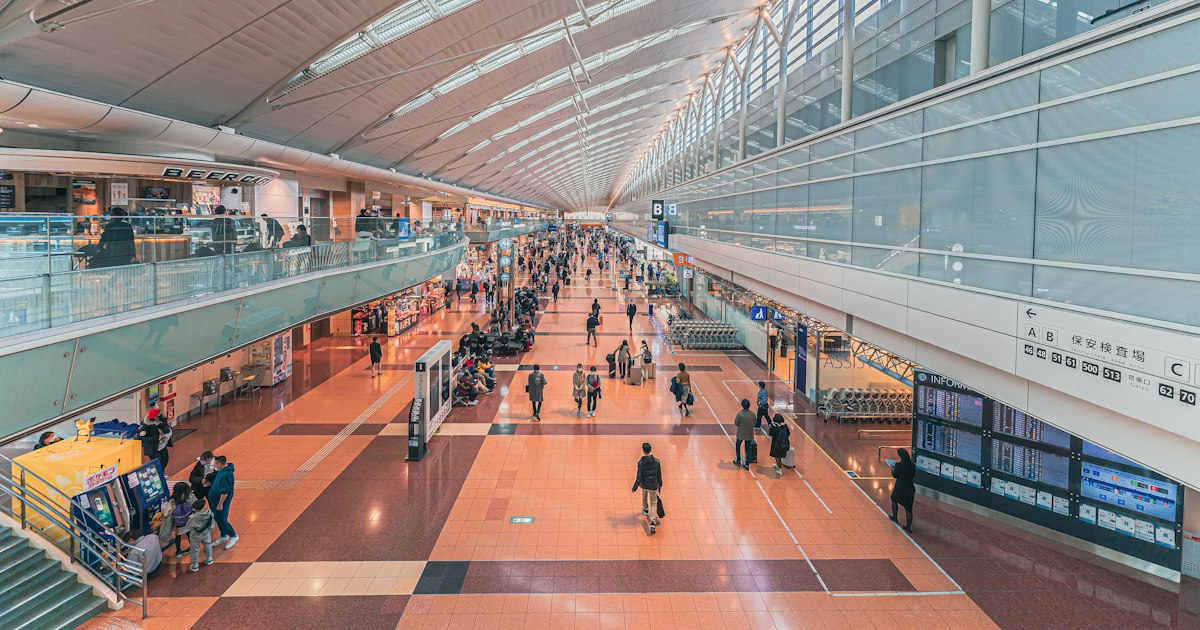
Photo by mos design on Unsplash
Haneda Airport’s Terminal 3 (formerly the International Terminal) is one of the most pleasant places in Japan to spend your last few hours before a long-haul flight. Unlike Narita, which sits an hour-plus outside central Tokyo, Haneda is close enough to the city that you can have lunch in Ginza and still make a 6pm flight with room to spare. But Terminal 3 is also deceptively large, and travelers who don’t plan their time well end up either sprinting to the gate or stuck in a mediocre chain restaurant because they didn’t know what else was there. Here’s what actually matters.
Getting to Terminal 3
Terminal 3 is served directly by both the Keikyu Line and the Tokyo Monorail, so you don’t need a shuttle bus like at some other terminals. From central Tokyo stations like Shinagawa, the Keikyu Airport Line takes about 15-20 minutes and costs roughly ¥300-330 one-way. The Tokyo Monorail from Hamamatsucho runs a similar time and price. If you’re coming from Shinjuku, Shibuya, or further out, the Limousine Bus is more comfortable with luggage and costs around ¥1,200-1,300, though it takes 45-75 minutes depending on traffic. Taxis from central Tokyo run ¥6,000-9,000 and are really only worth it for groups splitting the cost or very early/late departures when trains have stopped.
A common mistake: assuming all Haneda flights use Terminal 3. Domestic flights use Terminals 1 and 2, and while there’s a free shuttle bus connecting all three terminals (about 15 minutes between T2 and T3), budget extra time if you’re connecting from a domestic flight rather than assuming it’s a quick walk.
Lounges: Who Can Get In and What They Cost
If you’re flying business or first class on a oneworld, Star Alliance, or SkyTeam carrier, you’ll have access to the alliance lounges on the 4th and 5th floors after security — JAL’s Sakura Lounge and First Class Lounge, ANA’s Suite Lounge, and partner lounges like Cathay Pacific’s. These are genuinely excellent, with Japanese and Western hot food, sake and whisky bars in the premium lounges, and shower rooms.
For everyone else, Haneda has pay-per-use lounges that don’t require elite status or a specific airline ticket. The TIAT Lounge and similar facilities run roughly ¥3,000-5,500 for a few hours, depending on time of day and whether food is included, and can usually be booked same-day at the counter or in advance online. Priority Pass is also accepted at select lounges in T3 — worth checking before you fly if you hold a card that includes it, since it can make an otherwise ¥4,000 stop free. If you’re not flying premium and don’t have Priority Pass, the lounges generally aren’t worth the price just for wifi and snacks — the terminal’s own seating areas and restaurants cover that need for less.
Last-Minute Souvenir Shopping
This is where Terminal 3 genuinely shines compared to most airports. The departures floor (after security, 4th-5th floor) has a long stretch of shops replicating a traditional Edo-period street, called Edo Koji, alongside more conventional duty-free. A few notes on what’s actually worth buying here versus in the city:
- Cosmetics and skincare — Duty-free prices on brands like Shiseido and SK-II are often comparable to or better than in-town prices once tax refund is factored in, and the airport shops stock travel-friendly sizes. If you didn’t get a chance to pick up DHC or Fancl cleansing oil during your trip, Haneda’s drugstore-style shops usually carry both.
- Food gifts (omiyage) — Individually wrapped sweets like Tokyo Banana, Shiroi Koibito, and regional kit-kat flavors are all here, often at the same price as in the city. This is a fine place to grab last-minute boxes for coworkers if you ran out of time elsewhere.
- Rice and specialty pantry items — Less common at the airport, so if you were hoping to bring home Koshihikari rice or other specialty varieties, it’s better to buy that in town before you fly, since vacuum-sealed travel packs aren’t always in stock here and selection is limited.
- Traditional remedies and wellness items — A small number of shops sell kampo-adjacent wellness products, but the selection is nowhere near what you’d find at a dedicated kampo pharmacy in the city, so treat the airport as a backup, not the main stop.
Shops on the departures floor generally open around 7:00am and stay open until the last flight departs, usually 9:00-9:30pm, so hours line up with almost any international departure.
Food Before Your Flight
Terminal 3 has a solid food hall on the 5th floor called Tokyo Pop Town, with ramen, sushi, tempura, and a few izakaya-style counters that serve proper meals rather than airport-grade fast food. A bowl of ramen runs ¥1,000-1,300, and a sushi set is typically ¥1,500-2,500. If you want a sit-down final meal in Japan, this is a far better option than the chain cafes scattered through the terminal — budget travelers should note there’s no Saizeriya or CoCo Ichibanya at Haneda T3 specifically, so if you were hoping for one last cheap curry or pasta fix, that’s a city errand, not an airport one.
Timing and Security
Haneda’s international security and immigration lines move quickly compared to Narita, but that’s exactly why travelers underestimate how early to arrive. Plan to be at the airport 3 hours before departure for an international flight — earlier during peak seasons like late December, Golden Week (late April-early May), and mid-August, when both check-in counters and the shops get genuinely crowded. If you’re checking bags, double-check your airline’s weight allowance before you get to the counter; excess baggage fees at Haneda are charged at the same rates as elsewhere, and ANA and JAL’s excess baggage fees can run tens of thousands of yen if you’re over the limit, so it’s worth weighing your suitcase at the hotel beforehand rather than finding out at the counter.
Common Mistakes to Avoid
- Leaving duty-free liquid purchases (sake, cosmetics in large sizes) for after security assuming you’ll have time — queues at the registers can be long in the final hour before peak departures.
- Forgetting that some duty-free items must be collected at the gate rather than carried from the shop, which adds a few minutes to your boarding process.
- Not checking whether your connecting domestic flight into Haneda lands at T1/T2, since the inter-terminal shuttle bus adds 15-20 minutes you may not have budgeted.
- Assuming all restaurants take credit cards — most do, but a few of the smaller food hall counters are cash or IC card (Suica/Pasmo) only.
Overall, Terminal 3 rewards a bit of planning: know your lounge access ahead of time, do your real souvenir shopping in the city and treat the airport as backup, and arrive early enough that a slow security line or a last sake purchase doesn’t turn into a sprint to the gate.