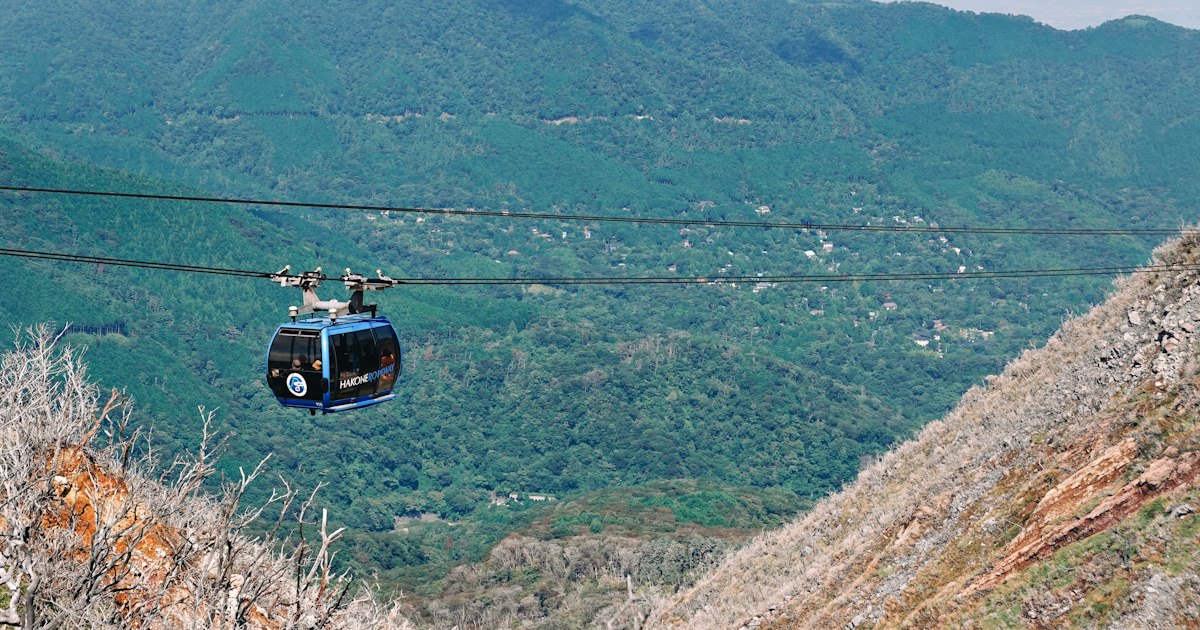
Tucked into the Okuhida Onsen region of northern Gifu Prefecture, the Shin-Hotaka Ropeway carries visitors from a forested valley floor to a wind-scoured observation deck at 2,156 meters in under 25 minutes — no hiking boots required. It’s the only “two-story” (double-decker) gondola in Japan, and the view from the top, a wall of jagged peaks in the Hida Mountains including Mt. Yakedake and the Hotaka range, is the kind of payoff that usually takes a full day of climbing to earn. Here’s how to actually plan the trip, not just admire the photos.
What Makes This Ropeway Different
Shin-Hotaka is actually two ropeway lines stacked end to end. The First Ropeway runs from Shin-Hotaka Onsen Station (elevation 1,117m) up to Nabedaira Kogen Station (1,308m), a short, unremarkable hop. The real attraction is the Second Ropeway from Nabedaira to Nishi Hotakaguchi Station at 2,156m — this is the double-decker gondola, with two full floors inside a single cabin, built to move large numbers of passengers quickly up a steep, high-altitude slope. The top station’s rooftop observation deck is the highest point in Japan you can reach entirely by cable car, and on a clear day you can see the Hotaka peaks, Yarigatake, and on exceptional days, all the way to the Sea of Japan side of the Alps.
How to Get There
Shin-Hotaka Onsen is remote, and that’s part of the appeal. The most common approach is via Takayama: from Takayama Nohi Bus Center, the Nohi Bus Okuhida line runs directly to Shin-Hotaka Onsen in roughly 90 minutes, with several departures a day (more in peak season, fewer in winter — check the Nohi Bus timetable before you go, since this is not a train route). If you’re coming from the Nagano side, Alpico buses connect Matsumoto to Shin-Hotaka via Hirayu Onsen, a transfer hub for several regional bus lines; the full trip takes around two to two and a half hours depending on connections. Driving is also straightforward if you have a rental car — there’s a paved parking area at the base station, though it fills up fast on autumn weekends and during Golden Week.
If your itinerary already has you in Gifu for Shirakawa-go or Takayama’s old town, Shin-Hotaka pairs naturally as a day trip, and it’s close enough to Toyama Prefecture that a bowl of Toyama black ramen makes a good detour on the way back if your route passes through that side.
Hours, Fares, and Tickets
The ropeway typically operates from around 8:30 AM to 4:00 PM, with the last ascent roughly 30 minutes before closing; hours extend slightly in peak summer and autumn foliage season and contract in winter. There are also scheduled maintenance closures in late autumn (usually a window in November), so always check the operating calendar for your exact travel dates rather than assuming it’s open — this is one of the few days a year it simply shuts down.
Tickets are sold as a through-fare covering both lines. As a rough guide, adult round-trip fare runs in the ¥3,600–4,000 range, with one-way tickets around half that, and discounted child fares roughly 50% off. Prices are revised periodically, so treat these as planning estimates and confirm the current fare at the ticket counter or official site before you budget your day. Tickets are sold on-site only (no reservation needed for individual travelers), but bring cash as a backup — rural mountain facilities in Japan don’t always have reliable card readers.
Best Time to Visit
Late April through early November is the comfortable window, with two standout stretches: early summer (June, before the rainy season peaks) for lush green valleys and clear morning skies, and mid-to-late October for autumn color on the slopes below the tree line. Winter (December–March) turns the summit into a genuine snowscape with rime-frosted trees, which is dramatic but cold and frequently cloud-bound — if you go in winter, aim for a morning departure, since cloud cover tends to build over the peaks by early afternoon. In any season, check the weather forecast for Okuhida (not just Takayama city) the morning of your visit; the base station can be sunny while the summit is socked in fog, and there’s no refund for a cloudy view.
What to Do at the Top
Nishi Hotakaguchi Station has an enclosed observation floor and an open-air rooftop deck — the rooftop is where the real view is, so don’t stop at the glassed-in level and assume that’s it. There’s a small shrine, a café, and a short, paved loop trail just outside the station that’s manageable in regular shoes if the ground is dry. Serious hikers use this station as a jumping-off point for routes toward Mt. Nishi-Hotaka and beyond, but those trails require proper mountain gear, are not casual walks, and should only be attempted by those with alpine hiking experience — this is genuine high-altitude terrain, not a park path. If you’re unsure of your fitness or the weather turns, the sensible move is to enjoy the observation deck and ride back down.
Common Mistakes to Avoid
- Underdressing for the summit: the base station sits in a warm valley, but the top is nearly 1,000 meters higher and regularly 10–15°C colder, with real wind chill even in summer. Bring a windbreaker or fleece layer regardless of the season.
- Treating it as an evening activity: last ascent is mid-to-late afternoon, and there’s no late-night access or illumination event at this ropeway — plan your visit for daytime hours and build in a buffer for bus schedules back to Takayama or Matsumoto, which thin out considerably in the evening.
- Skipping the weather check: cloud cover is the single biggest reason visitors leave disappointed. If the forecast shows heavy cloud over the Alps, consider rescheduling rather than paying for a ride into fog.
- Not planning for remoteness: cell coverage is patchy on the mountain, and services are limited. It’s worth knowing how to reach emergency services in Japan as a tourist before heading into any alpine area, even one as accessible as this.
Where to Stay and Eat Nearby
Shin-Hotaka Onsen and the wider Okuhida Onsen Go area are built around hot springs, so staying over turns this into more than a day trip. On a budget, look for simple minshuku (family-run guesthouses) near the base station from around ¥8,000–10,000 per person with breakfast. Mid-range travelers can book a ryokan with an open-air riverside bath (many in Okuhida have outdoor onsen literally carved into the rocks along the river) for roughly ¥15,000–25,000 per person with dinner included. For a splurge, several ryokan in the area offer private in-room baths and kaiseki dinners featuring Hida beef, running ¥30,000 and up per person. If your trip also takes you toward Shirakawa-go, that part of Gifu is known for its own rustic food and drink traditions, including the unfiltered home-brewed doburoku sake served at local festivals — worth working into the same loop if timing allows. Travelers who enjoy this kind of boardwalk-and-cable-car access to high-altitude nature might also want to compare it with Oze National Park’s wetland boardwalks, a very different but equally accessible slice of Japan’s alpine scenery.