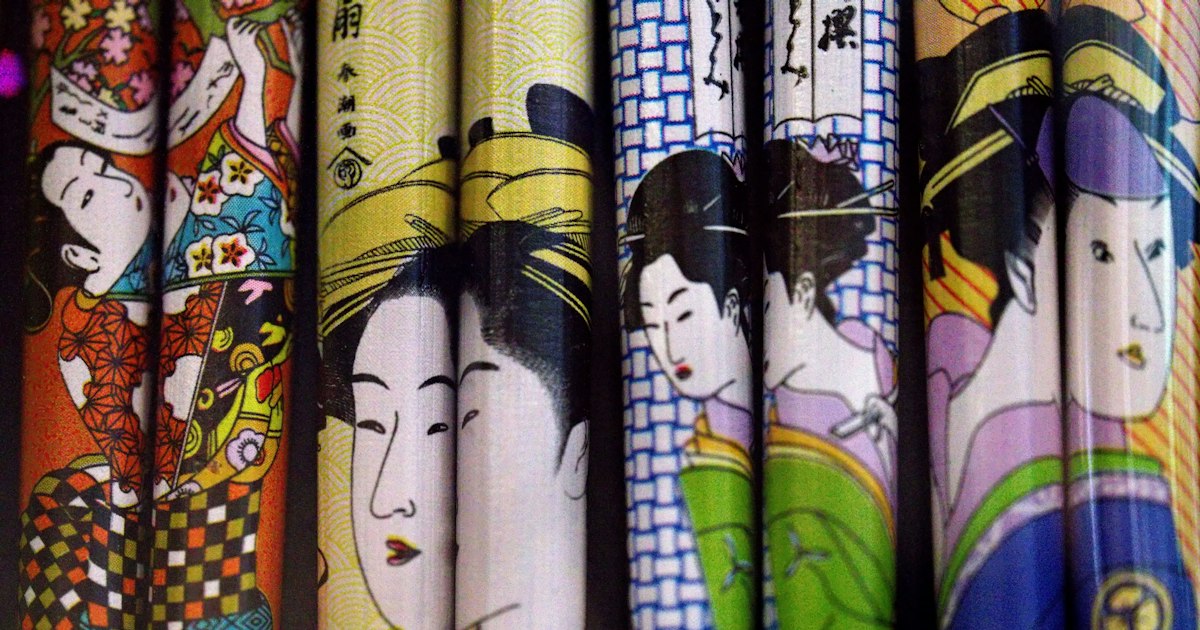
Photo by Danielle-Claude Bélanger on Unsplash
Chopsticks seem like the simplest souvenir you could bring home from Japan — until you’re standing in front of a wall of hundreds of them, in every length, wood, and lacquer finish imaginable, with prices ranging from 100 yen to 100,000 yen. Japan takes hashi (箸) seriously enough to have an entire town, Obama in Fukui Prefecture, built around one style of lacquerware chopstick. This guide walks through what actually separates a cheap set from a good one, where the famous regional styles come from, and how to buy something you’ll actually use rather than leave in a drawer.
Why Japanese chopsticks differ from Chinese or Korean ones
Japanese hashi are shorter and taper to a finer point than Chinese chopsticks, which are longer and blunter, and unlike Korean chopsticks they’re almost never made of metal. The pointed tip exists because Japanese food culture involves a lot of precision work — picking small bones out of grilled fish, separating rice grains, lifting delicate pieces of sashimi. That’s also why fish-eating households often own dedicated “fish chopsticks” that are thinner and more pointed than everyday pairs. If you’ve read our guide to yakiniku in Japan, you’ve already seen the other end of the spectrum: thick, disposable waribashi used for grilling, which prioritize grip and heat resistance over finesse.
Wakasa lacquerware: Japan’s chopstick capital
Obama City in Fukui Prefecture produces the vast majority of Japan’s lacquered chopsticks, a craft called Wakasa-nuri that dates back roughly 400 years. What makes it distinctive is the technique: layers of colored lacquer are built up over embedded materials like eggshell, seashell, or pine needles, then the surface is ground down and polished so those layers appear as a marbled, almost geological pattern. A single pair can involve over 20 coats of lacquer and take months to finish, which is why hand-finished Wakasa pieces cost far more than printed or dipped imitations.
You can visit the source at the Wakasa Nuribashi Kaikan (Wakasa Lacquerware Museum) in Obama, which has a retail floor plus hands-on workshops where you can polish or decorate your own pair for roughly 1,500–3,000 yen, finished the same day. It’s usually open 8:30am–5:00pm, closed around New Year’s; getting there from Kyoto takes about two hours by direct highway bus or JR limited express with a transfer, so it’s really a day-trip destination rather than a stop you fold into a Kyoto city itinerary. Late spring and autumn are the most comfortable times to visit, since Obama has hot, humid summers.
Other regional styles worth knowing
Wakasa isn’t the only name on the label. Echizen, also in Fukui, makes plainer but very durable lacquered hashi at a lower price point. Kishu lacquerware from Wakayama (also known for its own layered techniques) and Kaga-nuri from Ishikawa lean toward gold maki-e decoration rather than the marbled Wakasa look. If you’re already touring craft towns, this pairs naturally with a stop at Mashiko or Bizen for pottery — a good hashi-and-plate combination makes a more coherent souvenir than either item alone, and pairing lacquerware with stoneware is exactly how these are used in home dining in Japan.
Budget, mid-range, and splurge options
You don’t need to spend a lot to bring home something decent. Realistic price bands:
- Budget (100–800 yen): Painted or printed wood chopsticks from 100-yen shops, drugstores, or supermarkets. Fine for daily use, but the pattern is usually printed on rather than layered, and the tips wear down faster. Our guide to Gyomu Super and local supermarkets covers where to find these alongside groceries if you just want a functional set.
- Mid-range (1,500–5,000 yen): Machine-assisted Wakasa or Echizen lacquerware, natural wood (chestnut, cherry) with a few coats of lacquer or urushi-style resin, often sold in gift boxes at department stores and craft shops. This is the sweet spot for a souvenir that looks handmade and holds up for years.
- Splurge (8,000–50,000+ yen): Fully hand-applied maki-e or shell-inlay work, sometimes with your name lacquered onto the chopstick in gold. Specialty shops like Hashikoubou Shibata in Osaka or long-established hashi retailers in Tokyo’s Nihonbashi and Ginza districts stock these and will often engrave a name while you wait, similar to the personalization you’d get with a high-end Japanese fountain pen — another category where craftsmanship and personalization justify the price jump.
Sizing and material: what actually matters
Length is the detail most visitors skip and regret. Japanese hashi are traditionally sized to the user’s hand — measure from the tip of your thumb to the tip of your index finger when spread into an L-shape (called “ipponbune” sizing), then add about 1.5x that length; specialty shops will do this measurement for you on request. As a rough guide, women’s sets run 20–21cm, men’s 22.5–24cm, and children’s sets scale down from there. A too-long chopstick is hard to control; a too-short one feels cramped.
On material: natural lacquer (urushi) is more chip-resistant and ages well but is not dishwasher safe and shouldn’t soak in water. Cheaper polyurethane-coated sets tolerate dishwashers better but the coating eventually peels at the tip, which is the single most common complaint with budget chopsticks. If a set is going into daily rotation rather than a display shelf, ask specifically whether the finish is urushi or synthetic before you buy.
Common mistakes to avoid
- Buying disposable-style waribashi as a “traditional” souvenir. Those are meant for single use at restaurants, not lacquered as gifts — don’t confuse the two categories in a shop.
- Skipping the size check. A beautiful pair that’s the wrong length for the recipient’s hand won’t get used.
- Machine-washing hand-lacquered pieces. Even mid-range Wakasa lacquerware should be hand-washed and dried promptly; prolonged soaking dulls the polish.
- Assuming all “Wakasa-style” chopsticks are made in Wakasa. The name is sometimes used generically for the marbled-layer look even on pieces produced elsewhere; if provenance matters to you, check for a maker’s mark or ask the shop directly.
Whether you end up with a 300-yen pair from a supermarket rack or a hand-polished set from Obama with your name lacquered into the handle, the same rule applies to any Japanese craft souvenir, from tenugui hand towels to folding fans: buy it for how you’ll actually use it at home, not just how it looks on the shop shelf.