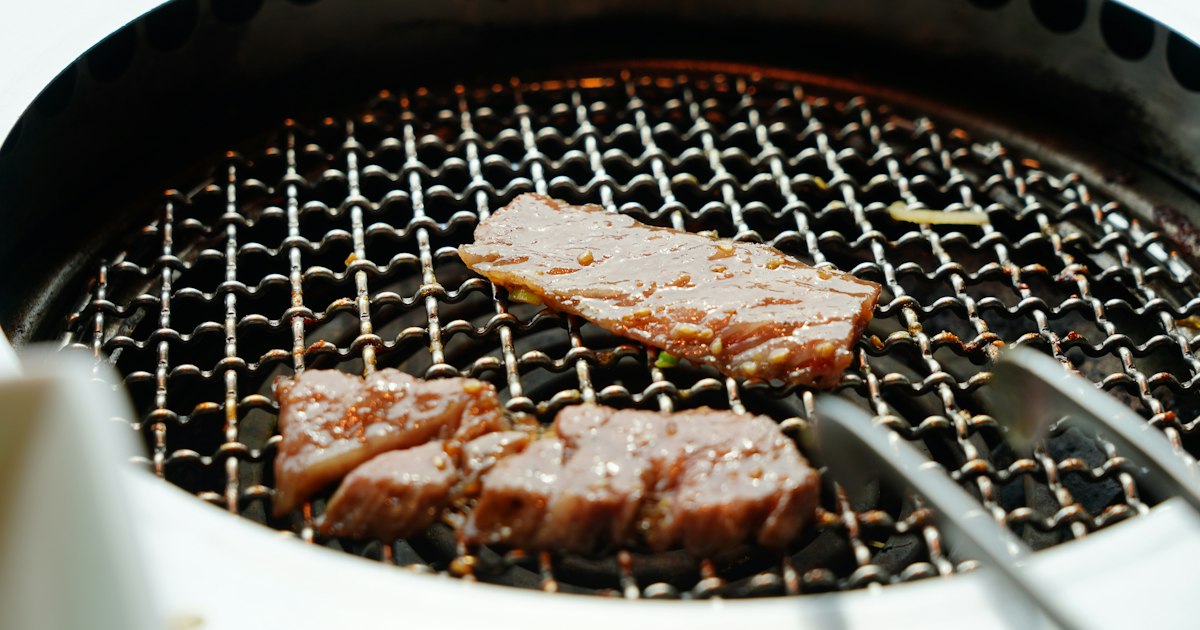
Yakiniku — literally “grilled meat” — is Japan’s answer to the barbecue table: thin slices of beef, pork, and offal cooked over a tabletop grill and dipped in tangy sauce. It’s one of the most approachable meals for visitors because you can see and control exactly what’s cooking, but the menus, sauces, and unwritten rules trip up a lot of first-timers. Here’s how to walk in, order well, and grill without embarrassing yourself.
What Yakiniku Actually Is (and How It Differs From Korean BBQ)
Yakiniku developed in Japan’s Korean communities in the 20th century and has since become thoroughly Japanese in style. Compared to Korean BBQ, portions are smaller and pricier per piece, cuts are sliced thinner, and the focus is squarely on beef quality — especially wagyu — rather than a huge spread of banchan-style side dishes. You’ll typically get one or two simple sides (kimchi, salad, cold tofu) rather than the dozen small plates common in Korea. Grills are usually gas or charcoal built into the table, with a small vent or duct overhead to pull away smoke.
How to Order: Cuts You’ll See on Every Menu
Menus are organized by animal and cut, and reading a few key words will get you far even without Japanese:
- Karubi (カルビ) — short rib, boneless and fatty. The classic starter cut, usually ¥600–¥1,500 per plate.
- Rosu (ロース) — loin, leaner than karubi with a cleaner beef flavor.
- Tan (タン) — beef tongue, often sliced thick and eaten with lemon and salt rather than sauce.
- Harami (ハラミ) — skirt steak, technically offal but tender and mild; a local favorite.
- Horumon (ホルモン) — offal (intestine, stomach), cheap and popular with regulars, less so with squeamish first-timers.
- Wagyu (和牛) — Japanese beef breeds like Kuroge Wagyu, sold at a premium; look for prefecture-branded versions like Omi, Hida, or Saga beef if you want a specific regional pedigree.
Most restaurants offer set courses (course or tabehodai for all-you-can-eat) alongside à la carte ordering — courses are the easier choice if you don’t want to decode a full menu.
How to Actually Grill It
A few habits separate a good yakiniku meal from a burnt or undercooked one:
- Don’t overcrowd the grill. Cook in small batches so each piece touches hot metal, not other meat.
- Flip once. Thin slices (2–4mm) cook in 30–90 seconds per side over a hot grill. Constant flipping dries the meat out.
- Cook fatty cuts (karubi) before lean ones (tan, rosu) so the grill isn’t coated in char before your delicate cuts go on.
- Use the tongs provided for raw meat, and separate ones (or chopsticks) for eating — many restaurants supply two sets specifically to avoid cross-contaminating cooked food with raw meat juices. This is one of the most common visitor mistakes.
- Change or scrape the grill grate when it gets black with residue; staff usually swap it if you ask (“abura-ami, kōkan onegaishimasu” — “please change the grill mesh”).
Sauces and Sides
Tare (タレ), the sweet-savory soy-based dipping sauce, is the default at most tables, but good shops also offer shio (salt) and miso-based options — ask for tan shio (salted tongue) specifically, since tongue is almost always served this way rather than with tare. Garlic chips, grated daikon with ponzu, and a squeeze of lemon are common counterpoints to rich, fatty cuts. Rice, cold reimen (Korean-style cold noodles), or a simple soup usually round out the meal — order rice partway through rather than at the start, since it works best alongside grilled meat rather than before it.
Budget, Mid-Range, and Splurge Options
Yakiniku spans an enormous price range:
- Budget (¥2,000–¥3,500 per person): Chain restaurants like Gyu-Kaku, Yakiniku King, or Anan offer all-you-can-eat (tabehodai) courses, often 90–120 minutes, heavy on karubi and rosu with unlimited drinks (nomihodai) as an add-on for roughly ¥1,000–¥1,500 more.
- Mid-range (¥4,000–¥8,000 per person): À la carte neighborhood yakiniku-ya with better sourcing, more offal variety, and attentive service. Common in areas like Tsuruhashi in Osaka (Osaka’s historic Korean-Japanese yakiniku district) or Shin-Okubo in Tokyo.
- Splurge (¥10,000–¥20,000+ per person): Specialty wagyu restaurants serving A5-graded beef, often omakase-style with no printed prices, or set courses that walk through a progression of cuts. Worth it once for the marbling texture alone.
Timing, Hours, and Getting a Table
Most yakiniku restaurants open for dinner around 17:00–17:30 and run until 23:00–24:00, with some chains also open for lunch (11:00–14:00) offering cheaper set lunches (¥1,000–¥1,500). Weekend dinner slots at popular spots fill up, so reserve a few days ahead if possible, especially for parties of four or more — many restaurants take reservations by phone only, so ask your hotel concierge to call if you don’t speak Japanese. Summer is peak yakiniku season in Japan (there’s even a “Yakiniku Day” on August 29, a pun on the numbers 8-2-9 sounding like “niku”), but it’s a satisfying meal any time of year, including as a warming dinner in winter.
Common Mistakes to Avoid
- Ordering too much at once. Start with 2-3 cuts per person and reorder — meat is best grilled fresh, not sitting on a plate going cold.
- Ignoring the exhaust duct position. Push smoky items toward the vent rather than letting smoke drift toward other diners.
- Skipping the raw-meat tongs rule. Reusing raw-meat tongs to eat is a genuine hygiene lapse, not just etiquette.
- Assuming tabehodai means unlimited time. Most all-you-can-eat courses have a strict time limit (often 90–100 minutes) with a last-order cutoff — watch the clock.
If you’re building out a broader food itinerary around Japan, pairing a yakiniku dinner with something lighter earlier in the day — like onigiri for lunch or a stop for taiyaki for dessert — keeps the day from feeling too heavy. And if you’re stocking up on Japanese seasonings or sauces to recreate tare at home, a browse through a local supermarket like Gyomu Super is worth the detour before you fly home.