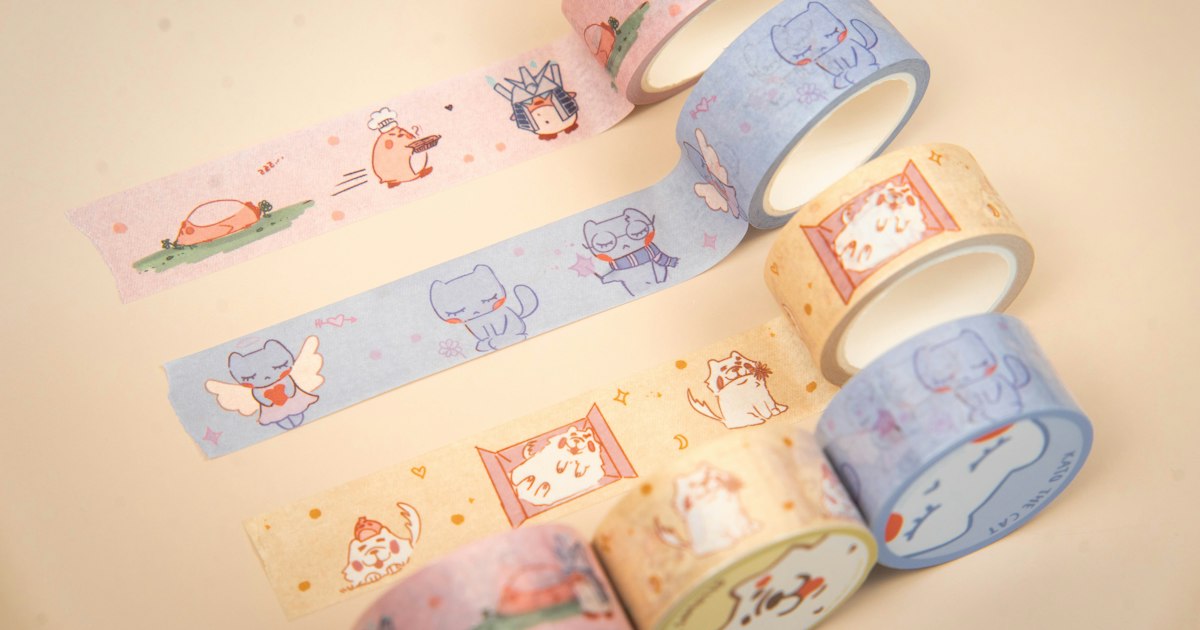
Photo by Madeline Liu on Unsplash
If you’ve ever seen rolls of patterned paper tape stacked like candy in a Tokyo stationery shop, you’ve found washi tape — one of Japan’s most addictive, lightweight souvenirs. It’s cheap, it packs flat, and it comes in thousands of designs, from indigo dye patterns to tiny Shiba Inu dogs. But not all washi tape is equal, and knowing which brands started the craze (and which are just imitating it) will save you money and disappointment.
What Makes Washi Tape Different From Regular Tape
Washi tape is made from washi — traditional Japanese paper, often derived from mulberry or similar plant fibers — coated with a low-tack adhesive. That weak adhesive is the whole point: it’s designed to be torn by hand (no scissors needed), repositioned, and peeled off cleanly from most surfaces without leaving residue. It’s not a strong packing or mounting tape, and treating it like one is the single most common disappointment first-time buyers run into.
Standard rolls are usually 15mm wide, though you’ll find skinny 7mm rolls and wide “deco” rolls up to 50mm or more. A typical roll holds 5–10 meters of tape.
mt: The Brand That Started It All
The modern washi tape boom traces back to one company: Kamoi Kakoshi, an industrial masking tape manufacturer based in Kurashiki, Okayama Prefecture, that has been making adhesive tape since the 1920s. In 2008, the company repackaged its factory know-how into a consumer product called “mt” (short for masking tape), aimed at designers and crafters rather than construction sites. It’s widely credited with turning masking tape into a design object, and the brand remains the benchmark everyone else is compared to.
mt rolls typically run about ¥200–250 for a single 15mm x 10m roll, with boxed sets of 2–3 rolls around ¥450–700. Wider deco rolls and special textured or foil finishes run ¥450–700 each. Kurashiki itself is worth the detour if you’re already routing through Okayama — the city’s Bikan Historical Quarter of canal-side warehouses is a pleasant half-day stop, and local stationery and souvenir shops there stock mt tape alongside Kurashiki-specific designs you won’t find in Tokyo. Okayama Station is a shinkansen stop on the Sanyo line, so if you’re coming from Osaka or Hiroshima, check how to book Shinkansen tickets online before you go, and keep in mind that Japan’s transfer rules are more forgiving than you’d expect if your connecting train runs late.
Other Brands Worth Seeking Out
Once you start looking, the shelf gets crowded fast. A few names are worth knowing:
- Classiky — a Himeji-based brand known for muted, vintage-feeling colorways and retro European-inspired patterns. Pricier than most, but the color palettes are genuinely distinct.
- BGM — known for foil-accented and glitter tapes, popular for scrapbooking and gift wrapping; usually ¥300–450 per roll.
- Shinzi Katoh Design — illustrated, character-driven designs aimed at a younger or gift-buying crowd.
- Craft Design Technology — minimalist, monochrome and single-color tapes for people who want function over cuteness, sold at design-focused shops like Loft.
- Daiso’s house brand — not a design label so much as the budget option, but genuinely usable for everyday wrapping and labeling.
A quick way to spot a “real” washi tape versus a cheap plastic-film imitation sold in some airport gift shops: genuine paper tape tears cleanly by hand with a slightly fibrous edge and has a matte, slightly textured surface. Shiny, stretchy tape that resists tearing is usually a PVC tape dressed up with a washi-style print.
Where to Buy It
You don’t need to hunt — washi tape is sold everywhere stationery is sold in Japan.
- Itoya (Ginza, Tokyo) — the 12-floor flagship “G. Itoya” near Ginza Station has a dedicated stationery floor with one of the city’s deepest washi tape selections, including limited designs. Open daily, roughly 10:00–20:00.
- Tokyu Hands and Loft — nationwide chains (branches in Shibuya, Shinjuku, Umeda, and most major cities) with large tape walls covering mt, BGM, and in-house lines. Typically open 10:00–21:00.
- Sekaido (Shinjuku, Tokyo) — an art-and-stationery megastore near Shinjuku Station with competitive prices and a huge selection; open daily, roughly 10:00–20:00.
- Daiso — for the budget end, any branch will have a basic rack, usually ¥110–220 per roll including tax.
Department store stationery floors (Tokyu, Isetan, Loft outposts inside them) are also reliable, especially if you’re already shopping for other Japanese souvenirs — it’s easy to combine a stationery stop with a browse through gift-worthy skincare, like our guide to Japanese hand cream and lip balm brands, or edible souvenirs such as our furikake buyer’s guide.
Budget, Mid-Range, and Splurge Picks
- Budget (¥110–220/roll): Daiso’s house-brand tape. Fine for everyday wrapping, journaling, and labeling; designs are simpler and the paper is slightly thinner than name brands.
- Mid-range (¥200–350/roll): Standard mt rolls and Craft Design Technology. This is the sweet spot for most souvenir shopping — good paper quality, huge design range, widely available.
- Splurge (¥450–1,000+): Limited-edition collaborations (mt has done collabs with artists and museums over the years), Classiky’s vintage sets, foil and glitter BGM rolls, and boxed gift sets. These make better gifts than personal craft supplies, since you’re partly paying for packaging and novelty.
Common Mistakes to Avoid
Don’t buy washi tape expecting it to hold heavy objects or survive outdoor weather — it’s a decorative, repositionable tape, not a structural one. Don’t assume every “washi-style” tape sold in tourist-heavy areas (airports, train station kiosks) is the real paper product; check that it tears cleanly by hand rather than stretching. And don’t overbuy single rolls at souvenir-shop markups when the same mt or Classiky designs are usually cheaper at Loft, Tokyu Hands, or Itoya — tourist gift shops near major temples sometimes charge ¥100–200 more per roll for identical stock.
Best Time to Shop
Washi tape isn’t seasonal the way food or clothing is, but brands do release seasonal print runs — sakura pastels in spring, autumn-leaf colorways around November, and Christmas or New Year designs from late November through December. These limited runs sell out at flagship stores first, so if a specific seasonal pattern catches your eye, buy it on sight rather than planning to come back later in the trip.