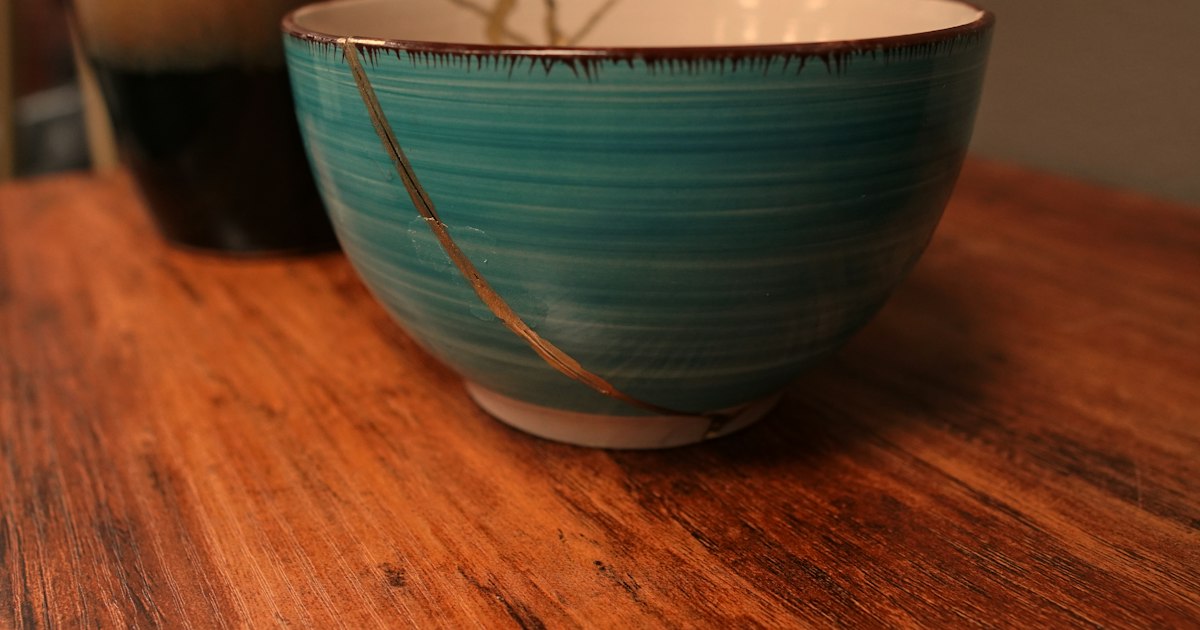
Photo by Matt Perkins on Unsplash
Kintsugi — literally “golden joinery” — is the Japanese craft of mending broken pottery with lacquer dusted or mixed with gold, so the crack becomes a visible, celebrated seam rather than a flaw to hide. It’s one of the easiest Japanese crafts to actually bring home and practice, because unlike indigo dyeing or woodblock printing, a starter kit fits in a tote bag and costs less than a hotel dinner. Here’s what’s actually in these kits, which kind you should buy, and where to find one in person rather than gambling on an unverified listing online.
Real Urushi Kintsugi vs. “Easy” Epoxy Kits
This is the single most important thing to understand before you buy anything, because the two products are completely different crafts wearing the same name.
Honkintsugi (traditional kintsugi) uses real urushi lacquer, made from the sap of the lacquer tree. It’s food-safe once fully cured, genuinely durable, and historically correct — but it’s also slow. Urushi needs high humidity (roughly 70–85%) and warmth to cure, with each layer taking several days to a few weeks, and the raw sap can cause a nasty skin rash (similar to poison ivy) if it touches bare skin. A full honkintsugi kit with real gold powder, urushi, and the proper brushes typically runs ¥8,000–¥20,000.
“Simple kintsugi” (kanni kintsugi) kits substitute a food-safe epoxy or synthetic resin for the lacquer and brass or mica powder instead of real gold. These cure in hours, don’t require humidity control, and are the ones sold at souvenir shops and department stores aimed at tourists and beginners. Expect ¥2,000–¥5,000 for a starter set. For a first attempt, or for mending something you’ll actually eat off again soon, this is the sensible choice — honkintsugi is worth graduating to once you’ve broken a few practice pieces.
Where to Buy One in Tokyo
You don’t need to hunt through back alleys; a handful of reliable spots stock beginner kits:
- Bikoen (Kappabashi, Taito-ku) — a lacquerware specialist near the kitchen-supply street Kappabashi, with genuine urushi kits and loose materials (gold powder, brushes, lacquer) sold separately if you want to assemble your own kit. Open roughly 9:00–17:00, closed Sundays. Kappabashi is a short walk from Tawaramachi Station on the Ginza Line, and easy to combine with a day exploring nearby Asakusa.
- Tokyu Hands or Loft branches — both chains stock the simple epoxy-based kits (brands like “Tsugu Kit” or similar) for ¥2,500–¥4,000 in their craft/hobby sections. The Shibuya and Shinjuku flagship stores are the most reliable for stock.
- Kintsugi workshops — several studios in Tokyo (Yanaka and Kagurazaka have a few) run 2–3 hour sessions where you repair a piece on-site using real urushi and take home both the piece and the leftover materials, effectively doubling as a kit purchase plus a lesson. Expect ¥6,000–¥12,000 per session, usually requiring reservation a few days ahead through their websites.
If Tokyo’s layout has you turning your phone in circles trying to find these shops, it helps to understand how Japanese addresses work before you go — block-and-building numbering doesn’t follow street logic, and Kappabashi’s shopfronts are numbered in a way that confuses first-timers using GPS alone.
Kanazawa: The Gold-Leaf Capital
If your trip includes the Hokuriku region, Kanazawa produces roughly 99% of Japan’s gold leaf, which makes it the single best place to buy both kintsugi kits and standalone gold powder at better prices than Tokyo. Shops around the Higashi Chaya geisha district sell gold-leaf kintsugi sets starting around ¥3,000, and several let you watch gold being hammered to paper-thinness before you buy. It also pairs naturally with a side trip to Toyama: if you’re already chasing traditional metalwork, Takaoka Dōki’s 400-year-old copper and bronze casting town is less than an hour away by train and scratches a similar “watch a centuries-old craft in person” itch.
Common Mistakes First-Timers Make
- Buying real urushi without checking the humidity requirement. If you’re repairing something at home in a dry climate or winter heating, honkintsugi simply won’t cure properly — go with an epoxy kit instead, or expect to build a makeshift humidity box (a sealed container with a damp towel works).
- Touching raw urushi sap with bare hands. Always use the gloves included in genuine kits. The rash can take over a week to resolve and sometimes needs medical attention.
- Rushing the layers. Both the mixing/binding layer and the gold-dusting layer need to set before moving on; applying gold powder onto still-wet lacquer just makes a smudge rather than a clean seam. Kits include timing instructions in Japanese — a translation app pointed at the box works fine if the kit doesn’t have English instructions.
- Trying it on a cherished heirloom first. Practice on a cheap thrift-store bowl or a deliberately dropped plate before attempting your grandmother’s teacup. The technique has a learning curve, and mistakes are hard to undo cleanly.
Budget, Mid-Range, and Splurge Picks
- Budget (¥2,000–¥4,000): A simple epoxy-resin kit from Tokyu Hands, Loft, or a souvenir shop near any major station — enough to mend two or three small items with brass-toned powder.
- Mid-range (¥6,000–¥12,000): A guided workshop session using real urushi, where you leave with a finished piece and materials to practice again at home.
- Splurge (¥15,000+): A full honkintsugi set from a specialist like Bikoen with real 24k gold powder, premium brushes, and enough urushi for several repairs — the version serious hobbyists eventually buy once the basics click.
Kintsugi has the nice side effect of turning travel souvenirs into a habit rather than a one-time purchase — a kit that mends five or six broken items over a year is far better value than a single trinket. And if you’re the type who likes bringing home a hands-on Japanese skill rather than just an object, it sits well alongside other learn-it-yourself souvenirs like a soba-making class or a traditional game set like hanafuda cards — small, durable pieces of the trip that keep giving you something to do with it after you’re home.