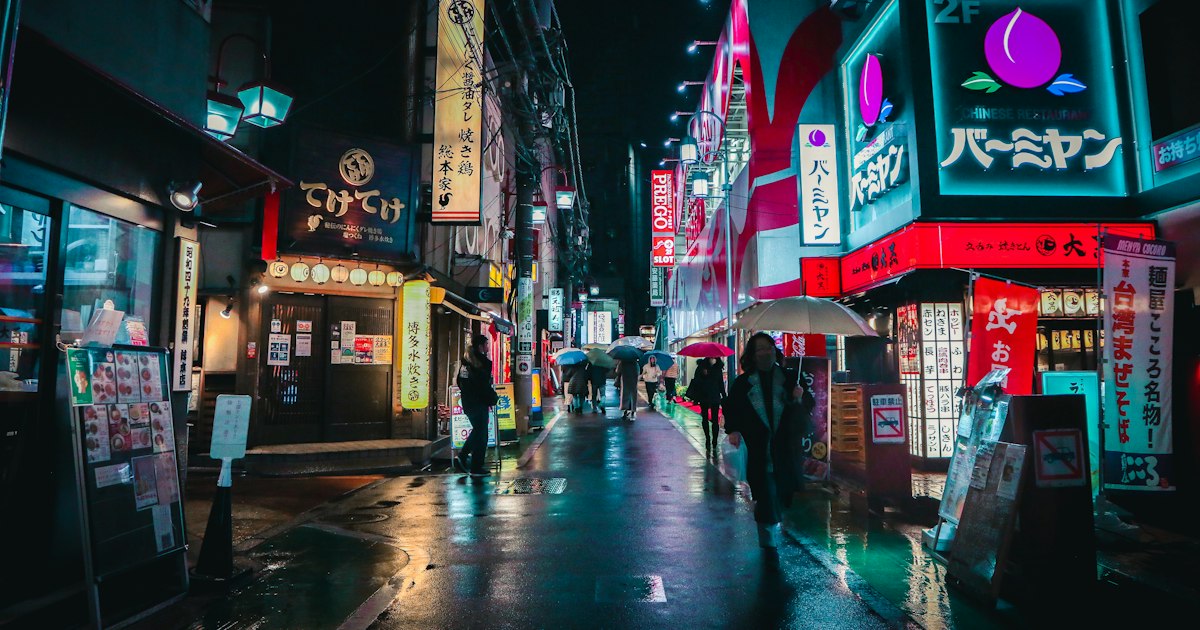
Walk past an unmarked building in Shinjuku, Ikebukuro, or a backstreet in Osaka and you might hear the unmistakable clack of plastic tiles drifting down a stairwell. That’s a jansou (雀荘) — a dedicated mahjong parlor — and Japan has thousands of them, mostly built for regulars who’ve been playing the same four-player game for decades. The good news for visitors is that a growing number of parlors now welcome walk-in beginners and even foreigners who’ve never touched a tile. Here’s how to actually find a seat, what it costs, and how to avoid the awkward moments that trip up first-timers.
What Is a Jansou, Exactly?
A jansou is a small, usually smoke-filled room (or several floors of rooms) lined with automatic mahjong tables — machines that shuffle, stack, and build the four walls of tiles for you at the push of a button, so even complete beginners can sit down and start playing within minutes. Traditionally these parlors catered to middle-aged salarymen playing for small cash stakes, which sits in a legal gray zone in Japan. Because of that, almost every modern parlor you’ll encounter as a tourist runs on a flat time-based “seat fee” (卓代, takudai) rather than cash winnings — you pay for your hour at the table, not for your score.
Since the mid-2010s, a parallel category called “healthy mahjong” (健康麻将, kenkō mahjong) has spread rapidly. These are bright, non-smoking salons aimed at retirees and beginners, often doubling as community centers with free tea, no gambling of any kind, and staff happy to explain rules from scratch. They’re by far the easiest entry point for a visitor.
Can Tourists Actually Play?
Yes, but with two caveats. First, mahjong needs four players (occasionally three with adjusted rules), so you can’t just show up solo and expect a game unless the parlor has staff or regulars available to fill seats — call ahead or go with at least three friends. Second, Japanese riichi mahjong uses scoring (han and fu) and hand values that differ noticeably from American, Hong Kong, or Chinese mahjong, so even experienced players from other countries should expect a short rules briefing.
Look specifically for parlors that advertise “初心者歓迎” (beginners welcome) or “外国人OK” (foreigners OK) — these terms appear on signage and on parlor listing sites. A few spots in Tokyo now offer English-language rule sheets and staff who’ll sit in as your fourth player, which is the single easiest way to get an authentic game without needing fluent Japanese.
Where to Find Tourist-Friendly Parlors
Takadanobashi Station in Shinjuku ward, reachable via the Toei Oedo Line, is Tokyo’s unofficial mahjong district — a legacy of its location near Waseda University, where generations of students turned the neighborhood into a cluster of dozens of parlors packed into a few blocks. It remains the densest concentration of jansou in the country, with everything from grimy old-school rooms to newer, cleaner salons aimed at casual players.
Ikebukuro and Shinjuku’s Kabukicho area also have multiple parlors, often tucked into upper floors of nondescript entertainment buildings with small, easy-to-miss signage — a good reminder of how confusing Japanese building numbering can be for first-time visitors; it’s worth skimming how Japanese addresses work before you go hunting for a specific floor number. Outside Tokyo, Osaka’s Namba and Umeda districts and Nagoya’s Sakae area have their own clusters, though they’re less visitor-oriented than Takadanobashi.
If navigating in Japanese feels daunting, mahjong-themed board game cafes in Shibuya and Shinjuku are an easier middle ground — they rent automatic tables by the hour, serve drinks and snacks, and are used to walk-in groups of friends rather than regulars expecting serious play.
How Much It Costs
Pricing is almost always per person, per hour, and typically includes unlimited soft drinks from a self-serve “drink bar.”
- Budget (¥500–800/hour): Healthy mahjong salons and residential-area jansou — no smoking, no stakes, beginner-friendly, sometimes with a one-time first-visit registration fee of a few hundred yen.
- Mid-range (¥1,000–1,500/hour): Dedicated parlors in entertainment districts like Takadanobashi or Ikebukuro, with newer automatic tables and staff available to join as a fourth player for an extra fee.
- Splurge (¥3,000–5,000+/hour): Private room rental for your own group, booking an entire table exclusively, or mahjong-themed bars that charge a cover charge plus table time alongside cocktails.
Most parlors are cash-only, especially older ones, so bring enough yen — don’t assume a card machine will be on-site.
Opening Hours and Best Times to Go
Most jansou open around 11am–noon and run until midnight or later; a number in Shinjuku and Ikebukuro’s entertainment zones stay open 24 hours to accommodate shift workers and night owls. Weekday afternoons are the quietest and most relaxed time to visit as a beginner, since evenings and weekends fill up with regulars who play fast and expect everyone else to keep pace. There’s no real seasonal angle here — mahjong is an indoor, year-round activity — but it’s a genuinely good option on a rainy afternoon or during the muggiest stretch of summer when you want air conditioning and something to do besides sightseeing.
Watching Instead of Playing
If you’d rather observe than play, Japan’s professional mahjong league, M.LEAGUE, has run since 2018 and streams matches online, featuring top pros competing in a structured team format — a good way to see high-level riichi mahjong in action even if you don’t understand every scoring call. Several mahjong bars and cafes in Tokyo project these broadcasts on big screens for regulars to watch while playing their own games, which is a low-pressure way to pick up strategy by osmosis before sitting down at a table yourself.
Common Mistakes to Avoid
- Showing up solo without warning: most parlors need advance notice to arrange a fourth player for a walk-in guest.
- Assuming it’s non-smoking: many older, traditional jansou still allow smoking in at least part of the room despite Japan’s 2020 indoor smoking law changes — ask for a “kinen” (non-smoking) table if it matters to you.
- Expecting your home rules: Japanese riichi scoring is its own system; don’t assume Chinese, American, or Hong Kong mahjong rules will translate directly.
- Treating it like a casino: betting real cash is not something tourists should attempt — stick to parlors charging a flat time-based seat fee.
- Walking into a members-only room: some neighborhood jansou genuinely are closed to non-regulars; stick to places that explicitly market themselves as beginner- or visitor-friendly.
Bringing a Mahjong Set Home
If playing a round or two leaves you wanting your own set, Japanese mahjong tiles — often in lacquered boxes with engraved bone-style or acrylic tiles — are sold at hobby shops, department stores, and specialist retailers in electronics and game districts. Secondhand and vintage sets, including older ivory-look tile sets and antique boxed sets, regularly turn up on Yahoo Auctions Japan for collectors willing to arrange shipping. Mahjong sets are generally compact enough to check into luggage, but if you’re buying anything bulkier or picking up several souvenirs on the same trip, it’s worth checking Japan’s duty-free allowance rules before you leave. And if mahjong sparks a broader interest in traditional Japanese games, the flower-card game hanafuda makes an easy, lightweight companion souvenir — far easier to pack than a full tile set.