Photo by Margo Evardson on Unsplash
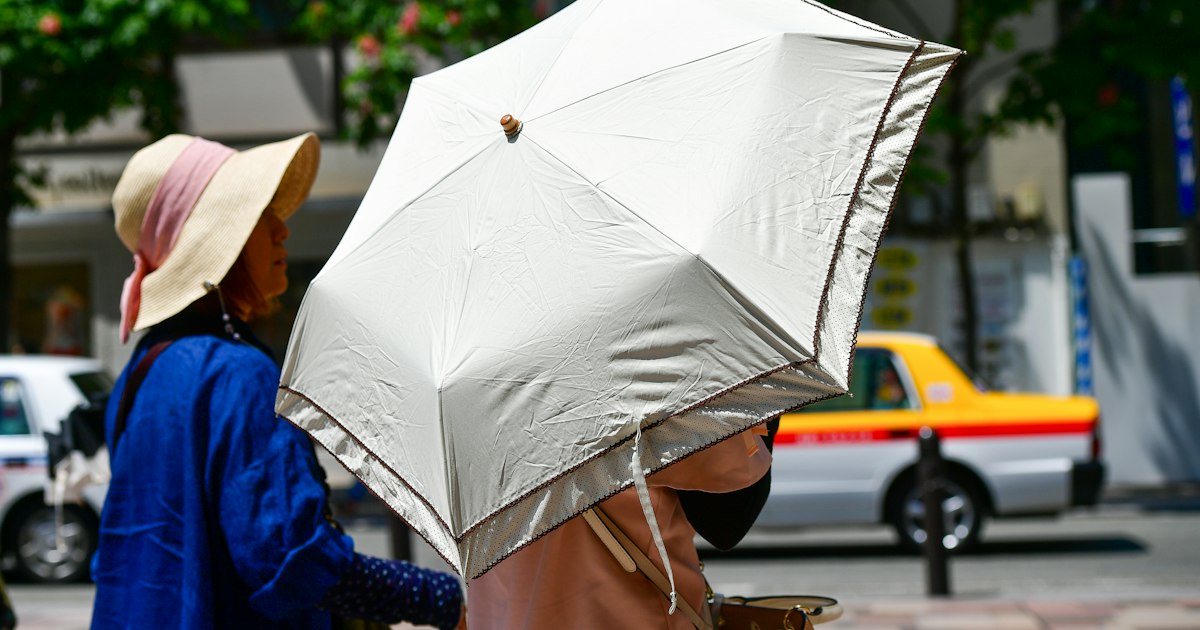
Walk through any Japanese city between May and September and you’ll notice something: a huge number of women (and a growing number of men) carrying parasols on days without a cloud in the sky. This isn’t fashion-forward umbrella use — it’s a higasa (日傘), a folding sun parasol designed to block UV rays and heat rather than rain. For visitors dealing with Japan’s brutal summer humidity and sun, a good higasa is one of the most useful things you can buy in the country, and also one of the best souvenirs to bring home. Here’s what they actually do, what they cost, and where to find one.
What a higasa actually does (and how it’s different from a rain umbrella)
A true higasa is coated or woven with a UV-blocking layer, usually rated as cutting 99% or more of UV rays, and the better ones are also coated black or silver on the underside to reflect heat rather than just shade you. Japanese brands print the cut rate directly on the umbrella or its tag — look for “UVカット率99%以上” or “遮光率100%” (light-blocking rate). Some are rain-and-sun dual-use (“晴雨兼用” / seiu-kenyou), which is what most tourists actually want, since it means you don’t need to carry two umbrellas. A plain black umbrella from a convenience store will NOT have real UV protection — it just looks dark.
Where to buy one: budget options (¥1,000–¥3,000)
For a functional, decent UV-cut folding umbrella, you don’t need a specialty shop:
- Daiso and Seria (100/300-yen shops): Basic folding UV umbrellas run ¥500–¥1,100. Coverage and durability are modest, but fine for a short trip. Check the tag for the actual UV-cut percentage — some are closer to 90% than 99%.
- Drugstores (Matsumoto Kiyoshi, Sundrug, Tsuruha): Slightly better quality, ¥1,500–¥2,500, often with reflective silver coating on the underside.
- Muji: Simple, minimalist folding parasols around ¥2,000–¥3,500, reliably well-made and easy to pack flat in a bag.
Mid-range: proper UV parasols (¥3,000–¥10,000)
This is the sweet spot for most travelers who want something that genuinely cuts heat, not just UV. Two brands to look for:
- Wpc. (World Party Co.): Japan’s most popular everyday UV-parasol brand, sold at Tokyu Hands, Loft, and department stores. Their “Unnurella” dual-use line and lightweight folding models run ¥3,500–¥7,000 and come in dozens of patterns, including transparent-panel styles that let you see the sky.
- Mont-bell “Sun Block” umbrellas: Outdoor-brand build quality, genuinely cooler under the canopy thanks to a titanium/silver coating, ¥5,000–¥9,000. Sold at Mont-bell stores and their website.
- Department store basement/1st-floor accessory counters (Isetan, Takashimaya, Daimaru) carry mid-to-premium brands like Kiu and Suzuran, generally ¥4,000–¥8,000, with staff who can explain cut rates in English-friendly terms at major Tokyo and Osaka flagship stores.
Splurge: handmade wagasa-style parasols (¥15,000–¥50,000+)
If you want a genuine craft piece rather than a practical tool, look into wagasa — traditional Japanese umbrellas with bamboo ribs and washi or cotton canopies, some now made with UV-cut coatings for actual outdoor use rather than purely decorative display. Kyoto is the center of this craft:
- Hiyoshiya (日吉屋) in Kyoto is the best-known maker still producing modern UV-cut wagasa by hand, with pieces typically ¥20,000–¥45,000. They also do shorter factory/showroom visits by appointment where you can see the bamboo ribbing assembled. It’s a short walk from the Karasuma or Kyoto Shiyakusho-mae subway stations in central Kyoto — worth checking their current hours before visiting, as traditional craft ateliers often close for lunch or on irregular weekdays.
- Kyoto’s Nishijin and Gojo-zaka craft shops occasionally stock smaller workshops’ wagasa alongside kimono and textile goods; prices vary widely and bargaining isn’t customary, but ask whether the piece is rain-safe if you want daily use rather than display.
If you’re also hunting for other Japanese handicrafts to bring home at this price tier, the approach is similar to shopping for Satsuma Kiriko cut glass — buy from the maker or a reputable specialty shop rather than a generic souvenir store, and ask directly about care instructions before you leave.
Best season and timing to buy
Parasols go on sale in Japan from roughly late April through September, with the widest selection in May and June, right before the worst of the heat hits in July–August. If you’re traveling in April, shops may still be stocked mostly with rain umbrellas; by October, UV parasols get discounted and shelved for the season, which is actually a good time to grab a budget one cheaply if you don’t mind last season’s patterns. Peak summer afternoons (July–August, roughly 11am–4pm) are when you’ll most appreciate having bought one on day one rather than day three.
Common mistakes to avoid
- Buying “cute” over functional. Pastel and white canopies look nice but transmit more heat than dark colors with a reflective underside. For actual cooling, a black exterior with silver/aluminum interior coating outperforms light colors.
- Assuming any dark umbrella has UV protection. Always check for a printed UV-cut percentage; novelty umbrellas sold at tourist souvenir stands often have none.
- Not checking rain compatibility. If you only want to carry one umbrella for the whole trip, confirm it’s labeled 晴雨兼用 (seiu-kenyou) — sun-only parasols can be damaged by rain.
- Packing it in checked luggage for the flight home. Full-size folding umbrellas are fine in carry-on; just note that if you buy a wagasa with a rigid wooden handle, it may not collapse as small as you expect — measure before you fly, and see the general rules in Japan’s duty-free allowance guide if you’re buying several as gifts.
Where to actually find the shops
Tokyu Hands (now “Hands”) and Loft locations in Shibuya, Shinjuku, and Ikebukuro are the easiest one-stop browsing spots — both carry Wpc. and several competing brands side by side so you can compare UV-cut ratings in person. In Kyoto, craft shops for wagasa tend to use traditional machiya-style addresses that don’t follow a simple grid, so it’s worth reviewing how Japanese addresses work before you go, or just navigate with a pinned map location rather than the written address. Department stores are the safest bet if you want air conditioning, English-speaking staff, and a tax-free counter all in one stop.
A UV-cut parasol isn’t just a souvenir — it’s genuinely one of the most comfort-improving ¥3,000 you can spend on a summer Japan trip. Buy one on day one, and you’ll wonder why more visitors skip it.