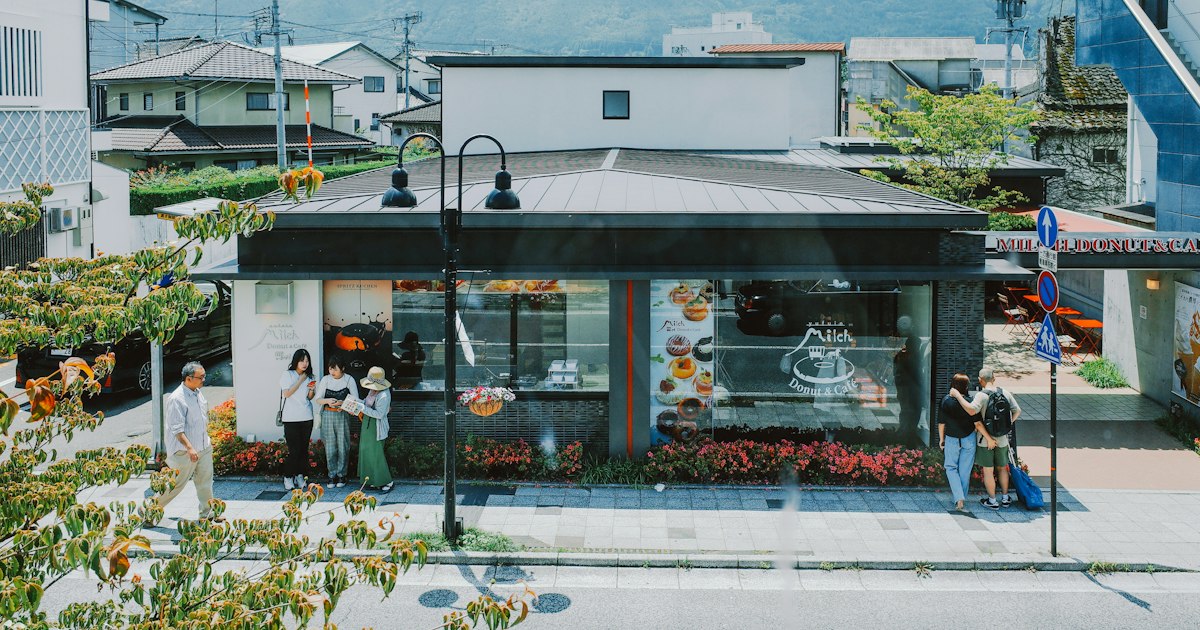
Walk into almost any Japanese shopping mall, train station concourse, or suburban roadside strip, and you’ll eventually spot the pink-and-white logo of Mister Donut. Known locally as “Misdo” (ミスド), it’s the donut chain that quietly outlasted Krispy Kreme’s Japan expansion and Dunkin’s near-total withdrawal from the country, and it did it with a donut most Westerners have never heard of: the Pon de Ring. If you’re planning a Japan trip and want a cheap, genuinely good snack between sightseeing stops, here’s what you need to know before you order.
What Makes Mister Donut Different From a Western Donut Shop
Mister Donut Japan isn’t a franchise import — it’s operated by Duskin Co., a Japanese company that opened its first store in Takatsuki, Osaka, in 1971. Over five decades it localized the menu so heavily that it now barely resembles the American chain it licensed its name from. There’s no cake donut dominance here; the lineup leans toward lighter, chewier, less sugary textures that suit Japanese palates, plus savory items like curry pan and misdo’s own fried chicken, which you won’t find at most Western donut counters. With roughly 900 locations nationwide, it’s the largest donut chain in Japan by a wide margin.
The Pon de Ring: Why This One Donut Has a Cult Following
The Pon de Ring (ポン・デ・リング) is Mister Donut’s signature item and the reason the chain has such devoted fans. Instead of standard wheat dough, it’s made with a wheat-and-tapioca-starch blend, which gives it a bouncy, mochi-like chew instead of the usual soft crumb. It’s shaped as a ring of eight connected dough balls — visually distinctive and easy to pull apart by hand, which is part of the appeal. The plain glazed version costs around ¥151-194 depending on the store and any price revisions in effect, and it comes in rotating flavors: matcha, chocolate, kinako (roasted soybean flour), and seasonal versions tied to sakura season in spring or chestnut in autumn. If you only try one thing at Mister Donut, make it this one — it’s genuinely unlike donuts you’ll find outside Japan, in the same way daifuku trades Western-style sweetness for a chewier, rice-based texture.
What Else to Order and What It Costs
Beyond the Pon de Ring, the menu is worth browsing rather than rushing. A few reliable picks:
- French Crullers — light, eggy, slightly caramelized exterior, around ¥162-183
- Honey Dip — the closest thing to a classic American glazed donut, around ¥151
- Old Fashioned — denser, less sweet, good with black coffee, around ¥172
- Angel Custard Cream and seasonal fruit donuts — limited-run items, often ¥200-280
- Curry pan and savory buns — a non-sweet option if you want something closer to a light lunch, roughly ¥230-280
Most stores run a “Pon de Set” style deal where ordering a drink alongside a donut adds only around ¥100-150 to the total rather than paying full drink price separately — ask staff or check the register display, since this isn’t always posted on the main menu board. A box of a dozen mixed donuts to take home typically runs ¥1,800-2,400, which makes Mister Donut a cheap, crowd-pleasing option if you’re bringing a snack back to a hostel or Airbnb group. For a coffee pairing on the go, Japan’s hot vending machine canned coffee is a decent backup if the in-store line is long.
Where to Find One and When They’re Open
Mister Donut locations cluster in shopping malls (AEON Mall food courts are a near-guarantee), train station buildings, and suburban roadsides — they’re less common in the densest parts of central Tokyo than konbini or standalone cafés, so it’s worth checking a map before you build a stop around one. Typical hours run from around 7:00 or 9:00 to 21:00 or 22:00, though station-adjacent locations sometimes open earlier for the commuter crowd and mall locations follow the mall’s own hours. Seating varies a lot: some stores have full café-style seating with drink refills, others are takeout-counter only, especially smaller station kiosks. If you’re combining a donut run with a day of station-hopping, it pairs naturally with a stop at an eki soba stall for something more substantial before or after.
Best Timing and Seasonal Reasons to Visit
Mister Donut leans hard into limited-time flavors and character collaborations, so timing your visit can genuinely change what you get to try. Spring (roughly February-April) usually brings sakura-themed pink donuts and sakura-flavored drinks. Autumn brings chestnut (kuri) and sweet potato flavors. Mister Donut also regularly runs “Misdo de Pon” promotions where a minimum purchase gets you a limited character toy — Pokémon, Chiikawa, and Sanrio collaborations have all appeared in recent years, and these tend to draw longer lines and can sell out mid-promotion, so go earlier in the run if a specific toy matters to you. Weekday mid-morning (around 10:00-11:00) and mid-afternoon (14:00-16:00) are the quietest windows; avoid the lunch rush (12:00-13:00) at mall locations, when office workers and students pack in.
Common Mistakes First-Timers Make
- Assuming it’s a cake-donut shop like at home. If you order expecting a dense American-style donut, the Pon de Ring’s bouncy texture can be a surprise — in a good way, but know what you’re getting into.
- Skipping the drink set deal. Ordering a donut and a separate drink at full price instead of asking about the combo pricing means overpaying by a meaningful margin.
- Not checking seating availability. Smaller locations are takeout-only; if you want to sit and eat, look for a larger mall or roadside store.
- Visiting right when a collab drops. Toy promotions can mean 20-30 minute waits on launch day — go a few days in rather than opening day if you can.
- Forgetting cash works everywhere but IC cards (Suica/Pasmo) and apps are faster. Most locations accept both, but tapping an IC card speeds up the line considerably during busy hours.
Budget, Mid-Range, and Splurge Options
On a budget, a single Honey Dip or Pon de Ring plus a set-price coffee comes in under ¥350 — a legitimately cheap snack by Tokyo standards. Mid-range, a box of 6-8 mixed donuts for ¥1,200-1,600 is a good way to sample flavors across a group or bring something back for travel companions. For a splurge, seasonal or collaboration items with premium fillings (custard, matcha cream, limited fruit donuts) run ¥250-350 each, and pairing a full dozen box with a few of the French Crullers and Old Fashioneds makes for a solid afternoon tea spread if you’re hosting friends in a rental kitchen. However you order, it’s one of the easiest, least expensive ways to taste something distinctly Japanese without needing a reservation or speaking much Japanese at all — just point at the case.