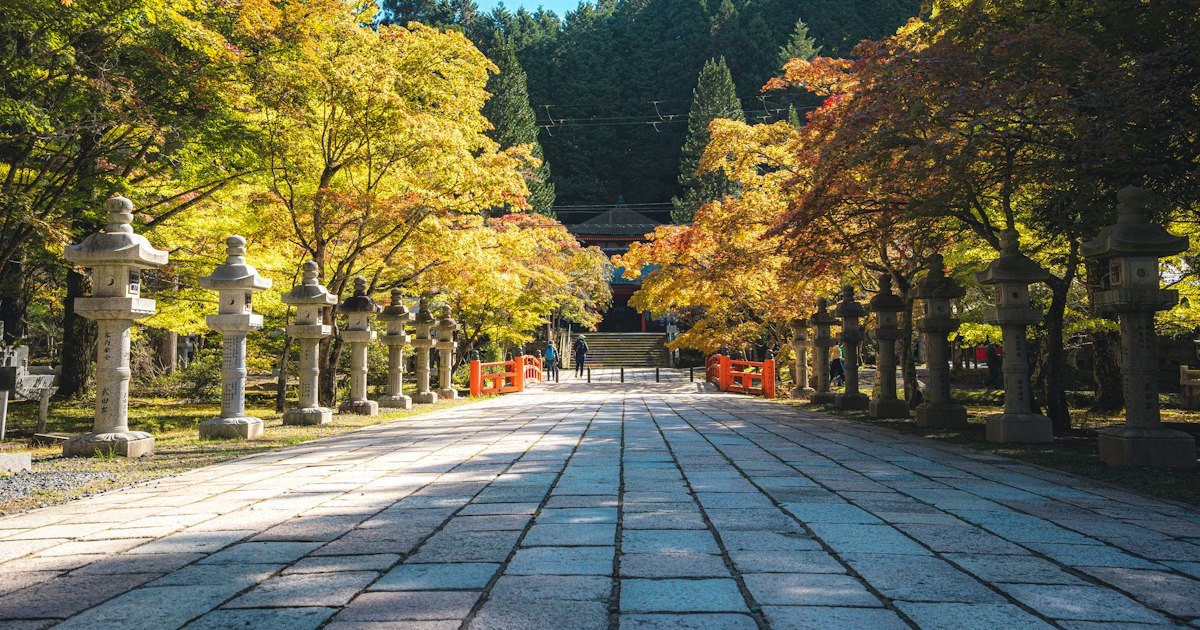
Photo by Alex Mesmer on Unsplash
Koyasan isn’t on the way to anywhere — it’s a mountaintop monastic town in Wakayama Prefecture that you have to deliberately climb to, and the journey itself is part of the experience. From central Osaka, getting there means a train, a cable car, and a bus, in that order, and each leg has its own quirks, prices, and easy-to-miss details. Here’s exactly how the trip works.
The Three-Stage Journey: Train, Cable Car, Bus
The route from Osaka to Koyasan always follows the same pattern: Nankai Koya Line train from Namba Station to Gokurakubashi Station, then the Nankai Koyasan Cable Car up the mountainside to Koyasan Station, then a local bus into the town itself. Door to door, budget around 2 to 2.5 hours from Namba, depending on which train you catch. There’s no shortcut — the cable car is the only practical way up, since the road route by taxi or car is long, winding, and far more expensive.
Getting to Namba Station and Choosing Your Train
Namba is the starting point, reachable easily from most of Osaka by subway or JR. At Namba, look for the Nankai Railway section (separate from the Midosuji subway line, with its own ticket gates) and head for the Koya Line platforms.
You have two main options:
- Limited Express “Koya” — the fastest option, running direct from Namba to Gokurakubashi in about 1 hour 20 minutes to 1 hour 40 minutes. These trains require a reserved-seat limited express ticket on top of the base fare, typically adding roughly ¥760–790 to the standard fare of around ¥930. Total one-way is usually in the ¥1,650–1,720 range.
- Rapid Express / Regular trains — cheaper (just the base ¥930 fare) but slower, often requiring a change of train at Hashimoto Station, with total travel time closer to 2 hours or more.
Not every Koya Line train goes all the way to Gokurakubashi — many terminate at Hashimoto, where you’ll need to switch platforms for a connecting local train for the final, scenic stretch through narrow forested valleys. Double-check the destination board before boarding, especially outside of limited express departures.
The Koyasan Cable Car: Japan’s Steepest Ride
At Gokurakubashi, the train station sits directly below the cable car (funicular) station — just follow the crowd upstairs. The Nankai Koyasan Cable Car covers the final 0.8 km in about 5 minutes, climbing one of the steepest gradients of any funicular in Japan. The current cars, introduced in 2019, have large windows that make the short, steep ascent worth paying attention to rather than burying your face in your phone. A one-way ride costs about ¥500 if bought separately, though most visitors get it bundled into a combination ticket (see below). Cars run roughly every 15–20 minutes, more frequently during busy periods, and the service generally operates from early morning until around 9pm, though exact first/last departures shift seasonally — it’s worth checking Nankai’s timetable the day before if you’re arriving late or leaving on an early train.
Buying the Koyasan World Heritage Ticket (Best Value)
Unless you already hold a rail pass that covers Nankai lines, the single best-value option is the Koyasan World Heritage Ticket, sold at Nankai’s ticket counters in Namba and a few other stations. It bundles the round-trip train fare, the cable car both ways, and unlimited rides on the Koyasan town bus network, plus small discounts at some temples and museums. From Namba, this combination ticket runs roughly ¥3,080 for a regular round trip (the limited express surcharge is extra if you want the “Koya” train). Given that the local bus system inside Koyasan otherwise charges per ride, and buses are genuinely necessary to get around once you’re up there, this ticket almost always works out cheaper than paying for each leg individually. Buy it before boarding — it isn’t sold once you’re already on the mountain.
From the Cable Car Station to Town: The Bus Leg
This is the step first-time visitors most often forget to plan for. Koyasan Station (top of the cable car) is not in the town — it’s perched on the mountain’s edge, and the temples, Okunoin cemetery, and the main street are still a bus ride away. Buses meet every cable car arrival and take about 10 minutes to reach Senjuinbashi, the central stop most travelers use as a base for walking the town. If your ticket doesn’t already include bus fare, a single ride costs a few hundred yen; the World Heritage Ticket’s unlimited bus privilege removes the need to think about this at all.
Best Season and Timing
Koyasan sits at around 800 meters elevation, so it’s noticeably cooler than Osaka year-round — bring a layer even in summer, and expect genuinely cold temperatures with possible snow from December through February. Autumn (early-to-mid November) and spring (April–May) are the most popular times, with fall foliage around the temples and cedar forest drawing heavy crowds on weekends. If you’re staying overnight at one of the town’s shukubo (temple lodgings), note that many enforce early check-in and quiet hours after evening prayers — worth reading up on Japan’s quiet-hour customs beforehand, and on the subtle hospitality cues covered in this guide to omotenashi in practice, since temple stays follow their own quiet rhythms of service. If you’re booking a shukubo room, it’s also worth knowing the difference between natsubuton and fuyubuton futon weights, since mountain nights get cold even when Osaka doesn’t.
Aim to arrive on the mountain by early-to-mid afternoon if you’re doing a day trip, since most temple interiors close their doors to visitors by 4:30–5pm even though the grounds stay accessible later.
Common Mistakes to Avoid
- Boarding a train that terminates at Hashimoto without realizing a transfer is needed — check the destination board, not just “Koya Line.”
- Forgetting the bus leg exists and assuming the cable car drops you in the town center.
- Buying tickets separately instead of the World Heritage combination ticket, which almost always costs less for round-trip visitors.
- Underestimating the cold at elevation, especially for shoulder-season day trips when Osaka still feels warm.
- Treating Koyasan as a quick stop — Okunoin’s cemetery walk alone takes over an hour, and the town rewards a full day or an overnight stay rather than a rushed afternoon.
Koyasan has been a pilgrimage destination for over 1,200 years, and pilgrims historically marked their visits with senjafuda, the printed name-stickers once pasted on temple gates — a tradition you can still see traces of, and read more about in this guide to Japan’s pilgrim name-stickers. Getting there may take a bit of planning, but the train-cable car-bus combination is straightforward once you know the sequence, and it delivers you to one of the most atmospheric places in the Kansai region.