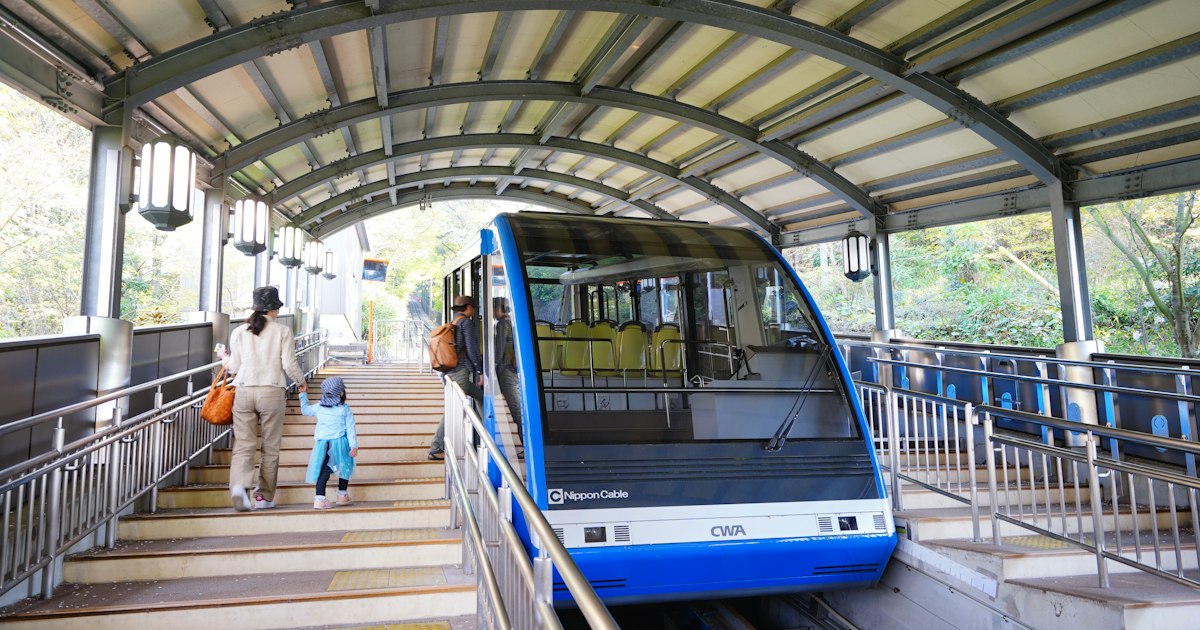
If you’re only used to JR trains and the Fukuoka City Subway, it’s easy to miss Nishitetsu entirely — and that’s a shame, because it’s the fastest and cheapest way to reach two of Kyushu’s best day trips from Fukuoka. Nishitetsu (officially Nishi-Nippon Railroad) runs its own separate network of lines, stations and ticket machines, unconnected to the JR fare system, and it’s the backbone of how locals get to Dazaifu’s famous shrine and the canal town of Yanagawa. Here’s how to actually use it.
What Nishitetsu Is and Why It’s Different from JR
Nishitetsu is a private railway company headquartered in Fukuoka, running the Nishitetsu Tenjin Omuta Line (its main trunk line south through the city) plus several branch lines, buses, and even a ferry. Its main hub station is Nishitetsu Fukuoka (Tenjin), located in the Tenjin shopping district — not Hakata Station, where the JR and Shinkansen lines terminate. This distinction trips up a lot of first-time visitors: if you arrive at Hakata by Shinkansen, you need to get to Tenjin first (five minutes on the Fukuoka City Subway, about 210 JPY) before you can board a Nishitetsu train.
Because Nishitetsu operates on a completely separate fare and ticketing system from JR, JR passes (including the JR Kyushu Rail Pass) are not valid on it, and Suica/ICOCA-type IC cards work for tap-and-go fare payment but won’t show you through-fares or discounts the way a dedicated Nishitetsu ticket might. For most tourists, buying a paper ticket from the vending machines or the ticket window is simplest, since station names and fares are posted in English at major stations.
Getting to Dazaifu: The Express Line Locals Use
Dazaifu Tenmangu, the shrine dedicated to the deified scholar Sugawara no Michizane and one of Japan’s most important sites for students praying for exam success, is the single most popular Nishitetsu destination for visitors. From Nishitetsu Fukuoka (Tenjin) Station, take the Tenjin Omuta Line to Nishitetsu Futsukaichi Station (about 15–20 minutes), then transfer to the short Nishitetsu Dazaifu Line for the final two stops to Dazaifu Station (about 5 minutes). Total fare is roughly 420–440 JPY one way, and total travel time including the transfer is about 25–30 minutes.
Some trains on the main line are labeled “Kaisoku” (express) or “Tokkyu” (limited express) and skip minor stops, shaving a few minutes off the ride — look for these on the platform departure boards if you’re in a hurry, though local (futsu) trains run the same route and aren’t much slower on this particular stretch. From Dazaifu Station, it’s a straightforward 10-minute walk through the approach street (lined with shops selling umegae-mochi, the shrine’s signature grilled rice cake) to the shrine itself.
Timing tip: Dazaifu Tenmangu’s grounds are open roughly 6:00 AM to 7:00 PM depending on season (closing earlier in winter, around 6:30 PM), and entry to the shrine grounds is free, though the adjacent Kyushu National Museum and the Dazaifu Tenmangu Museum charge separate admission. Go early on weekday mornings if you want the approach street and main hall without tour-group crowds; the plum blossoms (late February) and autumn foliage (mid-to-late November) are the two peak crowding windows.
Getting to Yanagawa: Fukuoka’s Canal Town
Yanagawa, about an hour south of Fukuoka, is known for its network of Edo-period canals, which you tour by flat-bottomed boat (donko-bune) poled by a guide who often sings local folk songs along the way. Nishitetsu’s limited express (Tokkyu) trains run directly from Nishitetsu Fukuoka (Tenjin) to Nishitetsu Yanagawa Station without a transfer, taking about 50–55 minutes, with a one-way fare of around 870 JPY. This is noticeably cheaper and, door-to-door, often comparable in time to taking JR plus a local bus, since Yanagawa isn’t directly on a convenient JR line from central Fukuoka.
From Nishitetsu Yanagawa Station, the main boat departure points are a 10–15 minute walk, or a short taxi ride (around 700–900 JPY) if you’re traveling with luggage or in summer heat. Boat tours run year-round, typically from around 9:00 AM to 4:00 PM (last departure varies by boathouse), take about 60–70 minutes, and cost roughly 1,700–1,800 JPY per adult — check with individual boathouses since several independent operators run tours at slightly different prices and schedules.
Best season: Late June brings hydrangeas along the canal banks, while late autumn (November) gives you colorful foliage reflected in the water; summer is scenic but hot and humid with little shade on the boats, so bring a hat and water. Winter tours sometimes add a kotatsu-style heated blanket setup on board, which is a nice novelty if you’re visiting in January.
Buying Tickets and Using IC Cards
At Nishitetsu Fukuoka (Tenjin) Station, ticket machines have an English-language button and display fares by destination once you select it from a route map. If you’re unsure of the fare, you can always buy the cheapest ticket and settle the difference at a fare adjustment machine at your destination — this is completely normal and station staff are used to it. IC cards (Suica, ICOCA, and the regional Nimoca/Hayakaken cards) all work on Nishitetsu’s gates for simple tap-in, tap-out travel, and this is the easiest option if you already have a card loaded from elsewhere in Japan.
One common mistake: assuming “Fukuoka Station” means the same thing across train networks. There is no “Fukuoka Station” on the JR network — JR’s hub is Hakata Station, while Nishitetsu’s hub is called Nishitetsu Fukuoka (Tenjin) Station. Confusing the two, or telling a taxi driver “Fukuoka Station,” can send you to the wrong part of the city entirely.
Budget, Mid-Range and Splurge Options
- Budget: Combine Dazaifu and a Tenjin shopping stop in one day using standard one-way tickets (around 420–440 JPY each way) and skip the Yanagawa boat tour, which is the single biggest optional cost of a Nishitetsu day trip.
- Mid-range: Do the Yanagawa round trip (about 1,740 JPY in train fares) plus the standard boat tour (roughly 1,700–1,800 JPY), landing a full day out, including a riverside unagi lunch (Yanagawa is famous for steamed eel over rice, seribo-don style), at somewhere in the 5,000–7,000 JPY range per person.
- Splurge: Some Yanagawa boathouses offer private or smaller-group boat charters at a premium over the standard shared tour, and a few hotels in the area package a boat tour with a kaiseki dinner — worth asking about locally if you want to stay overnight rather than day-trip from Fukuoka.
Common Mistakes to Avoid
- Trying to use a JR Rail Pass or JR ticket on Nishitetsu gates — it won’t work, since the two networks are entirely separate companies with separate fares.
- Starting from Hakata Station without first connecting to Tenjin — budget the extra 5–10 minutes and roughly 210 JPY subway fare if your hotel or itinerary starts at Hakata.
- Assuming every train on the Tenjin Omuta Line stops at Nishitetsu Futsukaichi for the Dazaifu transfer — double-check the platform signage or ask station staff, since express services vary by time of day.
- Arriving at Yanagawa late in the afternoon expecting a boat tour — the last departures are mid-to-late afternoon, so aim to arrive by early afternoon at the latest, especially in winter when daylight is shorter.
Nishitetsu isn’t glamorous or famous the way the Shinkansen is, but for anyone based in Fukuoka it’s the quickest, cheapest way to reach both Dazaifu’s shrine and Yanagawa’s canals without renting a car or juggling multiple transfers through JR stations. Once you’ve found Nishitetsu Fukuoka (Tenjin) Station and worked out that it’s separate from Hakata, the rest of the system is refreshingly simple.