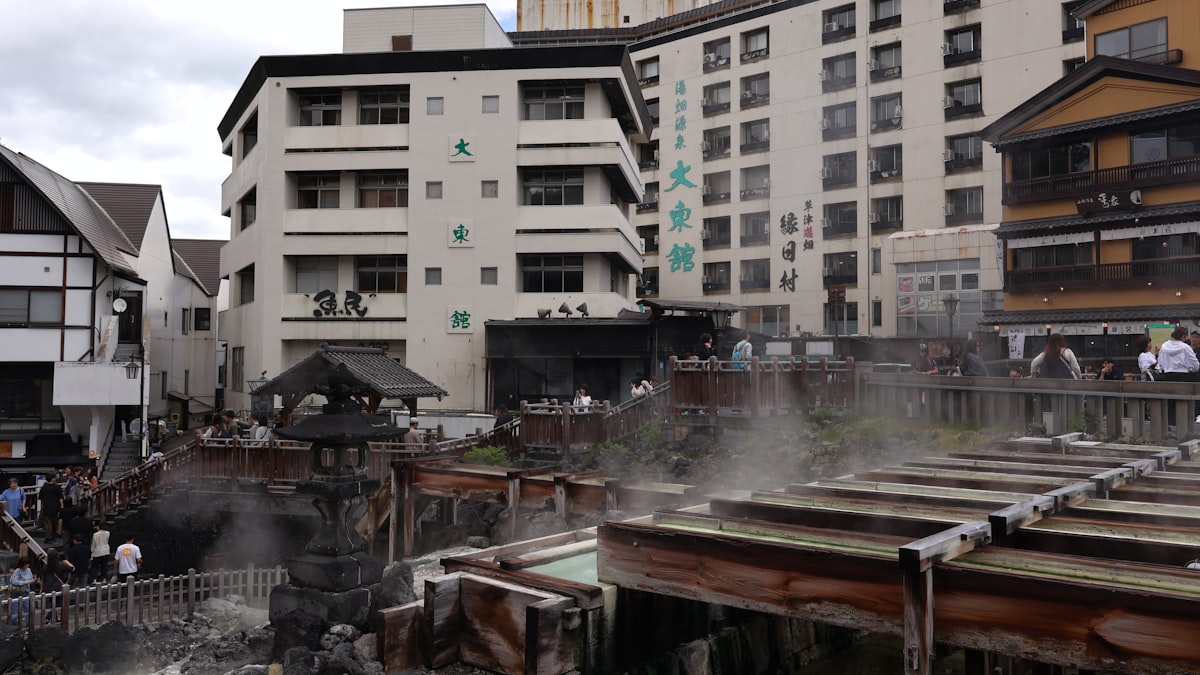
Soaking in an onsen (hot spring) is a quintessential Japanese experience — but the etiquette can feel daunting the first time. Here’s a simple, step-by-step guide so you can relax with confidence.
The golden rule: wash before you soak
The bath is for soaking, not washing. You clean yourself thoroughly at the shower stations before entering the communal bath. The bath water stays clean for everyone.
Step by step
- Undress fully in the changing room — no swimsuits. Put clothes in a basket or locker.
- Bring the small towel to the bathing area (a modesty towel).
- Wash and rinse completely at a shower station — sit on the stool, rinse off all soap.
- Enter the bath slowly — it’s hot. Keep the small towel out of the water (rest it on your head or the side).
- Soak and relax. Rinse off after if you like, then dry with the small towel before returning to the changing room.
Do’s and don’ts
- Do tie up long hair so it doesn’t touch the water.
- Don’t put your towel or head under the water, swim, or splash.
- Don’t take photos — privacy is essential.
- Keep voices low — it’s a place to unwind. More in our etiquette guide.
Tattoos?
Many onsen still restrict tattoos, but there are workarounds (cover patches, private baths, tattoo-friendly spots) — see our tattoo & onsen guide.
Where to soak
Try an onsen town for the full experience — see our best onsen towns and Hakone guide. A ryokan with a private open-air bath is the stress-free way to start.
What onsen bathing typically costs
- Public bathhouses (sento, not fed by natural hot spring but similar etiquette) cost as little as JPY 400-600; standalone onsen day-use facilities usually run JPY 700-2,000 depending on the region and facilities.
- A ryokan stay with a private in-room open-air bath (kashikiri or private bath rooms) typically adds JPY 5,000-20,000 per couple over a standard room, but removes any tattoo or etiquette concerns entirely since you’re bathing alone.
- Rental towels and yukata are usually included at ryokan; day-use facilities sometimes charge JPY 200-500 extra if you don’t bring your own small towel.
Common first-timer mistakes
- Rinsing only briefly before entering the bath — a thorough wash (shampoo, soap, full rinse) is expected, not optional; locals notice and it affects water cleanliness for everyone.
- Wearing a swimsuit into a mixed public bath thinking it’s more modest — most onsen explicitly prohibit swimwear in the communal bath itself, though some newer mixed-gender or family facilities do allow suits, so check specific rules.
- Rushing the soak — most visitors find 10-15 minutes at a time comfortable before needing to cool off outside the water, then returning for a second soak; treat it as a slow, repeated ritual rather than one long sit.
Choosing your first onsen experience
A private-bath ryokan room removes nearly every source of first-timer anxiety (nudity, tattoos, unfamiliar etiquette in front of strangers) and is worth the extra cost for a first try if budget allows. If you’d rather dive into the full communal experience, a well-reviewed onsen town like those in our best onsen towns guide will have staff used to first-time foreign visitors and often posted English instructions.
Onsen for families and groups
Traveling with kids or a mixed group of friends who’d rather not split up? Family baths (kazoku-buro) at many onsen towns can be reserved by the hour for private, mixed-gender bathing — a practical option that sidesteps the gender-separated communal baths without requiring a full private-bath ryokan stay. Ask at check-in or the local tourist office, since availability and pricing vary widely by town.