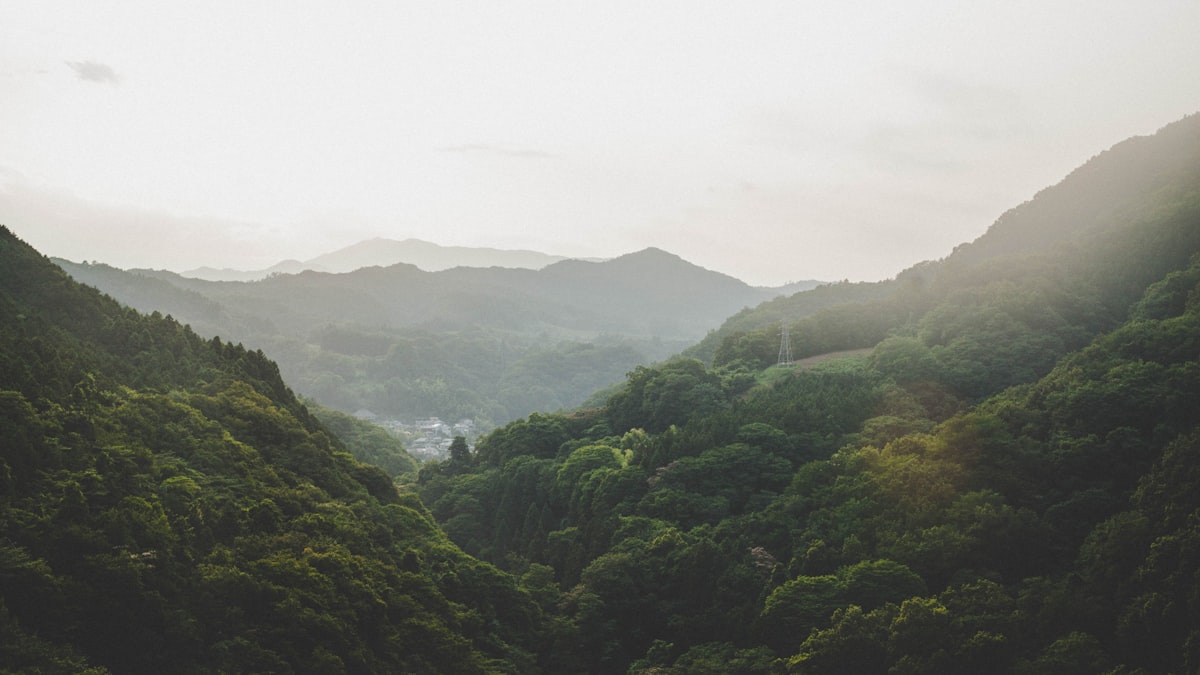
Shikoku is Japan’s smallest and least-visited main island, and most first-time (and even second-time) visitors skip it entirely. That’s a mistake if you want dramatic mountain scenery, a genuinely unique pilgrimage culture, and one of Japan’s strangest natural phenomena, all without the crowds of Honshu’s major routes. Here’s what’s worth building a few days around.
The Iya Valley: Japan’s hidden gorge
Deep in Tokushima Prefecture, the Iya Valley is a steep, forested gorge historically so remote it sheltered defeated Heike clan warriors after the 12th-century Genpei War. Today it’s known for:
- Vine bridges (kazurabashi) — swaying bridges woven from mountain vines, rebuilt every few years using traditional methods; crossing one, with the river visible through the gaps in the vines, is the valley’s signature experience. Entry costs around 550 yen.
- Remote onsen — small hot-spring ryokan tucked into the gorge, some accessible only by a cable car down the cliff face from the road above.
- Dramatic mountain roads — narrow, winding routes with viewpoints over the gorge; a rental car is genuinely the best way to explore, since bus service is infrequent.
- The valley is roughly a 2–2.5 hour drive from Tokushima city, or reachable by a combination of train and infrequent local bus if you’re not driving.
The Naruto whirlpools
At the Naruto Strait, between Shikoku and Awaji Island, powerful tidal currents create some of the largest whirlpools in the world, up to 20 meters across at peak tide. Sightseeing boats run close to the vortices for a dramatic view, and the Onaruto Bridge above has a glass-floor observation deck (Uzu-no-Michi) where you can watch the whirlpools form directly beneath your feet. Whirlpool activity is tide-dependent, so check the tide charts (posted at the sightseeing dock and most hotel front desks) before planning your visit — the biggest whirlpools appear around the spring and neap tide cycles, not every day equally.
The 88 Temple Pilgrimage
Shikoku is home to Japan’s most famous pilgrimage route: a roughly 1,200-kilometer loop connecting 88 temples associated with the Buddhist monk Kukai (Kobo Daishi), who was born on the island. Completing the full walking pilgrimage traditionally takes about 40–60 days, and pilgrims (called henro) are recognizable by their white jackets, conical straw hats, and wooden walking staffs. You don’t need to walk the whole route to experience it:
- Visit a handful of temples by car or bus as part of a shorter trip — many are near Tokushima, Kochi, Matsuyama, and Takamatsu, so it’s easy to fold two or three into a city visit.
- Local hospitality (osettai) — a distinctive part of the culture is residents offering pilgrims small gifts of food, drinks, or money as a form of merit-sharing; travelers who visit temples respectfully are sometimes included in this, even without walking the full route.
- For context on the broader shrine-versus-temple etiquette involved, see our shrines vs temples guide before visiting.
- Compare this with the Kumano Kodo on Honshu if you’re deciding between Japan’s two most famous pilgrimage routes — Kumano Kodo is shorter and more forest-focused, while the Shikoku pilgrimage is a full island circuit connecting temples through cities and countryside alike.
Matsuyama and Dogo Onsen
Matsuyama, Shikoku’s largest city, is home to one of Japan’s three original wooden castles still standing on its original site, and to Dogo Onsen — reputed to be Japan’s oldest hot spring, with a history stretching back over a thousand years and a mention in Japan’s earliest written records. The main bathhouse building, a wooden structure dating to 1894, is said to have partly inspired the bathhouse in Studio Ghibli’s Spirited Away (see our Ghibli guide). A basic bath here costs around 700 yen; private family bath options cost more and require reservations.
Getting to and around Shikoku
- By train — no shinkansen serves Shikoku directly; from Okayama on Honshu, limited express trains cross the Seto-Ohashi Bridge to Takamatsu in about an hour, making Okayama the main gateway.
- By plane — regional airports at Takamatsu, Matsuyama, Kochi, and Tokushima connect to Tokyo, Osaka, and other major hubs.
- Getting around the island — a rental car is strongly recommended, especially for the Iya Valley; the four prefectural capitals (Takamatsu, Tokushima, Kochi, Matsuyama) are connected by train and highway bus, but rural attractions are far easier with your own vehicle.
Planning your visit
- How long to stay — three to four days covers Iya Valley, Naruto, and one city (Matsuyama or Takamatsu) at a comfortable pace.
- Best time to visit — spring and autumn for comfortable hiking and driving weather; summer is hot and humid but works for whirlpool viewing since tidal strength doesn’t depend on temperature.
- Combine it with — Naoshima and the Seto Inland Sea art islands (see our Naoshima guide) sit just off Shikoku’s north coast near Takamatsu, making an easy add-on to a Shikoku itinerary.