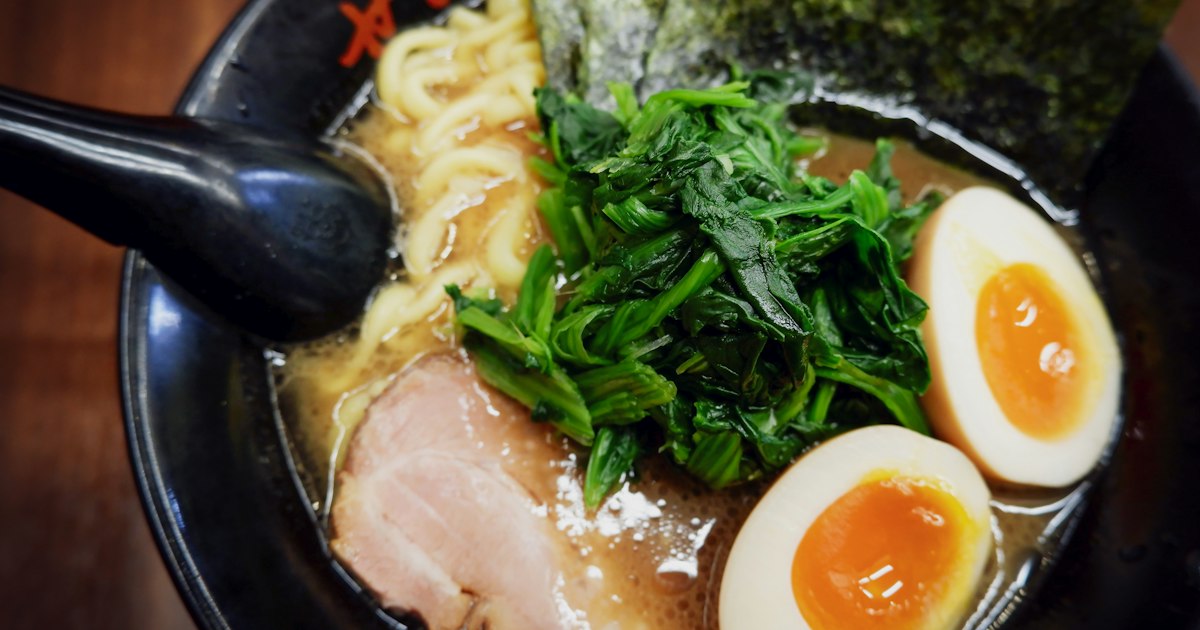
Photo by Susann Schuster on Unsplash
Most ramen styles in Japan are built to be slurped slowly and savored. Toyama Black was built to refuel a worker in under ten minutes. This jet-black, intensely salty soy-sauce ramen from Toyama Prefecture, on the Sea of Japan coast, has a backstory that’s as practical as the bowl itself — and it’s one of the more distinctive regional dishes you can seek out on a Japan trip. Here’s what it is, why it tastes the way it does, and exactly how to track down a proper bowl.
What Makes Toyama Black Ramen Black
The color and the saltiness come from the same source: a heavy pour of dark koikuchi soy sauce in a pork-bone (tonkotsu) based broth, often sharpened further with cracked black pepper. There’s no squid ink or char involved, despite how the broth looks under restaurant lighting — it’s simply soy sauce concentration that most other ramen shops would consider far too aggressive for a standalone soup.
A standard bowl comes topped with thick, slightly curly noodles, a few slices of chashu pork, menma (fermented bamboo shoots), a sheet of nori, and chopped green onion. The broth is meant to be sipped in small amounts rather than drunk like a lighter shoyu or tonkotsu ramen — locals traditionally eat it alongside a full bowl of plain white rice, dipping rice into the soup rather than finishing the bowl outright.
Built for Laborers, Not Tourists
Toyama Black was invented in 1947 at a small shop called Nishicho Daiichi (西町大喜) in Toyama City. Japan was rebuilding after the war, and the shop’s founder created an intentionally ultra-salty ramen for manual laborers — many working at nearby steel and machinery plants — who were sweating out large amounts of salt during long physical shifts and needed something cheap, calorie-dense, and salty enough to replace it fast. The ramen was never designed to be a delicate, balanced bowl; it was a tool for getting through a workday, eaten quickly with rice on the side to stretch the meal and cut the saltiness.
That origin is exactly why first-time visitors are sometimes caught off guard — if you’re expecting a mellow Hakata-style or Sapporo miso ramen, Toyama Black can taste shockingly salty on first sip. Go in knowing that’s the point, not a flaw, and it clicks into place as a genuinely satisfying, hearty dish rather than an oversight.
Where to Eat It in Toyama City
The original shop, Nishicho Daiichi, still operates near Toyama Castle in central Toyama City and is the benchmark bowl most ramen fans travel for. Expect a basic bowl of Toyama Black (ラーメン) to run roughly ¥800–900, with topping-loaded or larger versions closer to ¥1,000–1,200. Lunchtime queues form on weekends, so arrive close to opening or plan for a short wait; it’s a small, old-school counter-style shop rather than a large restaurant.
Beyond the original, several other shops around Toyama City serve their own takes on the style, with some easy to find inside or near Toyama Station, which is convenient if you’re short on time between trains. Because each shop adjusts the salt and pepper level slightly, it’s worth trying more than one if you’re staying in the city for a couple of days — the range from “salty” to “very salty” is wider than you’d expect from what looks like the same dish.
Budget travelers can treat Toyama Black as a full, filling meal on its own for under ¥1,000. Mid-range eaters can add a side of rice, gyoza, or an extra topping of chashu for another ¥200–400. There isn’t really a “splurge” tier for this dish — it’s intentionally a working-class meal — but some shops offer a specialty or extra-large bowl in the ¥1,200–1,400 range if you want the fullest version.
Getting to Toyama and Timing Your Visit
Toyama City is on the Hokuriku Shinkansen line, about 2 hours from Tokyo Station, with one-way reserved-seat fares typically in the ¥12,000–13,000 range on the fastest Kagayaki trains. If you’re traveling on the Japan Rail Pass, note that it does not cover Kagayaki services — take the slightly slower Hakutaka or Tsurugi trains instead, which add roughly 10–15 minutes but are fully covered. From Osaka or Kyoto, the route typically connects via Kanazawa.
Most black ramen shops keep fairly standard hours, roughly 11:00–15:00 for lunch and reopening in the evening until around 20:00–21:00, with a one-day weekly closure that varies by shop — it’s worth checking a shop’s posted hours the same day, since small, independently run ramen counters in Japan change schedules more often than chain restaurants. Toyama Black is eaten year-round, but it’s an especially good cold-weather meal, and Toyama City is also the jumping-off point for the Tateyama Kurobe Alpine Route (open mid-April through November), so many travelers pair a bowl of black ramen with a day trip into the mountains. If you’re road-tripping through the region rather than taking the train, our guide to renting an EV in Japan covers charging stops and route planning for the Hokuriku area.
Common Mistakes First-Timers Make
The biggest mistake is treating it like a normal ramen and drinking the broth in full — you’ll end up with far more sodium than intended for one meal, and most regulars would never finish the soup unassisted by rice. Order rice (gohan) alongside it, even if that feels redundant with noodles already in the bowl; it’s the traditional way to eat it and it genuinely balances the saltiness.
Another misstep is assuming “black ramen” is a single fixed recipe. Saltiness, pepper intensity, and broth thickness vary noticeably shop to shop, so if your first bowl feels overwhelming, a different shop’s version may suit you better rather than writing off the whole style. Finally, don’t go in starving expecting a huge bowl — portions are moderate by design, since this was originally a quick refuel rather than an indulgent meal.
Worth the Detour
Toyama Black isn’t trying to be Japan’s most refined ramen, and that’s exactly its appeal — it’s a direct, honest taste of postwar working-class food culture that’s still served almost unchanged. If you’re already adventurous about regional Japanese food — in the same spirit as travelers who seek out dishes like shirako — a detour to Toyama for a bowl of jet-black, deeply salty ramen is a small but memorable addition to a Japan itinerary, and far easier to fit in than most regional specialties thanks to the direct Shinkansen link from Tokyo.