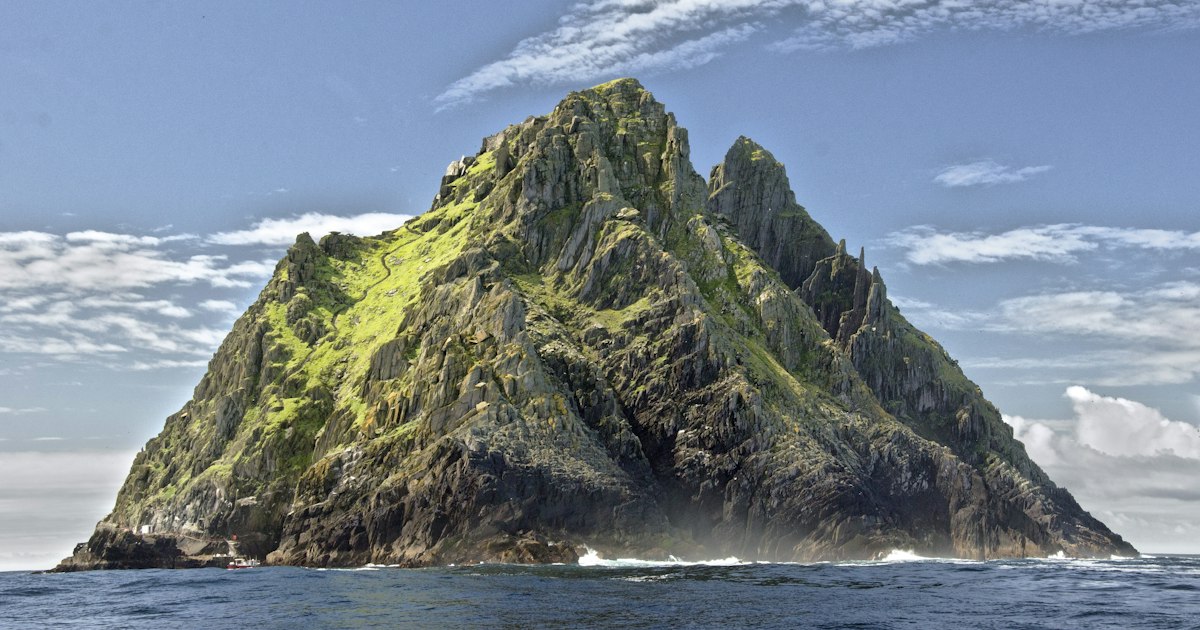
Nine hundred kilometers of open Pacific separate Tokyo from Okinawa’s main island — and then the Daito Islands sit another 360 kilometers further east, closer to nowhere than to anywhere. Minami Daito (South Daito) and Kita Daito (North Daito) are two of the strangest inhabited places in Japan: geologically Okinawan, but biologically and historically their own thing entirely. There’s no lagoon, no fringing reef, no natural harbor, and until relatively recently no way to get off a ship except by crane. If you’ve already done Ishigaki and Miyako and want something that still feels genuinely remote, this is where you go.
Why There’s No Reef and No Harbor
Most of Okinawa’s outer islands are classic coral-reef islands: a shallow lagoon, a barrier reef, calm turquoise water close to shore. The Daito Islands are different because they’re raised atolls — ancient coral reefs that were pushed up out of the sea by tectonic activity millions of years ago rather than staying at sea level. The result is a plateau of limestone ringed by sheer cliffs that drop straight into deep ocean, with no lagoon and no living reef buffering the coastline. That geology is also why the islands never had a natural harbor: there’s no calm, shallow water for boats to shelter in. Ships used to anchor offshore in open swell while passengers and cargo were lowered by crane into position on the pier — an image that shows up in almost every old photograph of the islands and is still part of how locals talk about the place, even though improved breakwaters have made landing far less dramatic today.
Getting There: Flights, the Twice-a-Month Ferry, and a Buffer Day
Ryukyu Air Commuter (RAC) flies Dash 8 turboprops from Naha Airport to Minami Daito Airport, with a short onward hop to Kita Daito. The Naha–Minami Daito leg takes a little over an hour. One-way fares run roughly ¥20,000 at full price, but advance-purchase discount fares (tokuwari) can bring that down to somewhere in the ¥10,000–15,000 range if booked weeks ahead — check RAC’s site directly, since availability on these small planes is limited and fares change.
The alternative is the cargo-passenger ferry “Daito,” which sails from Naha to Kita Daito and then Minami Daito roughly two to three times a month — not weekly, and the schedule is published only a month or so in advance because it’s built around cargo needs. The crossing takes around 14–15 hours overnight, and fares are a fraction of the flight cost, but you need real flexibility to use it. Whichever way you go, build in at least one spare day on either end of the trip. Both the flights and the ferry get cancelled for weather with some regularity given how exposed the islands are, and there is no faster backup option once you’re out there. If you’re the type who plans remote-island trips often, it’s worth reading Missed the Last Ferry in Japan’s Remote Islands: Backup Plans for Stranded Travelers before you go, because the logic in that guide applies directly here.
Where to Stay and What to Eat
Don’t expect resort hotels. Accommodation on both islands is small minshuku (family-run guesthouses) and a handful of simple business-style inns, mostly clustered near the ports on Minami Daito and in the small village on Kita Daito. Budget on roughly ¥6,000–10,000 per night including two meals — there’s no mid-range or splurge tier here in the usual sense; the splurge is simply booking a room with a private bath rather than shared facilities. Book directly by phone through the island’s tourist association rather than expecting much English-language online booking, and confirm your arrival flight or ferry first since hosts often arrange pickup. Food centers on what the surrounding ocean and the sugar cane fields produce: fresh tuna and reef fish (caught well offshore here, since there’s no reef to fish from shore), goat dishes at some guesthouses, and kokuto — the dark, mineral-rich unrefined cane sugar both islands are known for producing.
Minami Daito: Sugar Mills, a Giant Banyan, and Limestone Caves
Minami Daito is the larger, more populated island (around 1,300 residents) and the one with an actual settlement worth wandering. The working sugar mill near the port still processes the island’s cane harvest between roughly January and March, when the air around town smells faintly of molasses and you can watch cane trucks lining up at the factory gate — a genuinely interesting sight if your trip lands in that window. Near the harbor, look for the island’s giant gajumaru (banyan) tree, whose aerial roots have spread into a small grove over the decades, and ask locally about the limestone caves near Nishihama Beach, remnants of the island’s coral-reef past before it was lifted above sea level. Nishihama itself is the easiest swimming spot — since there’s no reef to create a shallow lagoon, the water drops off quickly, which makes for good snorkeling close to shore but means you should respect posted flags and swim only when conditions are calm.
Kita Daito: Phosphate-Mining Ruins and a Slower Pace
Kita Daito has fewer than 600 residents and feels noticeably quieter than its southern neighbor. In the early twentieth century it was mined for phosphate (guano deposited by seabirds over millennia, concentrated in the limestone), and the rusting remains of rail lines and processing structures from that era are still scattered around the island — low-key industrial-archaeology sites rather than polished attractions, but worth the walk if you’re curious about how this tiny, resource-poor island supported an entire export industry for a few decades. Like Minami Daito, Kita Daito also grows sugar cane, and its small village has a shrine and a handful of shops that double as the only places to buy supplies, so stock up before you wander.
Best Time to Go
Avoid typhoon season — roughly June through October — not just for comfort but because this is precisely when flights and the ferry are most likely to be cancelled, stranding you either on the island or back in Naha. November through May is calmer and drier, with winter daytime temperatures still a mild 17–20°C thanks to the subtropical location. If you want to see the sugar mill actually running, aim for January to March; outside that window the factory is dormant.
Common Mistakes to Avoid
- Booking a tight connection. Treat the Daito Islands like a true weather-dependent destination — never schedule an international flight home the day you’re due back from here.
- Expecting reef snorkeling. There’s no lagoon, so the water can be rougher and deeper close to shore than on Okinawa’s other outer islands; check conditions with your guesthouse before swimming.
- Assuming cards work everywhere. Bring enough cash — ATMs and card acceptance are limited to a few spots near each port.
- Skipping local confirmation. Ferry and flight schedules shift; always confirm directly with the island tourist association a few days before travel rather than relying on an old printed timetable.
The Daito Islands aren’t a place you stumble into on a loop through Okinawa — getting there takes real intent. But for travelers who want to see a part of Japan shaped entirely by geological accident and sugar-cane economics, with almost none of the infrastructure built for tourists elsewhere in the prefecture, it’s one of the most distinctive day-trip-adjacent destinations the country has left.