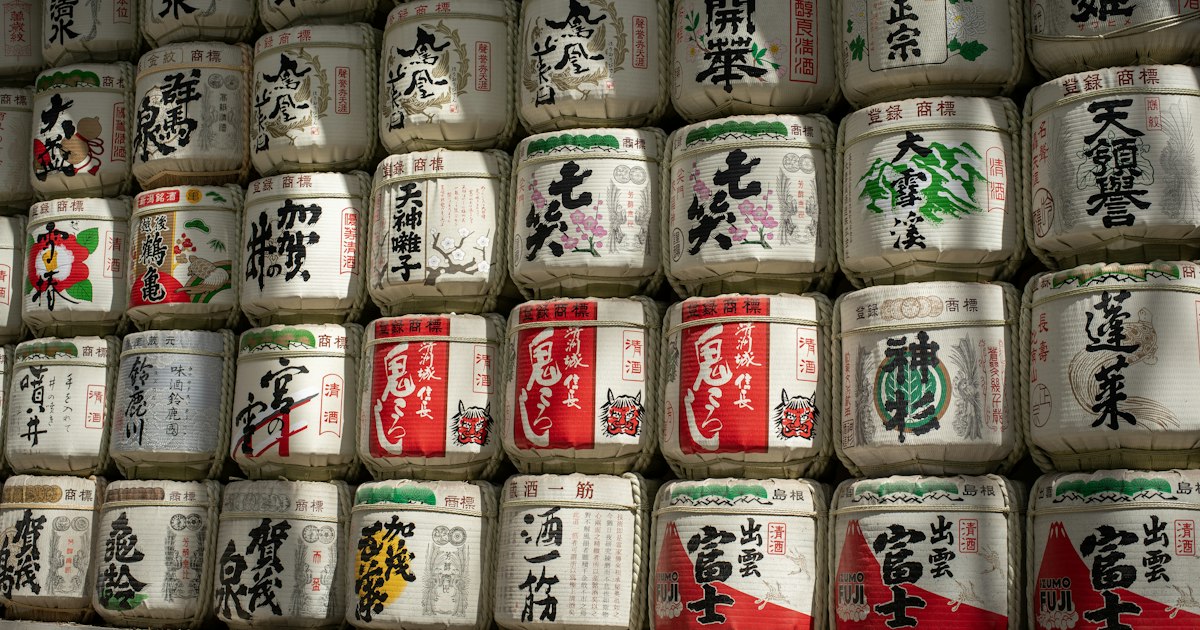
Photo by Habib Beaini on Unsplash
Most sake breweries you can walk into on a whim are museums with a gift shop attached — pleasant, but static. The actual brewing, the part with steaming rice and bubbling fermentation tanks and brewers who haven’t slept properly in weeks, only happens during kanzukuri, the traditional cold-weather brewing season that runs roughly from late October through March, peaking in January and February. If you want to see sake being made rather than just sake being sold, winter is the only window, and it takes a bit more planning than showing up at the door.
Why Winter Is the Only Real Option
Sake ferments best in cold temperatures, which is why brewers historically worked through winter and went quiet the rest of the year. Outside that window, most kura (breweries) are either aging and bottling what they already made, or running at a skeleton crew. A summer visit to a sake brewery means a tour of empty tanks and a tasting counter — useful, but not what this guide is about. If your trip dates are flexible, aim for mid-December to late February, and specifically ask whether the brewery is “actively brewing” (moromi ga tatteiru) on the dates you’re considering, since even in-season activity ebbs and flows by batch.
Three Regions That Actually Welcome Visitors
Fushimi, Kyoto — Japan’s second-largest brewing region and the easiest to reach. The kura district clusters around Chushojima and Fushimi-Momoyama stations on the Keihan Line, walkable in about 10 minutes from either. Gekkeikan’s Okura Sake Museum here charges around 600 yen for entry, which includes a tasting of three sakes and a small souvenir cup; it’s open roughly 9:30–16:30 and closed for a few days around New Year and mid-August.
Nada, Kobe/Nishinomiya — the largest brewing district in the country, strung along what locals call the “sake road.” Hakutsuru’s brewery museum is free and shows Edo-period tools and a recreated brewing floor; Hakushika’s museum nearby charges a small admission (around 400 yen) and includes tasting. Reach the area via JR Sumiyoshi or Hanshin Uozaki stations.
Niigata — the prefecture with the most breweries per capita in Japan, and the most convenient single stop for sampling widely: Ponshukan, built right into Echigo-Yuzawa Station on the Joetsu Shinkansen (about 75 minutes from Tokyo), lets you buy 500 yen worth of coins and use them in vending-style dispensers to taste sake from roughly 90 different Niigata breweries, plus a sake-infused footbath. It’s not a working kura, but it’s the best orientation before visiting one.
What You’ll Actually See Inside a Working Kura
A real production tour, as opposed to a museum walkthrough, usually covers: the koshiki room where rice is steamed in huge batches each morning; the koji room, kept warm and humid for cultivating the mold that converts starch to sugar; rows of moto (yeast starter) tanks; and the moromi tanks themselves, where you’ll actually see and smell fermentation happening — a thick, slightly sweet, rice-and-alcohol smell that’s stronger than most people expect. Depending on the brewery, you may also see the pressing stage, either a traditional fune press or a modern Yabuta press that separates sake from the leftover lees (kasu).
Look for a sugidama, the ball of cedar fronds hung outside the entrance — bright green when a new batch is first pressed, slowly browning as it ages. It’s a centuries-old signal to locals that fresh sake has just become available, and tracking the color is a genuinely useful way to guess which breweries have new releases.
Expect some house rules: no strong perfume or cologne (it interferes with staff’s ability to judge aroma), no open flame near the tanks, and sometimes hairnets or disposable booties on the production floor. These aren’t tourist theater — they’re the same rules brewery staff follow themselves.
Tasting: What’s Included and What Costs Extra
Museum-style visits typically bundle a few tastings into the admission fee (roughly 300–800 yen total). Ponshukan-style facilities charge per pour via coins, with extra coins around 100 yen each if you want to taste beyond your initial set. Actual working-kura tours are a different tier: expect 3,000–6,000 yen per person for a 60–90 minute guided tour that includes a proper flight of 4–6 sakes, sometimes paired with small bites. Some breweries only pour unpasteurized nama-zake or just-pressed shinshu to tour groups during the brewing months, which you genuinely cannot get bottled and shipped abroad — worth asking about specifically if trying something unavailable outside Japan is the point of the visit.
If you’re staying somewhere with a kaiseki dinner included, ask whether the ryokan can pair courses with sake from a brewery you visited that day — many regional ryokan keep a local-only list. For how these meal plans are typically structured and priced, see Onsen Ryokan Meal Plans Explained. Kochi Prefecture takes sake pairing further than most regions, built around its famously generous drinking customs — if a feast-style dinner interests you, Sawachi Ryori is the dish to seek out alongside it.
Booking a Tour: Reservations and Common Mistakes
The biggest mistake visitors make is assuming a brewery operates like a winery with drop-in tours. Most working-floor tours in Japan require reservations one to four weeks ahead, and a large share are Japanese-language only — English-guided slots exist at a handful of breweries in Niigata, Akita, and Yamaguchi (Asahi Shuzo’s Dassai no Sato visitor center near Iwakuni is a reliable English-friendly option), but you should confirm language support before booking, not after arriving.
Other mistakes worth avoiding: showing up without cash, since small rural kura shops are frequently cash-only; assuming you can drive yourself afterward in areas with no taxi service — plan a designated driver or train connection in advance; and confusing sake with mirin at the gift shop, which happens more than you’d think since both are rice-based and sold in similar bottles at brewery stores. If you want to know which is which before you buy, the mirin buyer’s guide covers the difference clearly.
Budget, Mid-Range, and Splurge Options
- Budget (300–800 yen): Self-guided museum visits in Fushimi or Nada, or a Ponshukan-style coin-tasting hall in Niigata. No reservation needed, English signage is decent, good for a two-hour stop between other sightseeing.
- Mid-range (3,000–6,000 yen): A reserved working-kura tour with a tasting flight, ideally timed to January or February when fermentation is in full swing. This is where you actually see brewing happen rather than reading about it on a placard.
- Splurge (15,000–30,000+ yen): A private tour with a sake sommelier followed by a pairing dinner at a ryokan, sometimes including a bottle of nama-zake to take home that was bottled that week. Worth it mainly if sake is the main reason for your trip rather than a side activity.
However you plan it, build slack into your itinerary — brewery schedules shift around actual production needs, not tourist convenience, and a kura that confirms a tour slot in December may need to reschedule if a batch runs long. That unpredictability is exactly what makes a winter visit worth the extra coordination.