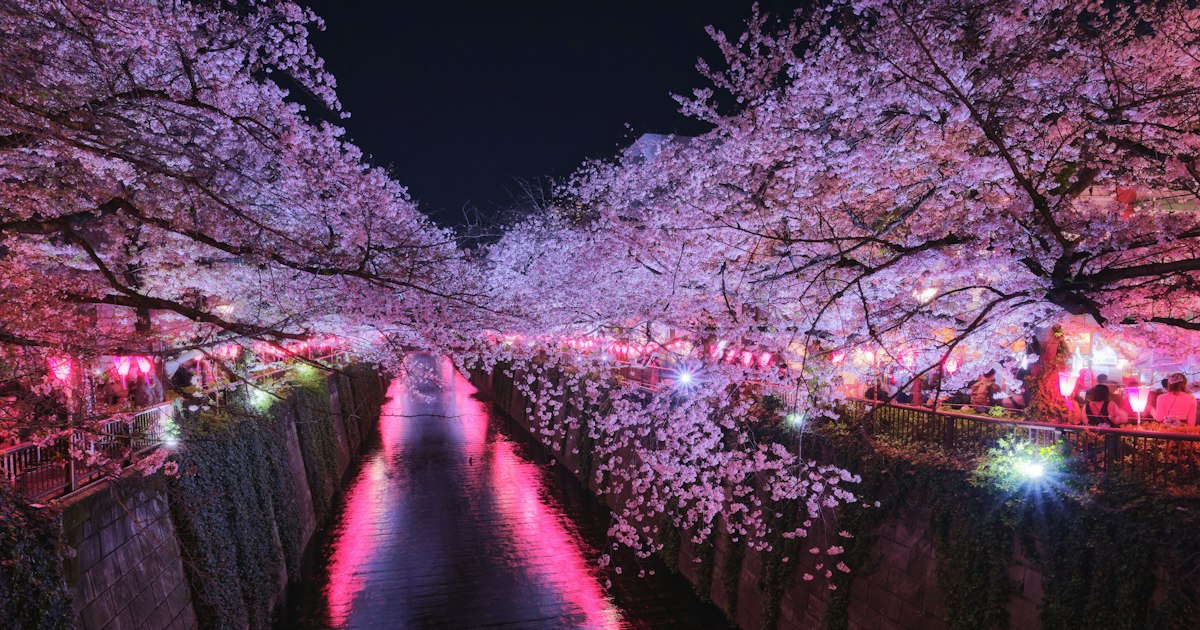
Photo by Takashi Miyazaki on Unsplash
If you’re visiting Japan in February and assumed you’d missed cherry blossom season entirely, you’re in luck — you just need to go to the right place. In the small town of Kawazu on the Izu Peninsula, a deep-pink cherry variety called Kawazu-zakura blooms from late January through early March, roughly six weeks ahead of Tokyo’s famous Yoshino cherries. It’s one of Japan’s best-kept seasonal secrets, and it’s entirely doable as a day trip or overnight stay from Tokyo.
What Makes Kawazu-zakura Different
Kawazu-zakura (河津桜) is a naturally occurring hybrid first discovered in the 1950s growing in a garden in Kawazu, a town on the warm southeastern coast of the Izu Peninsula in Shizuoka Prefecture. Genetically, it’s believed to be a cross between the Kanhizakura (Taiwan cherry) and Oshima-zakura varieties, which is why it blooms so early and so vividly — the petals are a much deeper, more saturated pink than the pale white-pink of Yoshino cherries most visitors picture when they think of sakura. The blossoms also last far longer on the tree, often two to three weeks per bloom cycle versus about a week for Yoshino, because the cooler early-spring temperatures slow petal fall.
Today roughly 8,000 Kawazu-zakura trees line the banks of the Kawazu River, planted in the decades after the original tree was discovered, turning the riverside promenade into a continuous pink corridor through the middle of town.
When to Go: Bloom Timing and the Festival Dates
Kawazu-zakura typically starts opening in late January and reaches peak bloom in early-to-mid February, continuing in good condition through the end of the month. The town runs its official Kawazu Sakura Matsuri (Kawazu Cherry Blossom Festival) to coincide with this, generally spanning early February to early March, with food stalls, local produce vendors, and evening illumination of the trees along the river lit up until around 9pm. Because the bloom is so dependent on winter temperatures, exact peak dates shift by a week or so year to year — if you’re planning the trip months ahead, build in a couple of flexible days rather than locking into a single date.
This also makes Kawazu a useful fallback if your trip dates don’t line up with Tokyo’s late-March/early-April cherry season — you still get a full cherry blossom experience, just earlier and in a quieter, more rural setting. Early February also happens to overlap with Japan’s chocolate-gifting season; if you’re in the country around then, it’s worth knowing the customs explained in our guide to Valentine’s Day in Japan.
Getting to Kawazu from Tokyo
Kawazu is served by its own station, Kawazu Station, on the Izu Kyuko Line. The most comfortable option is the JR Limited Express Odoriko, which runs directly from Tokyo Station (and Shinjuku, on some runs) straight through to Izukyu-Kawazu without a transfer — the ride takes roughly 2.5 to 3 hours, and a reserved seat one-way typically runs in the ¥7,000–7,500 range.
A cheaper route is to take the Tokaido Shinkansen from Tokyo to Atami (about 50 minutes, roughly ¥4,000 unreserved), then transfer to the Izu Kyuko Line for the remaining run down to Kawazu (about 1 hour 20 minutes, roughly ¥1,800–2,000). This combination costs somewhat less than the direct Odoriko and is worth it if you already have a JR pass covering the Shinkansen leg — note the Izu Kyuko Line itself is a private line and not covered by the JR Pass. Once you’re near Odawara on this route, it’s also an easy detour to the Enoura Observatory, Hiroshi Sugimoto’s clifftop art museum, if you want to break up the journey with a half-day stop.
From the station, the river promenade and the heart of the festival are a 5–10 minute walk away, and the route is well signposted in English during festival weeks.
Where to See the Blossoms in Kawazu Town
The main viewing area is the walking path along the Kawazu River (Kawazu-gawa) running from near the station down toward the coast, with the densest, most photogenic stretch close to the Mine no Sakura area and the riverside park just south of the station. Entry to the riverside walk is free; the festival itself doesn’t charge admission, though you’ll see donation boxes (typically a few hundred yen) supporting tree maintenance, and some roped-off viewing spots near the illumination zone may ask for a small contribution. Stalls sell Izu specialties — grilled fish, mikan (mandarin) products, and sakura-flavored sweets — generally for ¥300–800 per item.
For a quieter view away from the main stalls, walk 20–30 minutes upstream from the station toward Kawazu Nanadaru (a set of waterfalls), where the crowds thin out considerably but the trees are just as dense.
Budget, Mid-Range, and Splurge Ways to Experience It
On a budget, a day trip from Tokyo using the Shinkansen-plus-transfer route keeps round-trip transport under roughly ¥12,000, with no lodging cost and only snack-stall spending beyond that.
Mid-range travelers often combine the blossoms with a night in the Izu Peninsula’s hot spring towns — Izu is one of Japan’s classic onsen regions, and many ryokan in nearby Atami or Shimoda offer river-view or ocean-view rooms from roughly ¥15,000–25,000 per person including dinner. If you’re traveling with a baby or toddler, it’s worth checking our guide on bringing young children into a Japanese onsen before booking, since age limits and diaper policies vary by property.
For a splurge, book a scenic helicopter flight over the Izu coastline and Mount Fuji — on clear February days the peninsula’s blossoms, coastline, and a snow-capped Fuji can all be visible in one flight. Our guide to booking a scenic helicopter flight covers the main operators and what a flight actually costs.
Common Mistakes to Avoid
- Assuming Kawazu-zakura means the same thing as “cherry blossom season” nationally. It’s a distinct, localized variety — if you come expecting the pale Yoshino cherries you’ve seen in photos of Kyoto or Tokyo, the deeper pink can be a surprise (a pleasant one, but plan your photos accordingly).
- Not checking bloom reports before locking in dates. Japanese weather and tourism sites publish Kawazu-zakura bloom forecasts starting in January; a warm or cold winter can shift peak bloom by a week or more.
- Skipping the Izu Kyuko Line transfer and assuming a JR Pass covers the whole trip. It covers the Shinkansen and Odoriko as far as JR tracks go, but not the private Izu Kyuko Line south of Ito — budget for that separate fare.
- Visiting only on a weekend. The festival gets genuinely crowded on Saturdays and Sundays, especially the two or three weekends around peak bloom; a weekday visit means a noticeably calmer riverside walk.
- Underestimating how cold February in Izu still is. Coastal Izu is milder than Tokyo but still winter — bring a proper coat, especially for evening illumination viewing.
Beyond Kawazu: Other Early-Bloom Spots
If you can’t make it to Kawazu itself, nearby Atami has its own early sakura display along the Itokawa River walkway, often blooming even slightly earlier than Kawazu’s trees, and it’s a much shorter trip from Tokyo (Shinkansen direct to Atami, under an hour). It’s a reasonable backup if your schedule is tight or you want to pair blossom viewing with an onsen soak on the same day.
Either way, catching cherry blossoms in February rather than late March means smaller crowds, cheaper off-peak accommodation, and a genuinely different side of Japan’s sakura culture than the one most visitors see.