Photo by Susann Schuster on Unsplash
Kitakata is a quiet city in the Aizu basin of Fukushima Prefecture that happens to have one of the highest concentrations of ramen shops per capita anywhere in Japan — something like 120 shops serving a population of around 44,000 people. It isn’t a ramen theme park or a single street of competing stalls; it’s an ordinary town where eating noodles for breakfast is normal, where many shops are old family-run diners rather than specialist ramen-ya, and where the local style — thick, wavy, hand-cut noodles in a light soy broth — has stayed recognizably the same for close to a century. If you’re building a Tohoku itinerary around food rather than just scenery, it’s one of the more rewarding day trips in the region.
What makes Kitakata ramen different
Two things define the style. First, the noodles: thick, flat, and heavily waved, made using a multi-stage water-addition technique (locals call it tashimizu) that gives the dough an unusually high water content. The result is a noodle that stays chewy and doesn’t go limp even after sitting in hot broth, which matters because Kitakata broth is thinner and lighter than, say, Kyushu tonkotsu.
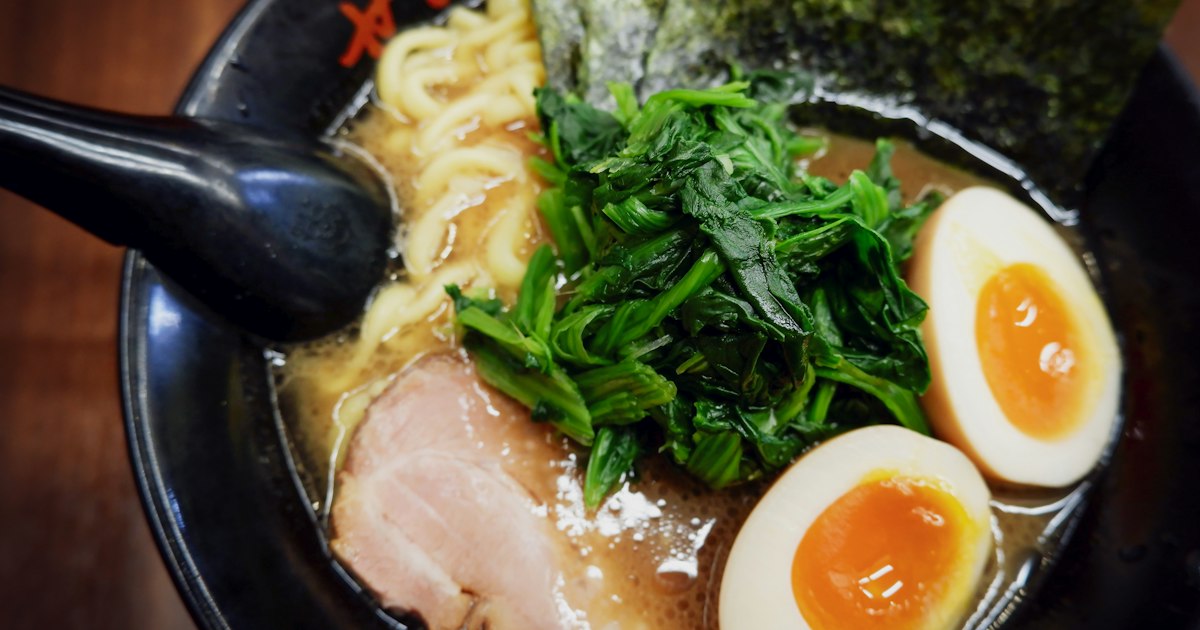
Second, the broth itself: a clear, brownish shoyu (soy sauce) base, usually built from pork bones simmered with niboshi (dried sardines), sometimes with chicken added. It’s savory and a little smoky from the dried fish, but nowhere near as heavy or fatty as tonkotsu ramen from Kyushu or the miso styles of Sapporo. Most shops serve a straightforward bowl — noodles, broth, a few slices of chashu pork, menma bamboo shoots, scallions, and a sheet of nori — and don’t deviate much from that formula. The skill is in the broth balance and noodle texture, not in piling on toppings.
Why the town has so many ramen shops
Many of Kitakata’s ramen shops are technically shokudo — general diners that also serve curry rice and donburi — rather than dedicated ramen restaurants. The style is believed to date to the 1920s, when Chinese immigrant cooks began selling noodle soup to workers at the town’s sake breweries and lumber yards. Kitakata was (and still is) a town of soy sauce brewers, sake breweries, and miso makers, which is partly why a soy-forward broth took hold here rather than the miso or salt styles found elsewhere in Tohoku. The old kura (storehouses) used for brewing are still scattered through town and worth a short walk between ramen stops if you have time.
Getting to Kitakata
From Tokyo, take the Tohoku Shinkansen to Koriyama (roughly 80 minutes, around ¥8,000–9,000 one-way unreserved), then transfer to the JR Ban-etsu West Line toward Aizuwakamatsu/Kitakata. Local trains take about 60–70 minutes from Koriyama; a limited express service cuts that down when it’s running. Budget roughly 2.5–3 hours total each way from Tokyo, and check current JR East rail pass coverage before you book, since the Ban-etsu West Line is a regional line that isn’t always included in every pass.
Once you’re at Kitakata Station, the town is flat and ramen shops are spread out rather than clustered on one street, so renting a bicycle at the station tourist information counter (typically a few hundred yen for a half day) is the easiest way to hit two or three shops without a lot of walking. IC card coverage thins out the further you get from major stations, so don’t assume every ticket machine or shop on this trip takes a Suica or Pasmo the way it would in Tokyo — see this guide to which station kiosks actually take IC card tap-to-pay before you rely on one for the whole trip.
Where to eat: budget to splurge
Prices are gentle almost everywhere. A basic bowl of shoyu ramen typically runs ¥700–850, with a chashu-loaded version landing around ¥1,000–1,200.
- Budget / classic: Genraiken (源来軒), generally credited as the shop that started the whole style back in 1925, is a good first stop for a textbook bowl without a long wait.
- Mid-range, worth the queue: Makoto Shokudo (まこと食堂) is one of the most talked-about shops in town for its clean, delicate broth — expect a line, and expect them to sell out and close once the day’s noodles run out, sometimes mid-afternoon.
- Splurge (relatively speaking): Bannai Shokudo (坂内食堂), a short walk from the station, is known for generous, almost absurdly thick slices of chashu piled on top — order the chashu-men if you want to see what that looks like.
Nearly all of these are small, cash-based family operations. Card and IC payment are not reliable here, so stop at a convenience store ATM before you leave Koriyama or Aizuwakamatsu — see this breakdown of convenience store ATM withdrawal limits if you’re not sure how much you can pull per transaction.
Asa-ra: why locals eat ramen for breakfast
One quirk worth planning around: Kitakata has a tradition of eating ramen in the morning, known locally as asa-ra (morning ramen), a habit that goes back to brewery and construction workers wanting a hot meal before an early shift. A number of shops open as early as 7:00 or 8:00 and are already serving a steady breakfast crowd. The flip side is that many of the same shops close by early-to-mid afternoon — 2:00 or 3:00pm is common — and don’t reopen for dinner. If you’re picturing a sit-down ramen dinner after a day of sightseeing, Kitakata will likely disappoint you; plan your visit around lunch, not dinner.
Hiyashi ramen: the cold-noodle summer specialty
Kitakata is also credited with inventing hiyashi ramen — cold noodles served in a chilled soy broth, topped with cucumber, menma, chashu, and a boiled egg. It’s distinct from Tokyo’s hiyashi chuka (which uses a vinegar-sesame dressing rather than a cold version of the same soy broth), and it was reportedly developed in the 1930s as a way to keep selling noodles through the Aizu basin’s hot, humid summers. It’s typically priced close to the regular bowl, around ¥750–900, and is mainly on menus from late spring through early autumn. If you’re visiting in July or August, it’s worth asking for it by name even if it’s not prominently listed. Given how hot and humid the basin gets in summer, grab something to rehydrate with afterward — a vending machine ion drink does the job; this guide to Pocari Sweat, Aquarius, and OS-1 explains the differences if you’ve never had to choose between them.
Common mistakes to avoid
- Assuming dinner service: Many shops are lunch-and-breakfast only and close mid-afternoon. Arrive by late morning if you want to try more than one place in a day.
- Not checking the weekly closed day: Unlike many tourist-oriented restaurants, Kitakata’s shokudo don’t share a uniform day off — each shop sets its own, and it changes. Check the specific shop before you build your schedule around it.
- Expecting card payment: Bring cash; very few of these diners take anything else.
- Treating it as a one-noodle-style town: If you have a full day, the countryside around Kitakata has working soy sauce and miso breweries open for tours, plus roadside stands selling whatever local farmers picked that morning — worth a stop if you want to see where some of that soy sauce broth starts; see this guide to Japan’s unmanned roadside vegetable stands for how the honor-system pricing works.
Kitakata rewards a slow, low-key day: one or two bowls, a short walk past the old brewery storehouses, and no rush to be anywhere else. It’s a reminder that some of Japan’s best food towns are built around breakfast, not dinner.