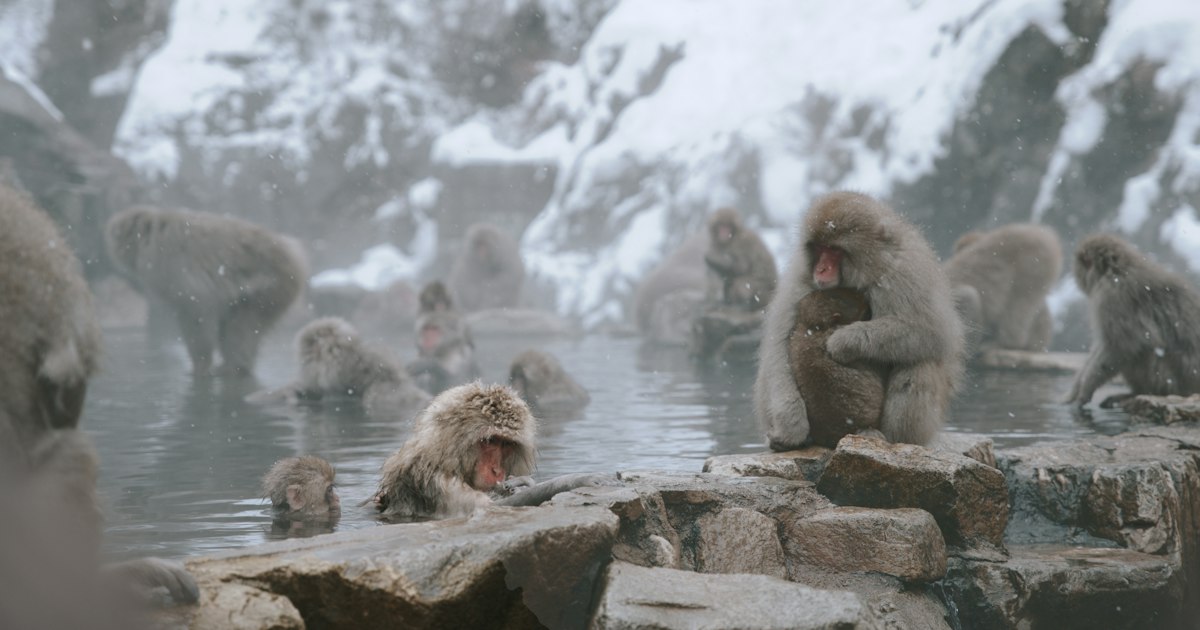
Photo by Jonathan Ansel Moy de Vitry on Unsplash
In a narrow valley outside the small town of Yamanouchi, Nagano Prefecture, wild Japanese macaques climb down from the forest, wade into a steaming rock pool, and sit there looking utterly unbothered — sometimes with snow piling up on their heads. Jigokudani Yaen-koen, better known internationally as the Jigokudani Monkey Park, is one of the few places on Earth where you can watch this happen a few meters away, unfenced. It’s become one of the most-searched day trips from Tokyo, and for good reason, but it also gets some basic logistics wrong in a lot of trip-planning blogs. Here’s what’s actually true on the ground.
Why This Park Exists (and Why the Monkeys Bathe)
“Jigokudani” means “Hell’s Valley,” named for the steam and boiling water that rise from the cliffs here — this is volcanic hot-spring country, part of the same geothermal system that feeds the region’s onsen towns. The monkey park itself opened in 1964 as a way to observe the local troop of Japanese macaques without them raiding nearby farms or onsen ryokan. Park staff scatter grain and soybeans in a specific area near the outdoor pool to keep the troop nearby, which is why the monkeys reliably show up close to the water rather than staying deep in the forest. The bathing behavior is genuinely their own choice, not a performance — they do it to stay warm, and younger monkeys often turn it into play.
Getting There: Nagano Station to the Trailhead
Access takes a bit of assembly, but it’s straightforward once you know the sequence:
- Shinkansen to Nagano Station — about 90 minutes from Tokyo Station on the Hokuriku Shinkansen.
- Nagano Electric Railway (Nagaden) to Yudanaka Station — roughly 45–50 minutes, around ¥1,300 one-way. This line is not covered by the Japan Rail Pass, since it’s a private railway.
- Local bus from Yudanaka Station to Kanbayashi Onsen bus stop — about 15 minutes, roughly ¥300.
- Walk the forest trail to the park entrance — about 1.6 km (roughly 30–40 minutes), gently uphill through cedar forest.
If you’d rather not juggle three separate tickets, Nagano Dentetsu sells a combined “Snow Monkey Pass” covering the train and bus legs, usually valid for one or two days — worth pricing against buying tickets separately if you’re also stopping in Yudanaka. Some travelers instead book a direct round-trip bus from Nagano Station straight to the park entrance, which skips the train change entirely and can be worth the extra cost if you’re short on time or traveling with kids.
Before you leave Tokyo, drop your main luggage in a coin locker rather than hauling it to Nagano — a day trip to Jigokudani involves a forest walk in boots, not something you want to do with a rolling suitcase. Our guide to coin lockers in Japan covers sizes, prices, and the apps that show which stations still have space.
Opening Hours and Admission
The park’s hours shift by season, so check before you build your schedule around it:
- Late April–October: 8:30 AM–5:00 PM
- November–late April: 9:00 AM–4:00 PM
Admission is ¥800 for adults, ¥400 for elementary school children, and free for preschoolers. It’s cash-based at the gate, so bring yen — there’s no ATM at the entrance. There’s no advance booking or timed-entry system; you simply walk in, though the last stretch of forest trail closes access to latecomers close to closing time, so aim to arrive at least an hour before the park shuts.
Best Time to Visit
This is the detail most visitors get wrong: the monkeys are present year-round, but they only reliably sit in the hot spring when it’s cold. In summer, you’ll see plenty of monkeys around the park — grooming, foraging, chasing each other across the rocks — but the pool itself is often empty because they have no reason to want a hot bath.
For the classic “snow monkey in an onsen” scene, aim for December through March, ideally after a fresh snowfall, which is also when the valley looks the most dramatic. January and February are the most reliable months for actual snow on the ground. Early morning (right at opening) tends to have fewer crowds and better light for photos, and the monkeys are often more active before they’ve eaten their fill for the day.
What to Wear and Common Mistakes
The forest trail and viewing area are unpaved dirt and stone, and in winter they ice over. Regular sneakers are genuinely risky here — waterproof boots with real tread, or boots plus slip-on ice cleats (many convenience stores and outdoor shops in Nagano sell cheap ones), make the walk far safer. Trekking poles help too if you have them.
A few other things people get wrong on-site:
- Don’t bring food or let it show. These are wild animals; a rustling bag or visible snack can draw a monkey straight at you.
- Don’t make prolonged eye contact. Macaques read a fixed stare as a threat display. A glance for a photo is fine; staring them down is not.
- Don’t touch them, even if one sits close to you on the path — it happens often, and staff generally allow it as long as visitors stay passive.
- Don’t underestimate the walk in bad weather. It’s not stroller-friendly, and carrying a small child on an icy uphill trail is harder than it looks in photos.
There are no lockers or full-service restaurants inside the park itself, just a small shop near the entrance, so eat beforehand or bring a light snack for the walk.
Where to Stay and What Else to See Nearby
Most visitors do this as a day trip from Nagano or even Tokyo, but staying overnight in the area lets you see the park at opening, before tour groups arrive, and lets you soak in a hot spring yourself afterward.
- Budget: Guesthouses in Yudanaka Onsen, from roughly ¥5,000–8,000/night per person, often with access to a public bathhouse.
- Mid-range: Ryokan in Kanbayashi Onsen or Shibu Onsen, generally ¥15,000–25,000/night per person with dinner and breakfast included — Shibu Onsen’s old wooden streets and public bathhouse-hopping (yumeguri) pair well with a monkey park visit.
- Splurge: Larger ryokan in Yudanaka with private outdoor baths (kashikiri-buro) run ¥30,000+ per person but let you have your own hot-spring moment without an audience.
If you have extra time in the area, Yamanouchi sits close to Shiga Kogen for hiking or skiing depending on the season, and Nagano City itself is worth a stop for Zenkoji Temple. If snow monkeys become a theme of your trip, note that Kyoto has its own version with a very different vibe — the Iwatayama Monkey Park in Arashiyama lets you feed monkeys from inside a cage while they roam free outside, more accessible but far less atmospheric than Jigokudani’s snowbound hot spring.
After a cold morning watching monkeys bathe, Nagano Prefecture is also a solid place to eat well — the region is known for Shinshu beef, and if you’re curious how it stacks up against more famous names, our guide to wagyu grading explains what the A5 and regional labels actually mean before you order.
Jigokudani rewards a little planning more than most day trips in Japan — get the season and the footwear right, and it’s one of the most memorable few hours you’ll spend in the country.