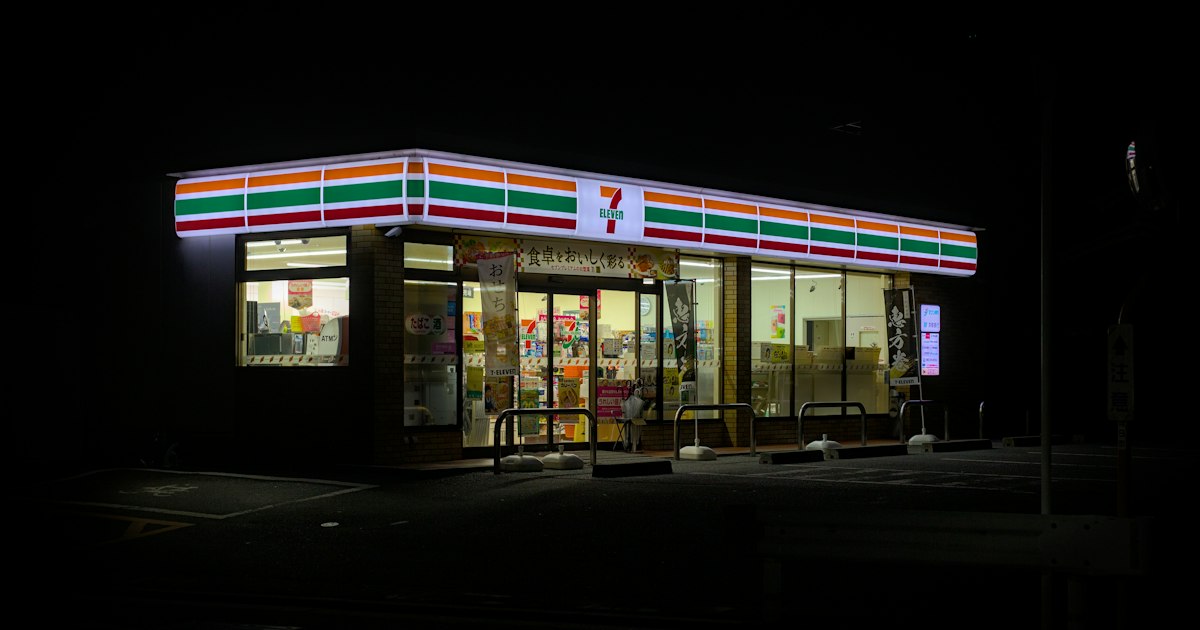
Japan still runs on cash more than most visitors expect — tiny noodle shops, shrine donation boxes, and plenty of retro candy stalls won’t take your card. The good news is that getting yen into your wallet is no longer the ordeal it used to be, thanks to one unglamorous but hugely useful machine: the Seven Bank ATM inside almost every 7-Eleven in the country. If you’re planning a Japan trip, it’s worth knowing exactly how these work before you land, so you’re not fumbling with a rejected card at midnight.
Why 7-Bank ATMs Are the Tourist-Friendly Default
Seven Bank is the financial arm of Seven & I Holdings, the company behind 7-Eleven in Japan, and it was built from the start to handle foreign-issued cards reliably. That’s not true of every ATM in Japan — plenty of regular bank ATMs at Japanese megabanks still reject overseas cards outright, or only accept them during limited daytime hours. Seven Bank machines, by contrast, were designed for international withdrawals from day one, with English-language menus and recognition of the major global card networks. With roughly 21,000 7-Eleven stores nationwide, there’s almost always one within walking distance, whether you’re in central Tokyo, a small town in Nara, or a ferry terminal in Okinawa.
Which Cards Work (and the Networks to Check)
Seven Bank ATMs accept cards on these networks: Visa, Visa Electron, PLUS, Mastercard, Maestro, Cirrus, American Express, Diners Club, Discover, JCB, and UnionPay. In practice, this covers the vast majority of debit and credit cards issued outside Japan. Before you fly, check the back of your card for one of these logos — if it has one, it should work. It’s also worth telling your bank you’re traveling to Japan, since some card issuers flag overseas ATM activity as suspicious and freeze the card on the first withdrawal attempt.
One quirk to know: Japanese ATMs only accept numeric PINs, typically 4 digits. If your card uses a longer or alphanumeric PIN, contact your bank before departure to get a compatible one issued.
Step-by-Step: How to Withdraw Cash
- Insert your card and select your preferred language (English, Chinese, Korean, Portuguese, and Spanish are commonly available) as soon as the screen prompts you.
- Choose “Withdrawal” and enter the amount in yen.
- Enter your PIN and confirm.
- If a screen offers to show the transaction in your home currency (dynamic currency conversion), decline it and let your card issuer handle the conversion — their exchange rate is almost always better.
- Take your cash, card, and the printed receipt, which shows the exchange rate used, in case your bank statement doesn’t match what you expected.
Fees, Limits, and How to Avoid Surprises
Seven Bank itself does not add its own ATM surcharge for most internationally issued cards, but your home bank almost certainly will — typically a foreign transaction fee of around 1–3% of the amount withdrawn, sometimes plus a flat fee per withdrawal. Because that flat fee doesn’t scale with the amount, it’s more economical to withdraw a larger sum less often than to make several small withdrawals over your trip. Most Seven Bank machines cap a single withdrawal at around ¥100,000 per transaction, dispensed in a mix of ¥10,000, ¥5,000, and ¥1,000 notes, though your own bank’s daily limit may be lower — check that figure before you go, since it’s set on your end, not Japan’s.
Finding One and Hours of Operation
Look for the Seven Bank ATM logo near the entrance or front window of any 7-Eleven — it’s usually a freestanding machine just inside the door, separate from the cash registers. Because most 7-Eleven stores operate 24 hours, the ATMs are generally accessible around the clock, including public holidays, which matters if you land on a late flight or need cash before an early Shinkansen. A small number of stores (especially in rural areas) have moved to reduced hours in recent years as part of a nationwide shift away from strict 24/7 operation, so if you’re in a smaller town, it’s worth having a backup machine identified rather than counting on just one location.
Common Mistakes to Avoid
- Accepting the on-screen currency conversion. It almost always gives a worse rate than your card network’s own conversion — choose “no conversion” or “charge in Japanese yen.”
- Assuming any convenience store ATM works the same way. Lawson and FamilyMart also have ATMs, and many now accept foreign cards too, but Seven Bank’s foreign-card support has historically been the most consistent, so it’s the safest default if you’re unsure.
- Forgetting Japan is still cash-heavy outside big cities. Small retro shops, local festival stalls, and traditional craft stores often don’t take cards at all — stock up on cash before you need it, not when you’re already standing at the counter.
- Not notifying your bank. A frozen card at a 7-Eleven ATM is one of the most common and easily avoidable travel hiccups.
Cash matters more than you’d think once you start shopping for souvenirs, too — plenty of the best finds, like the retro sweets at dagashi candy shops or a tin of gourmet canned mackerel to bring home, are sold at small, cash-preferring shops rather than big department stores.
Backup Options If a 7-Bank ATM Won’t Work
If a particular Seven Bank machine rejects your card (it happens occasionally, usually due to a temporary network issue rather than anything wrong with your card), don’t assume all ATMs in Japan will fail the same way — simply try another 7-Eleven down the street, or look for a Japan Post Bank ATM, which also handles foreign cards reliably and is found in post offices nationwide. Airport arrival halls also have currency exchange counters and ATMs, but their rates and fees are typically worse than withdrawing with your own card once you’re in the city. If you’re planning a longer trip with a packed itinerary — say, catching an early train to see cherry blossoms or planning around a festival — it’s worth building a quick cash withdrawal into your first day’s plan rather than leaving it for later, the same way you’d plan around opening hours for something like designated smoking areas or other practical logistics that are easy to overlook until you actually need them.
Ultimately, the humble 7-Eleven ATM is one of the few pieces of Japan travel admin that’s genuinely gotten easier over the years. Keep your card’s network logo in mind, decline the currency conversion prompt, and withdraw in slightly larger chunks — and cash access becomes one less thing to worry about on your trip.