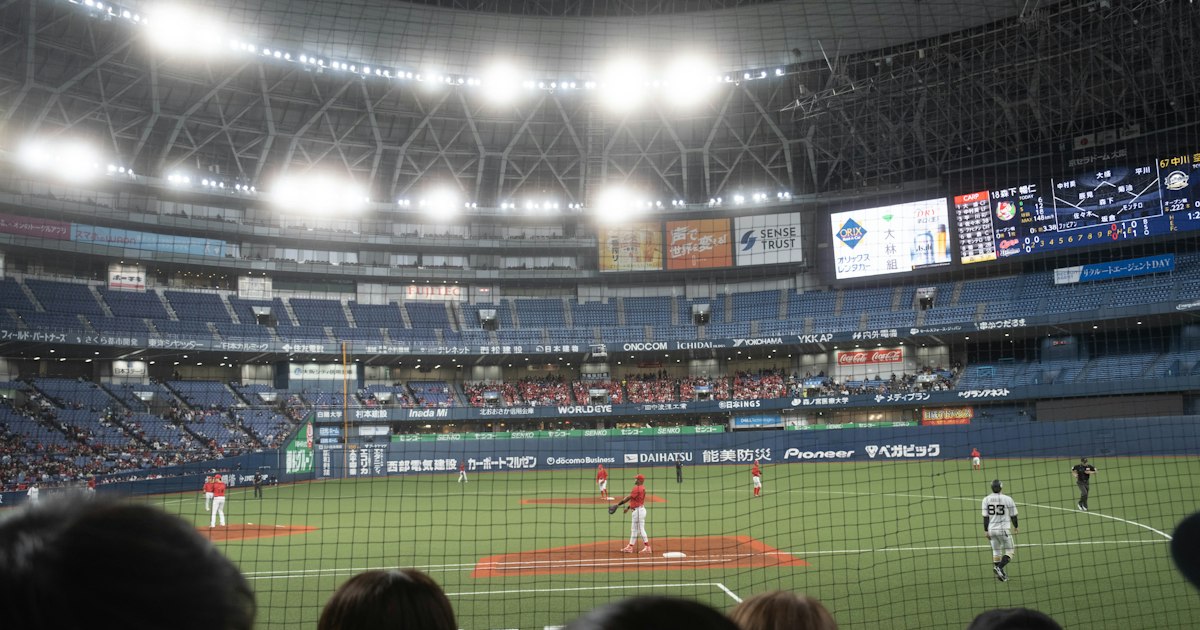
Photo by Harman Tatla on Unsplash
Every August, a stadium outside Osaka fills with 50,000 people watching teenagers play baseball — and it is, by several measures, one of the most emotionally intense sporting events in Japan. Koshien is not a pro league. It’s the National High School Baseball Championship, and for much of the country it eclipses the professional game in sheer drama. If you’re visiting Japan in summer or spring and want to see something genuinely local rather than tourist-oriented, Koshien is worth building a day around.
What Is Koshien, and Why Does It Matter So Much?
“Koshien” technically refers to Hanshin Koshien Stadium in Nishinomiya, Hyogo Prefecture, but the name has become shorthand for the tournament itself. Every one of Japan’s 47 prefectures (Hokkaido and Tokyo each get two representatives) sends a champion team through brutal local qualifiers to a single-elimination national bracket. Losing is final — there’s no second chance, no best-of-three. That format is a big reason the games carry so much weight: a single error in the ninth inning can end a team’s season, and sometimes a player’s entire competitive baseball career, on live national television.
Many professional players, including several who later played in MLB, got their first national exposure here. Broadcasters cut to crying players and coaches bowing to the crowd, and it’s treated as completely normal — this is part of why Koshien resonates so deeply with Japanese audiences of all ages, not just baseball fans.
Summer vs. Spring: Two Different Tournaments
There are actually two Koshien tournaments, and they’re worth distinguishing:
- Summer Championship (Natsu no Koshien) — the big one, held over roughly two weeks in mid-to-late August. This is the tournament with the full 49-team bracket and the tournament most Japanese people mean when they say “Koshien.”
- Spring Invitational (Haru no Koshien) — held in late March with a smaller, invited field of around 32 teams selected based on the previous autumn’s regional results. It’s a shorter, calmer event with easier access to tickets.
If you want the full atmosphere — packed outfield bleachers, brass bands, the roar of thousands of students — go for summer. If you’d rather watch quality high school baseball without crowds or heat, spring is the better pick.
Getting to Hanshin Koshien Stadium
The stadium sits almost exactly between Osaka and Kobe, which makes it an easy half-day or evening trip from either city. Take the Hanshin Main Line to Koshien Station — it’s about 13 minutes from Osaka-Umeda Station and around 20 minutes from Kobe-Sannomiya. The stadium entrance is a short, well-signed walk from the station, and during the tournament the whole route is lined with food stalls and vendors selling tournament merchandise, so you’ll know you’re going the right way even without Japanese signage.
If you’re staying in Kyoto, factor in an extra 40–50 minutes via the Hanshin or JR lines with a transfer in Osaka.
Tickets and How to Get a Seat
This is the part most visitors get wrong, so pay attention:
- Outfield bleacher seats (gaiya) are free and unreserved for most first-round and early-round games, but they are first-come, first-served. For popular matchups, people start lining up before dawn — gates typically open around 6:00–7:00am with first games starting near 8:00am, and seats for a marquee game can fill before 7:00am.
- Infield reserved seats (naiya) must be purchased in advance through the official tournament ticket site, generally priced from around 1,500–3,000 JPY for early rounds up to 5,000–6,500 JPY for the championship weekend. These sell out fast online and are rarely available at the gate for big games.
- Semifinal and final games are dramatically more crowded than early rounds — if you’re flexible, watching a second- or third-round game gives you a much easier, cheaper, and still thoroughly entertaining experience.
Budget option: show up early on a weekday for an early-round game and sit in the free outfield seats. Mid-range: buy an infield seat in advance for a quarterfinal. Splurge: infield seats for the championship final, which require booking well ahead and accepting a long day in the heat.
The Cheering Culture Is Half the Show
What makes Koshien distinct from watching baseball anywhere else is the organized cheering. Each school brings its own oendan (cheering squad) along with a full brass band, and they perform choreographed chants, songs, and dances non-stop for their team’s entire game — win or lose. It’s genuinely one of the most energetic live sports atmospheres you’ll find in Japan, closer to a marching-band competition layered on top of a baseball game.
A lot of that energy is driven by taiko drums keeping the rhythm for the chants — if the sound grabs you, it’s worth reading about where tourists can buy one or take a lesson in Japan after the game. Cheer squad members and alumni supporters also often wear matching team happi coats over their clothes, the same style of short festival jacket described in our guide to Japan’s festival team jacket and where to buy one for matsuri — seeing hundreds of them in a school’s color block is a great photo opportunity from the outfield seats.
Practical Tips and Common Mistakes
- The heat is brutal. Koshien Stadium has limited shade in the outfield and August in the Osaka-Kobe area regularly hits 33–35°C with high humidity. Bring a hat, a handheld fan, and more water than you think you need; convenience stores near the station sell ice packs and cooling towels that locals swear by.
- Don’t assume you can buy tickets at the gate. For anything other than the free outfield seats on quiet early-round days, buy infield tickets online in advance.
- Games run long and start early. Multiple games are often played back-to-back starting at 8am, so arriving “mid-morning” can mean you’ve already missed the first game entirely.
- Smoking is tightly restricted inside and around the stadium, as it is at most public venues in Japan now — if you smoke, check our guide on designated smoking areas in Japan before you go, since there’s no casual lighting up near the gates.
- It’s a genuinely local crowd event, similar in spirit (if not subject matter) to how dedicated fans queue overnight for things like Comiket — arriving early and being patient in line is part of the experience, not an inconvenience to route around.
Is It Worth Building a Trip Around?
If your Japan trip already lands in mid-August or late March, yes — it costs nothing to watch from the outfield and gives you a few hours of completely unscripted, high-emotion local culture that most tourist itineraries never touch. It’s not a “see Japan’s icons” stop like a temple or a shrine; it’s closer to watching a World Cup match in a country that’s obsessed with it. Pair it with a day in Osaka or Kobe before or after, since the stadium is a short ride from either city’s downtown.