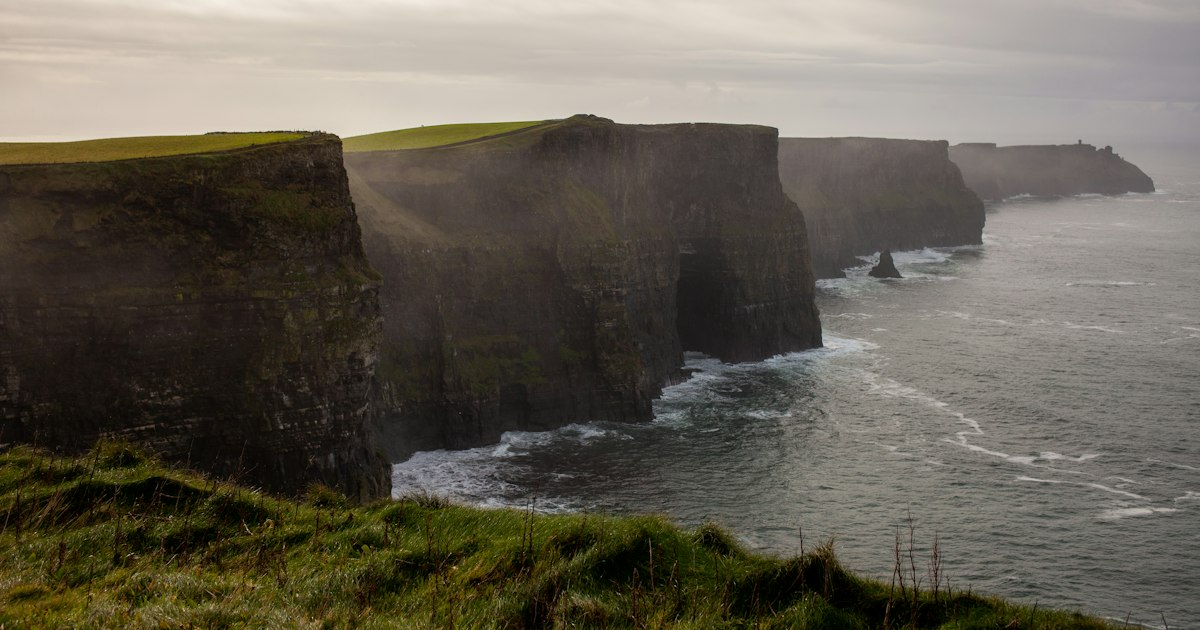
Photo by KaLisa Veer on Unsplash
Closer to Taiwan than to mainland Okinawa, Yonaguni is the kind of place that rewards travelers willing to add an extra flight and an extra day to their Japan itinerary. It’s a windswept, sparsely populated island famous for two things: the mysterious rock formations known as the Yonaguni Monument, lying underwater just off its southern coast, and some of the best hammerhead shark diving in the world. There are no konbini on every corner here, no trains, and barely any crowds — which is exactly the point.
Where Is Yonaguni, and Why Go
Yonaguni sits at the far western edge of Japan’s territory, about 111 km from Taiwan’s coast and roughly 509 km from Okinawa’s main island. It belongs administratively to Okinawa Prefecture but feels like its own world — a small, hilly island around 28 square km with a population of under 1,700 people. If you’ve already visited Okinawa’s more developed islands like Miyakojima, Yonaguni is the opposite experience: fewer beaches for sunbathing, far more rugged coastline, wild horses, and a strong sense of being at the literal edge of the country.
Most visitors come for one of two reasons — diving (especially the Monument and hammerhead sharks) or simply to stand at Japan’s westernmost point. Both are doable in a long weekend, though divers often stay three to four nights to get in enough dive days around weather.
The Yonaguni Monument: Ruins or Rock?
Discovered in 1986 by local diver Kihachiro Aratake while scouting for hammerhead sharks, the Yonaguni Monument is a series of stepped, rectangular rock formations sitting 5 to 25 meters underwater off the island’s southern coast near Arakawa-bana (Iseki Point). The formations have sharp right angles, flat terraces, and what look like carved steps and a possible stone face, which has fueled decades of debate over whether this is a natural sandstone formation shaped by fault lines and erosion, or the remains of a submerged ancient structure.
Mainstream geologists, including most researchers from the University of the Ryukyus, lean toward a natural origin — the rock is sandstone that fractures along straight lines, and similar above-water formations exist elsewhere on Yonaguni. A smaller group of researchers, most prominently Masaaki Kimura, argue for human modification. Nobody has settled it definitively, which is honestly part of the appeal — you get to see the evidence yourself and form an opinion.
You don’t need to be a certified diver to see it: glass-bottom boat tours run from Kubura Port on calm days for around 3,000–4,000 JPY per person, though visibility from the surface is limited. For a proper look, you’ll want to dive or snorkel it directly.
Hammerhead Sharks and Diving Yonaguni
Yonaguni’s other major draw is diving with schooling hammerhead sharks, which gather in deeper channel waters mainly from November through February, with December and January generally considered peak season. Sightings aren’t guaranteed — they depend on current, visibility, and luck — but local dive shops track conditions daily and will tell you honestly if the odds are low on a given day.
A typical two-dive day trip costs around 18,000–23,000 JPY including boat and guide, with gear rental (wetsuit, BCD, regulator) often an extra 3,000–5,000 JPY if you’re not bringing your own. Currents around the Monument and the shark-viewing points can be strong, and several shops ask for Advanced Open Water certification or at minimum solid experience in current diving — this isn’t the easiest place to learn. Dive shops cluster around Kubura and Sonai; most are small, family-run operations, so book a few weeks ahead if you’re traveling in peak shark season, when boats fill up fast.
Getting to Yonaguni
There’s no bullet train shortcut here — flying is the realistic option for most travelers. Ryukyu Air Commuter (RAC) operates small turboprop flights to Yonaguni Airport (OGN) from Naha (about 1 hour) and from Ishigaki (about 30 minutes). These planes seat only a few dozen passengers, so flights sell out, especially around long weekends and shark season — book as early as you can, ideally a month or more ahead for winter travel.
There’s also a passenger ferry from Ishigaki run by Fukuyama Kaiun, taking around 4 hours one way for roughly 3,500 JPY, but it only operates a few days a week and is frequently cancelled for rough seas — don’t rely on it as your only way out if you have a flight to catch elsewhere. If you want a sense of just how remote “remote island Japan” can get, it’s worth comparing notes with the Ogasawara Islands, which are even more isolated — Yonaguni is remote by Okinawan standards, but Ogasawara takes that to another level entirely.
Once on the island, there’s no train or city bus network to speak of. Renting a car is close to essential — there are only one or two rental agencies on the island, with small cars running around 5,000–7,000 JPY per day, and they can sell out in peak season too. A few minshuku (guesthouses) offer airport pickup and bicycle rental as a cheaper alternative if you’re not planning to range far.
Best Time to Visit
For hammerhead sharks, aim for December through February, with peak odds in December and January. For calmer seas, better general visibility, and milder weather for non-diving sightseeing, April through June and October into November tend to be pleasant, with less typhoon risk than mid-summer. July through September brings the highest typhoon risk in the region — flights and ferries get cancelled with little notice, so build in a buffer day if you’re traveling then, especially since missing your return flight on a small prop-plane route can mean a multi-day wait for the next available seat.
Beyond Diving: Horses, Dr. Coto, and Cape Irizaki
Cape Irizaki (Nishihama), marked with a stone monument, is the westernmost point in Japan accessible by land — a simple, free, slightly wind-battered spot that’s become a pilgrimage site for completionist travelers. On clear days, locals say you can glimpse the mountains of Taiwan from here, though this is weather-dependent and not something to count on.
Yonaguni horses (Yonaguni uma) are a small native breed that roams semi-wild across parts of the island — one of Japan’s few remaining native horse breeds, and noticeably smaller than typical riding horses. You’ll likely spot them grazing by the road while driving around.
The island also has a minor pop-culture claim to fame: a set from the TV drama “Dr. Coto’s Clinic” (Dr. Koto Shinryojo) was built on Yonaguni and is preserved as a small, free-to-visit attraction near Hiyari Beach, drawing fans of the show even years after it aired.
Practical Tips and Common Mistakes
- Book flights and dive boats early. Seats on the prop planes and boat spots in shark season both fill up weeks in advance.
- Bring cash. Card acceptance is limited outside a few shops and the airport; there are only a couple of ATMs on the island, and they don’t always accept foreign cards reliably.
- Build in a buffer day before any onward international or domestic flight — weather cancellations are common, particularly in typhoon season (July–September).
- Rent a car if you can. Without one, you’re limited to what taxis (few) and your guesthouse can arrange.
- Don’t expect a swim-up view of the Monument. Unless you dive or snorkel it directly, you’re mostly looking at a glass-bottom boat’s view from above — manage expectations if you’re not a diver.
- Accommodation is simple. Budget minshuku run around 5,000–8,000 JPY per night including breakfast; there’s no large resort-style hotel on the island, so don’t expect Naha-level amenities.
Yonaguni isn’t a place you stumble into on a loosely planned Okinawa trip — it takes deliberate effort to reach. But for divers chasing hammerheads, or anyone curious enough about a 12,000-year-old debate over rocks under the sea, it’s one of the more memorable detours in Japan.