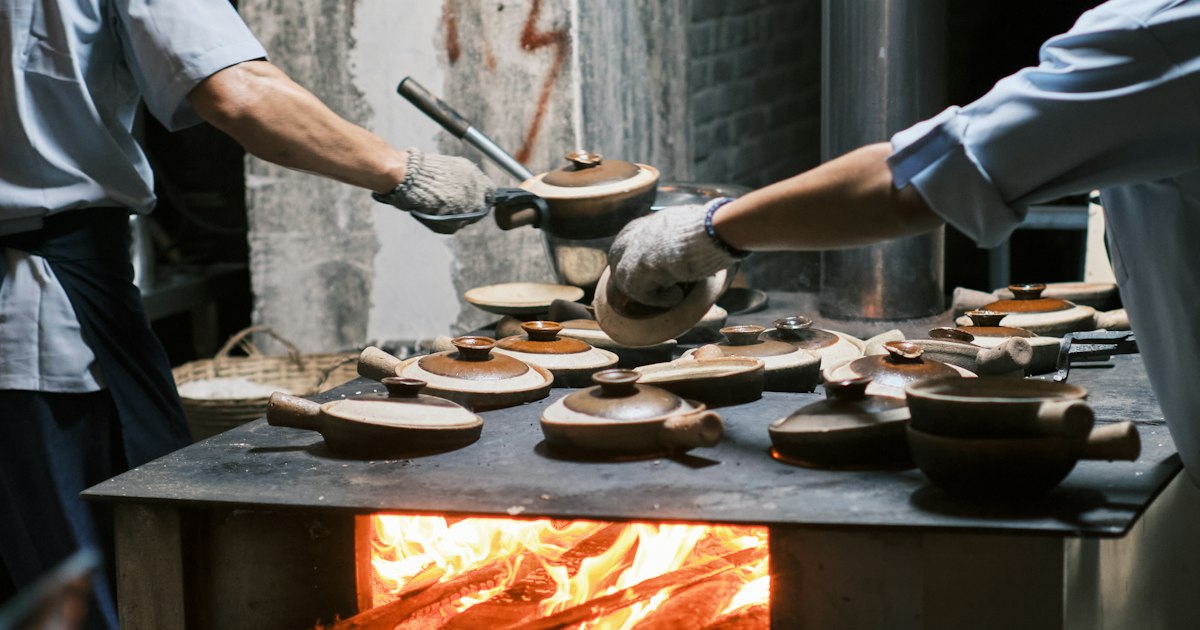
Photo by LI WEIBIN on Unsplash
Long before Instagram made ceramics shopping a travel-itinerary item, tea masters had already ranked Hagi ware second only to Raku bowls in the old saying “ichi Raku, ni Hagi, san Karatsu” — first Raku, second Hagi, third Karatsu. Made in and around Hagi City in Yamaguchi Prefecture, this pale, porous pottery is prized precisely because it’s imperfect: the clay body drinks in tea over years of use, slowly shifting color in a process potters call “Hagi no nanabake,” the seven transformations of Hagi. If you want to bring home a piece of pottery with real tea-ceremony pedigree rather than a mass-produced souvenir, Hagi is worth the detour.
What Makes Hagi Ware Different
Hagi-yaki traces back to the early 1600s, when the Mori clan — the feudal lords of the Choshu domain — brought Korean potters to the area after the Imjin War campaigns. Those potters used local clay from Daidogatake and a milky white feldspar glaze (called kairagi) that crazes into fine cracks as it cools. Those tiny cracks are the point, not a flaw: they let tea soak gradually into the clay, which is why old, well-used Hagi tea bowls (chawan) develop a warm, mottled patina that collectors chase for decades. Several kiln families in Hagi — including the Miwa and Sakakura lines — have been designated as holders of Important Intangible Cultural Properties, and some of their work sits in the same price bracket as fine art.
Getting to Hagi
Hagi has no shinkansen station of its own, which is part of why it stays uncrowded. The standard route is to ride the Sanyo Shinkansen to Shin-Yamaguchi Station — about 4 hours from Tokyo via Shin-Osaka, or roughly 1 hour from Hiroshima — and then transfer to a bus. If you’re booking shinkansen tickets for this leg, it’s worth reading up on reserved vs non-reserved seating before you buy, since long-haul Nozomi/Hikari runs can fill up during holiday weeks.
From Shin-Yamaguchi, the “Hagi-go” highway bus runs directly to central Hagi in about 65–70 minutes and costs around 1,900–2,200 JPY one way. A slower, cheaper alternative is the JR Yamaguchi Line local train to Higashi-Hagi Station, which takes closer to 2 hours with a transfer but costs less if you’re using a regional rail pass. Once in town, central Hagi is flat and compact enough to walk, but many shops rent bicycles for around 1,000 JPY/day, and the Hagi Junkan Maru loop bus covers the castle town for 100–150 JPY a ride — handy if you’re carrying boxed pottery and don’t want to pedal with it.
Where to Buy: Hagi’s Kiln District and Shops
The highest concentration of kilns and retail galleries sits in and around the old castle town (Jokamachi) near the ruins of Hagi Castle, plus a cluster along the Shizuki area. A few reliable starting points:
- Hagi Yaki Kaikan (Hagi Ware Hall) — a one-stop hall near the city center selling work from dozens of local kilns side by side, so it’s the easiest place to compare styles and prices before committing. Generally open daily, roughly 8:30–17:30.
- Individual kiln shops in Jokamachi — many working kilns sell directly from their own showrooms, and prices are often lower than in department stores because there’s no middleman. Hours vary widely (roughly 9:00–17:00), and some close without notice on slow weekdays, so don’t plan a trip around a single kiln without calling ahead.
- Hagi Uragami Museum — not primarily a shop, but its Hagi ware collection is a good way to calibrate your eye for quality before you start spending money nearby.
If pottery-hunting puts you in the mood for other Japanese handicraft shopping, the same patient, shop-by-shop approach applies to things like wa-rousoku handmade candles — small-batch Japanese crafts rarely have fixed, uniform pricing, and part of the fun is comparing makers.
Budget, Mid-Range, and Splurge Picks
Hagi ware spans an enormous price range, and knowing where you sit on it will save time:
- Budget (2,000–6,000 JPY): A simple yunomi teacup or small sake cup from a newer or lesser-known kiln. Perfectly usable, everyday pottery and a good way to start a Hagi-no-nanabake collection without risk.
- Mid-range (8,000–30,000 JPY): A proper chawan tea bowl from an established kiln, often signed, with visible kairagi crackling and a maker’s box (tomobako). This is the sweet spot for most visitors who actually want to use the bowl at home.
- Splurge (50,000 JPY to several hundred thousand JPY or more): Work by named masters from the Miwa, Sakakura, or Saka kiln families. These are collector pieces, sometimes sold with certificates of authenticity, and the price reflects decades of technique as much as the clay itself.
Cash is still king at smaller kiln shops — many accept IC cards or credit cards for larger purchases but not for a 3,000 JPY teacup, so carry yen.
Best Time to Visit
Hagi holds a pottery festival, the Hagi Toki Matsuri, in the spring (around early May), when kilns set up outdoor stalls with festival discounts and you can often meet the potters directly. Outside festival dates, late autumn is the most pleasant season to walk the castle town, with mild weather and fewer tour groups than Kyoto or Hiroshima day-trip crowds. Avoid the muggy height of summer if you’re also hoping to tour working kilns, since many studios are hot, un-air-conditioned workspaces and potters understandably limit visits.
Common Mistakes to Avoid
- Buying the first thing you see. Prices and styles vary a lot between kilns for what looks like similar pottery. Walk through Hagi Yaki Kaikan first to get a price baseline before buying at an individual studio.
- Assuming it’s dishwasher- or microwave-safe. Traditional Hagi ware is porous and unglazed in places; ask the shop directly, since care instructions differ by piece.
- Underestimating shipping. Most kiln shops will pack and ship overseas for an extra fee, which is often safer than carrying an unglazed ceramic bowl in a backpack through the rest of your trip. Ask about this before you buy if you still have weeks of travel ahead.
- Skipping the maker’s box. A tomobako with the kiln’s name and seal adds to resale and gift value and is worth asking for even if it costs a little more.
Using Your Hagi Ware Back Home
A Hagi chawan isn’t just a shelf piece — it’s meant to be used, which is part of why serious tea drinkers seek it out. If you want to understand the etiquette and context behind the bowl you’ve bought, it’s worth pairing this trip with a proper tea ceremony experience in Kyoto or Tokyo before or after your Yamaguchi stop, so you can see how a bowl like yours is actually handled and appreciated in practice.
Hagi won’t fit into a quick Kansai loop — it takes real planning to reach — but for anyone who cares about where their tea bowl actually comes from, it’s one of the few places in Japan where you can buy directly from the kilns that built the tradition in the first place.