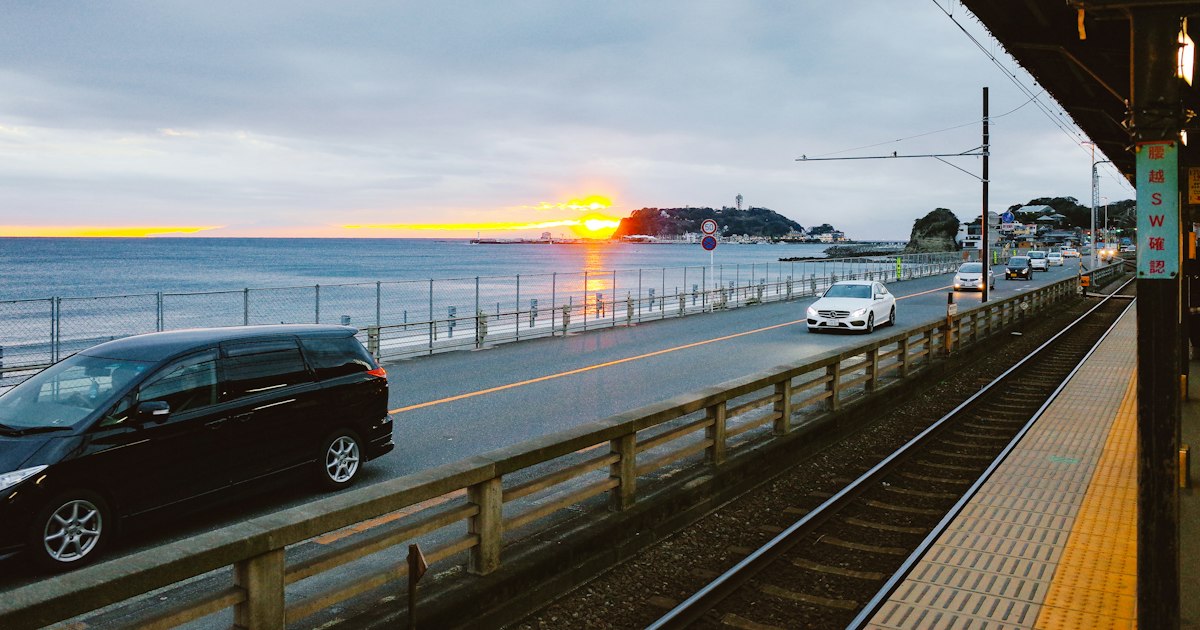
Most visitors ride Japan’s trains purely to get from A to B, but a small fleet of “joyful trains” (JR’s own term, Joyful Train) turn the journey itself into the destination. These are limited-run sightseeing trains with panoramic windows, local sake bars, retro steam engines, or glass domes, running through coastline, gorges, and rice fields that the Shinkansen blasts past in a tunnel. Booking one takes a bit more planning than a normal JR ride, but the payoff — a slow, scenic afternoon instead of another transfer — is usually worth it. Here’s how to actually plan around the best ones.
Resort Shirakami: Tohoku’s coastal classic
Resort Shirakami runs along the Gono Line between Akita and Aomori prefectures, tracing the Sea of Japan coastline for much of the route. There are three different train sets in rotation — Aoike, Buna, and Kumagera — each with slightly different interior themes, but all share the same big draw: wide panoramic windows and, on some runs, a carriage with tatami-style seating or live local shamisen performances.
The classic routing is between Akita Station and Hirosaki (or Aomori), about 3 hours each way, hugging cliffs and fishing villages with the sea on one side. Reservations are required for the seat you want (around 自由席/non-reserved seats exist but reserved seating, ¥840 on top of the base fare, guarantees a window view), and the train only runs a handful of times per day, so check current timetables on JR East’s site before building your itinerary — schedules shift by season and some runs are suspended in winter storms. Best season is actually winter for dramatic stormy-sea views, but late spring through autumn is more comfortable and reliable. If you hold a JR East rail pass covering Tohoku, the base fare is typically covered; you just add the reserved seat fee.
Common mistake: assuming you can simply hop on. Reserved seats sell out days ahead during Golden Week and autumn foliage season (mid-October to early November), so book as soon as your dates are fixed.
SL Hitoyoshi and Kyushu’s steam-train revival
Kyushu has leaned hard into steam nostalgia. The SL Hitoyoshi, a genuine coal-fired steam locomotive, has historically run on the Hisatsu Line between Kumamoto and Hitoyoshi through the Kuma River gorge — though JR Kyushu suspends and reroutes steam services periodically due to typhoon damage on the line, so always verify current operating status directly with JR Kyushu before counting on it. When running, tickets require both a base fare and a seat reservation (a few hundred to around ¥1,000 extra depending on class), and the cars include a small observation deck and retro wood-paneled interiors.
Kyushu’s SL network has shifted over the years — the SL Yufuin no Mori steam service and the diesel-powered Yufuin no Mori express (not actually steam, despite the name) running between Hakata/Fukuoka and Yufuin are more consistently operational and just as scenic, winding through mountains toward the hot-spring town. If steam specifically matters to you, treat it as a bonus rather than the plan, and build in a backup day.
Other joyful trains worth the detour
A few others reliably deliver:
- Odoriko / Saphir Odoriko — runs from Tokyo to the Izu Peninsula’s hot-spring coast. The Saphir Odoriko is the premium version with all-reserved, roomier seating and a small private suite; book via JR East’s reservation system or at any JR ticket counter.
- Umi Kaze / Setouchi trains — several short scenic runs hug the Seto Inland Sea, useful if you’re already island-hopping toward spots like Shodoshima.
- SL Gunma / SL Takasaki — a more accessible steam option from Tokyo, running on weekends in warmer months through Gunma’s countryside, good for a day trip without the Kyushu-level uncertainty.
- Belles Montagnes et Mer / Umikaze trains in Shikoku — smaller, charming local runs with wood interiors and ocean or mountain views depending on the line.
How to book and what it actually costs
Joyful trains run on standard JR tracks, so you pay the normal base fare plus a reserved-seat surcharge (usually ¥500–¥1,500) — there’s no separate “tourist train ticket” system. Reservations open about one month before travel and can be made at any JR ticket counter (midori no madoguchi), via JR’s online reservation systems where available, or through travel agents in Japan. English-language phone booking is limited, so if you’re not comfortable navigating a Japanese reservation screen, it’s easier to reserve in person once you’ve landed, or ask your hotel concierge to call ahead.
Budget approach: ride the non-reserved cars where available and accept you might stand or miss a window seat. Mid-range: book reserved seating 2–4 weeks out. Splurge: Saphir Odoriko’s suite-class seating or a private green-car compartment on Resort Shirakami, both of which need to be booked as early as the reservation window allows.
Timing your trip around these trains
Most joyful trains don’t run daily — many operate only on weekends, holidays, or a few fixed departures per day, and schedules are published roughly 3–6 months in advance with revisions closer to departure. Build your scenic-train day around the train’s timetable, not the other way around: pick the date first, then slot sightseeing in nearby towns around the departure and arrival times. Autumn foliage (late October–November) and spring (April) are the most popular windows and the first to sell out; summer and winter are quieter and often cheaper to combine with onward hot-spring or coastal stays.
Practical tips before you go
- Bring food and drink — some trains have small local-product bars (Resort Shirakami’s is a highlight), but service is limited and cash-only on older trains.
- Toilets exist but are basic; don’t expect Shinkansen-level facilities on older rolling stock.
- Photography through moving windows works best on the shaded side of the car — check which side faces the coast or gorge before choosing a seat.
- If a route is suspended (weather, track damage, maintenance), JR usually substitutes a regular limited express on the same line — you’ll still get where you’re going, just without the theming.
None of these trains require advanced Japanese or elaborate planning — just a bit of lead time on reservations and a flexible attitude if a steam service gets rerouted. Treat the ride itself as a sightseeing stop on your itinerary, not a transfer, and you’ll end up with some of the most memorable hours of the whole trip.