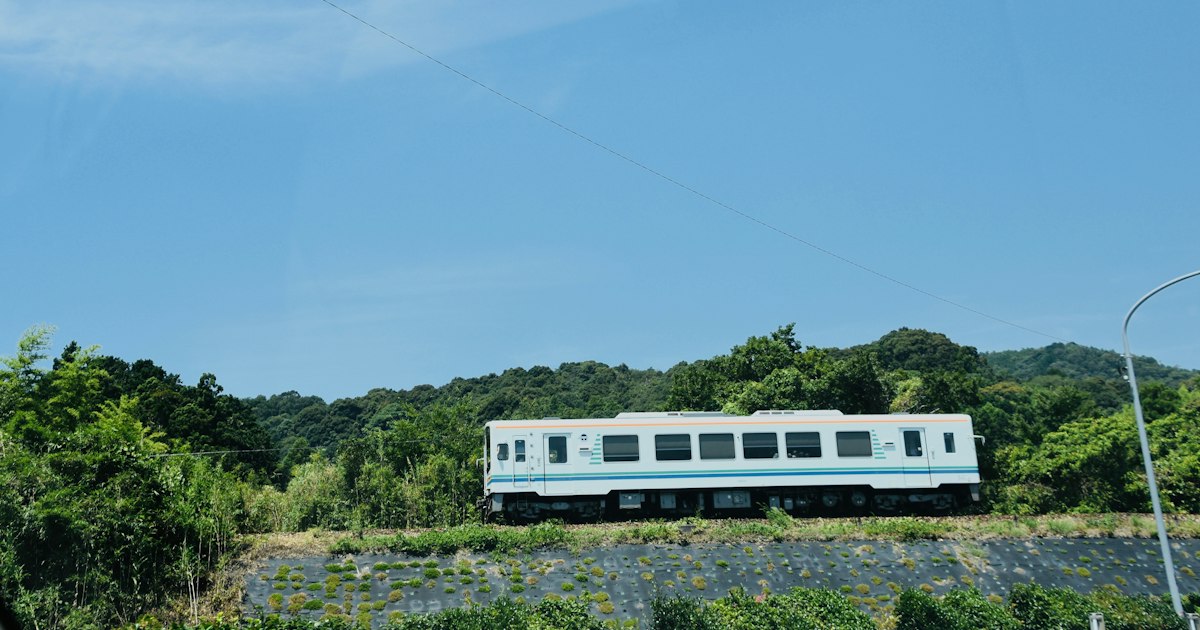
Photo by Yoko Correia Nishimiya on Unsplash
If you’ve spent any time in Japanese train-enthusiast forums, you’ve seen people rave about the Seishun 18 Ticket (青春18きっぷ, Seishun Juhachi Kippu). It’s one of the cheapest ways to cover huge distances in Japan — but it only works on slow trains, only during a few weeks a year, and JR recently rewrote the rules. Here’s what it actually gets you, what it costs, and who should (and shouldn’t) bother with it.
What the Seishun 18 Ticket Actually Is
Despite the name (“youth 18”), it has no age limit — anyone can buy and use one. It’s a JR Group ticket that gives unlimited rides on ordinary local (futsu) and rapid (kaisoku) trains anywhere on the JR network nationwide, including JR ferries to Miyajima. The catch is right there in “local and rapid”: you cannot use it on shinkansen, limited express (tokkyu) trains, or sleeper trains. You’re riding the same trains commuters and students use, which means more transfers, longer journeys, and occasionally standing room only during rush hour.
For travelers comfortable with slower travel, it’s a genuinely fun way to see the country — you end up passing through small stations and rural scenery that the shinkansen simply flies over. For anyone on a tight schedule trying to get from Tokyo to Osaka in an afternoon, it’s the wrong tool; that trip alone can take 8+ hours by local train versus about 2.5 hours on the Tokaido Shinkansen.
How It’s Priced — and a Rules Change to Know About
For decades the classic format was simple: one ticket, five one-day stamps, priced at ¥12,050 total (around ¥2,410 per day of unlimited travel), and usable by a group splitting the five days among multiple people on the same day. It was one of the best-value rail products in the country.
In 2024, JR announced a significant overhaul of the ticket starting with the winter 2024–2025 sales period, changing it toward single-person use with a different day structure and pricing. Because JR revises these terms by season, don’t assume the old ¥12,050/five-day structure is still current — check the exact price, number of valid days, and whether sharing is allowed on JR’s official site or at a JR ticket counter (Midori no Madoguchi) before you build an itinerary around it.
When You Can Buy and Use It
This isn’t a year-round pass. It’s sold and valid only during three seasonal windows tied to Japan’s school holidays:
- Spring: roughly late February through early April
- Summer: roughly mid-July through early September
- Winter: roughly mid-December through mid-January
The sale period and the usable period overlap but aren’t identical — tickets usually go on sale a couple of weeks before the usable window opens. If your trip falls outside these three seasons, the Seishun 18 Ticket simply isn’t an option, and you’ll want to look at regional JR passes instead.
What You Can (and Can’t) Ride
Unlimited local and rapid trains on JR lines across Japan, including the New Rapid services in the Kansai area and most JR commuter lines in greater Tokyo. What’s excluded: shinkansen, all limited express trains (even for a short hop), sleeper trains, and non-JR private railways and subways (Tokyo Metro, Hankyu, Keikyu, etc. all require separate fares). If your plan involves the airport, note that the Narita Express and the Keisei Skyliner are both excluded from this pass — for airport transfers, compare your options in our Narita Express vs Keisei Skyliner guide rather than trying to stretch the Seishun 18 Ticket to the airport.
How to Buy One
Seishun 18 Tickets are sold at JR ticket counters (Midori no Madoguchi) inside major JR stations and at JR-affiliated travel agencies. You can’t buy them from a Shinkansen ticket machine or convenience store. At the counter, staff stamp the ticket with the date each time you start a day of travel, so keep it somewhere you won’t lose it — a damaged or illegible ticket can cause problems with conductors checking tickets along the route.
Who This Pass Is Actually For
It suits a specific traveler: someone with flexible time, a tolerance for long travel days, and an interest in the journey itself rather than just the destination. Classic uses include:
- A one-day round trip from Tokyo to a seaside town like Atami via the Tokaido Line — about 1.5–2 hours each way by local/rapid train, well within a single day’s budget.
- Multi-day loops through regional Japan for travelers chasing low cost over speed, including long hauls toward destinations like Kurokawa Onsen in Kyushu, which can take a full day of connections by local train alone.
- Students and backpackers on a tight budget who have more vacation time than money.
It’s a poor fit if you’re juggling hotel check-ins, tours, or dinner reservations with hard start times — local-train connections run less frequently than shinkansen and delays cascade. If your itinerary depends on precise timing, book a regular ticket or a JR regional pass instead, and save cash elsewhere — for instance by comparing taxi apps when you land, covered in our guide to hailing a taxi in Japan.
Common Mistakes to Avoid
- Assuming it covers limited express trains. It doesn’t — not even for one stop. Boarding a tokkyu by mistake means paying the limited express surcharge on top.
- Forgetting the seasonal windows. The ticket isn’t sold or valid outside the three windows above; there’s no year-round version.
- Not budgeting extra time. A route that takes 3 hours by limited express can take 5–6 hours by local trains with multiple transfers. Build slack into your plan, especially for the last train of the day in rural areas, where service can stop surprisingly early in the evening.
- Buying without checking current terms. Given the 2024 rule changes, confirm the current price, day structure, and whether it’s still shareable before you commit — rules can differ by sales season.
Used with the right expectations, the Seishun 18 Ticket turns a simple train ride into one of the more memorable, low-cost ways to see rural Japan — just go in knowing you’re trading speed for savings and scenery.