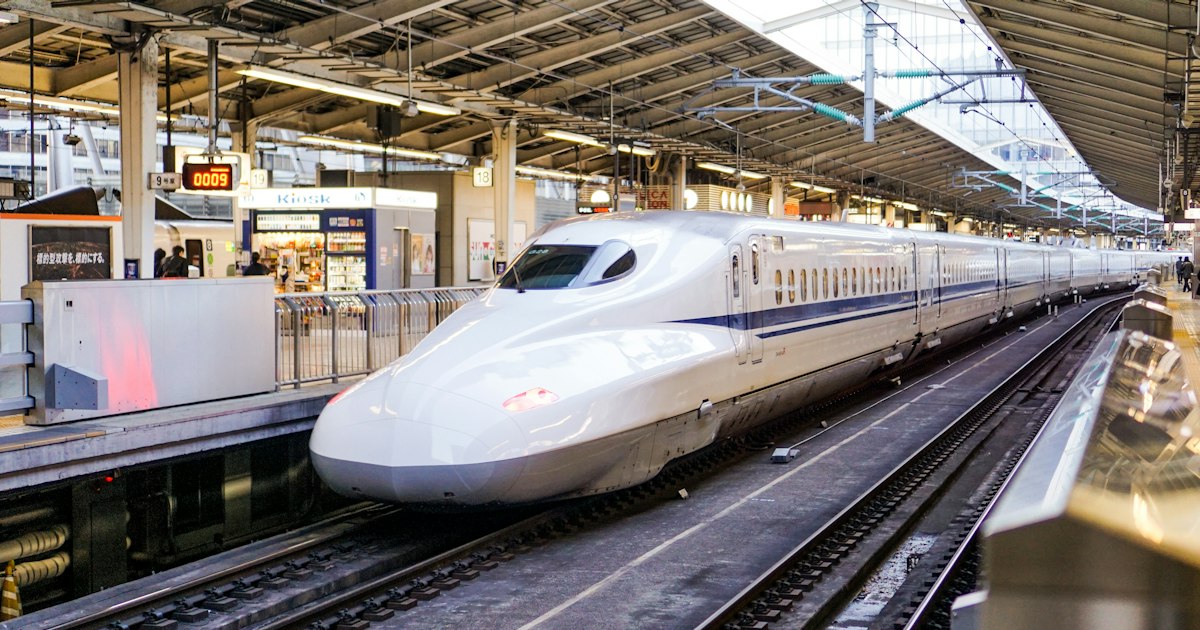
Photo by Fikri Rasyid on Unsplash
If you’ve bought a Shinkansen ticket and seen two confusingly similar options at the vending machine — one cheaper, one not — you’ve run into Japan’s reserved vs. non-reserved seat system. Getting this choice right can save you money on a long trip, or it can leave you standing in the aisle for two hours with a suitcase wedged against your legs. Here’s how jiyuseki (non-reserved) and shiteiseki (reserved) actually work, what they cost, and how to pick the right one for your trip.
What “Jiyuseki” Actually Means
Jiyuseki (自由席) literally translates to “free seating” — it doesn’t mean the seat is free, it means seating is unassigned. You buy a jiyuseki ticket, walk to the designated non-reserved cars (usually clearly marked on the platform signage and on the side of the train itself), and sit in any open seat. First come, first served. If every seat is taken, you stand or sit on the floor near the doors, which does happen during peak travel.
Shiteiseki (指定席) is the opposite: a specific seat, specific car, specific train, guaranteed. You pick your seat (window or aisle, sometimes even the exact row) at the time of purchase, and it’s yours regardless of how crowded the train is.
How the Pricing Actually Breaks Down
Every Shinkansen ticket is made up of two fares: the base fare (kijun unchin) and the limited express surcharge (tokkyu-ken). The reserved/non-reserved difference lives entirely inside that surcharge. As a concrete example, on the Tokyo–Shin-Osaka route aboard a Nozomi:
- Non-reserved (jiyuseki), ordinary car: approximately ¥13,870
- Reserved (shiteiseki), ordinary car: approximately ¥14,720
- Green Car (reserved only, more legroom and quieter cabin): approximately ¥19,560
So the premium for a guaranteed seat is roughly ¥850–¥1,000 on a long route like this — not huge, but it adds up for a family of four, and it drops to almost nothing on shorter hops between neighboring cities. Prices shift slightly by season and are higher on Nozomi/Mizuho services than on Hikari or Kodama, which are the only Shinkansen types the Japan Rail Pass covers.
When Jiyuseki Makes Sense
Non-reserved seating is genuinely the smarter choice in a few situations:
- Short, frequent routes. Between Tokyo and Shizuoka, or Osaka and Kyoto on the Tokaido line, trains run every few minutes. If you miss one, the next is barely 10 minutes behind, so the risk of not finding a seat is low outside peak hours.
- Flexible schedules. If you’re not sure which train you’ll catch — say, you’re finishing lunch at Kuromon Ichiba Market and don’t know exactly when you’ll leave — jiyuseki tickets don’t lock you into a specific departure. Any non-reserved car on any train that day works.
- Budget trips. Travelers already squeezing costs with something like the Seishun 18 Ticket for local legs will appreciate that jiyuseki shaves a little more off Shinkansen segments too.
Where it gets risky: Golden Week (late April–early May), Obon (mid-August), New Year (late December–early January), and Friday evenings/Sunday afternoons on popular routes. During these windows, non-reserved cars fill up at the originating station and stay full. If you’re boarding mid-route during one of these periods, strongly consider paying the small premium for a reserved seat.
Finding and Boarding the Non-Reserved Cars
Each Shinkansen has designated jiyuseki cars, almost always the lowest-numbered cars at one end of the train (commonly cars 1–3 on a 16-car Tokaido Shinkansen Nozomi, for example). The platform has floor markings and overhead signs showing exactly where each numbered car will stop, plus color-coded lines for reserved vs. non-reserved queuing. Arrive at least one train earlier than you plan to depart if you want a good shot at a seat, and line up at the marked spot rather than wherever looks convenient — queue order matters here and locals take it seriously.
If you board with large luggage, note that oversized bags (any dimension sum over 160cm) technically require a free luggage reservation on Tokaido/Sanyo/Kyushu Shinkansen, and oversized racks are only in specific reserved cars — another point in favor of booking ahead if you’re hauling big suitcases full of souvenirs.
Booking a Reserved Seat: Your Options
You can reserve shiteiseki seats at any JR ticket counter (midori-no-madoguchi), at the green ticket vending machines found in most stations, or online through apps like JR East’s “Train Reservation” or the Smart-EX/EX-IC services (useful mainly for the Tokaido/Sanyo/Kyushu lines). Reservations open about a month in advance and are free to make beyond the surcharge itself — the only cost is the shiteiseki fare difference noted above. If you’re arriving into Tokyo and connecting onto a Shinkansen the same day, it’s worth comparing airport transfer options first — our Narita Express vs. Keisei Skyliner guide covers which service gets you into the city fastest to make that connection.
Common Mistakes to Avoid
- Sitting in a reserved seat with a jiyuseki ticket. The conductor will politely but firmly move you, and if the seat’s rightful occupant boards mid-route, you’ll be standing anyway. Always check the car number against the platform signage.
- Assuming the Japan Rail Pass covers every train. It doesn’t cover Nozomi or Mizuho — only Hikari and Kodama — so Pass holders should default to those and check jiyuseki/shiteiseki car numbers, which differ by train type.
- Not checking seasonal crowding. If your trip overlaps a national holiday week, reserve ahead rather than gambling on jiyuseki, especially for day trips where you need a guaranteed return seat.
- Forgetting both tickets. A reserved Shinkansen trip requires the base fare ticket plus the tokkyu-ken limited express ticket (often printed as one combined ticket, but sometimes two separate slips) — keep both until you exit the gate.
Budget, Mid-Range, and Splurge: Quick Picks
For a short hop like a day trip to the retro hot-spring town covered in our Atami guide, jiyuseki is the easy budget call — trains run constantly and the savings are real. For long cross-country routes during busy season, mid-range travelers should spend the extra ¥800–¥1,000 for shiteiseki peace of mind. If you want the full splurge experience — guaranteed wide seats, quieter cabin, and no scramble for a window view of Mt. Fuji — book a Green Car seat in advance. And if you’re relying on taxis for the legs on either end of your Shinkansen ride, our guide to hailing a taxi in Japan covers the apps and fares worth knowing before you land.