Photo by Ronald Langeveld on Unsplash
If you’ve ever stood in a Japanese drugstore aisle staring at a wall of unfamiliar boxes with cartoon mosquitoes on them, you’re not alone. Japan takes bug repellent seriously — summers are hot, humid, and buggy from the Pacific coast to the mountains — and the result is a genuinely excellent lineup of products that most visitors never learn to use properly. This guide covers what’s actually in that aisle, what it costs, and how to pick the right thing for your trip, whether you’re staying in a Tokyo apartment, camping near a lake, or heading out for a day of fishing.
Why Japan’s Bug Repellent Aisle Looks Different From Home
Japanese mosquitoes are mostly the Asian tiger mosquito (yabu ka), which bites during the day and at dusk rather than only at night, and they’re persistent around standing water, rice paddies, parks, and shaded garden paths. Because of this, Japanese households rely on a layered system rather than a single spray: a plug-in or mat device for the room, a coil for outdoor spaces like balconies and genkan entryways, a personal spray or patch for when you’re out walking, and a dedicated itch-relief cream for after you’ve already been bitten. Most of these products use pyrethroid compounds (synthetic versions of a chrysanthemum-derived insecticide), which is a different base than the citronella or DEET-heavy formulas many visitors are used to, so don’t expect identical ingredient labels.
Earth No Mat and Plug-In Vape Units: How They Work
“Earth No Mat” (by Earth brand) and its main rival, Fumakilla’s “Vape,” are the two household names for electric mosquito repellent. There are two formats: the classic heated mat version, where a small electric unit heats a medicated paper mat that slowly releases repellent into a room, and the newer liquid version, where a plastic bottle of liquid repellent screws into a plug-in unit and evaporates continuously for 30, 60, or sometimes 180 days per bottle. A starter set with the device and one mat or bottle runs about 700–1,500 JPY at a drugstore; refill mats (usually 30 or 60 per box) cost around 400–600 JPY, and refill liquid bottles run 600–900 JPY depending on how many days they last. These units need a Japanese 100V outlet, so if you’re staying in self-catering accommodation for more than a few nights in summer, buying one is genuinely worth it — just leave it behind when you check out, since the voltage and plug shape won’t work back home.
A cordless, battery-powered version also exists for tents or balconies without outlets, usually a bit pricier at 1,500–2,500 JPY for the unit.
Mosquito Coils (Katori Senko) for Camping and Balconies
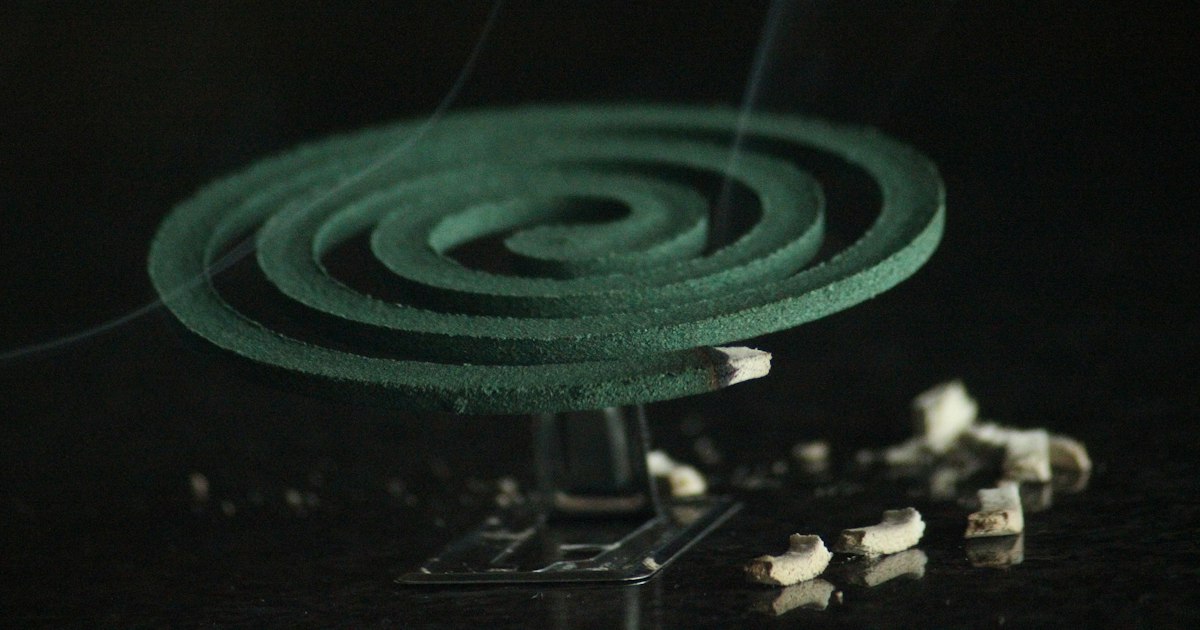
The spiral green coil you’ve probably seen in period dramas is still sold everywhere and still works well outdoors, where plug-in units aren’t practical. A box of 30 coils from Kincho or Earth costs roughly 400–550 JPY, plus you’ll want a simple ceramic or tin coil stand (300–600 JPY) to hold it safely above a flammable surface. These are ideal for camping trips, riverside fishing spots, or barbecues — if you’re planning time outdoors, they pair well with gear covered in our guide to fishing in Japan, where sitting still near water for hours makes you a prime mosquito target. One coil burns for about 6–7 hours, so budget two per full evening session.
Spray and Patch Repellents for On-the-Go Protection
For walking around temples, gardens, or golf courses, skip the room devices and grab a personal spray. The two biggest brands are Kincho’s “Mushi Pro” line and Fumakilla’s “Skin Vape,” sold as aerosol sprays (200ml, about 700–950 JPY), pump sprays, or wipe-on gels. Japanese formulas often use icaridin (picaridin) rather than high-concentration DEET, which is gentler on skin and fine for kids in the lower-strength versions — look for “こども用” (for children) on the label if traveling with a family. Adhesive repellent patches (stick them on clothing, strollers, or bag straps) are another uniquely convenient option: a pack of 24–60 patches costs around 400–600 JPY and lasts roughly 12 hours per patch with no spraying required, which is handy if you’re outdoors all day at a golf course — see our golfing in Japan guide for other things worth packing for a round.
If you’re flying home with sprays, remember standard aerosol restrictions apply in checked and carry-on luggage, so buy travel-size cans (around 50–100ml) if you intend to pack them rather than use them up locally.
After the Bite: Muhi and Itch Relief
No repellent system is perfect, so Japanese pharmacies sell dedicated anti-itch creams rather than expecting you to use general antihistamine cream. The classic is Ikeda Mohando’s “Muhi S” (orange box, roughly 600–900 JPY for a small tube), which combines a local anesthetic with an anti-inflammatory and works faster than most imported alternatives. There’s a kids’ version with a gentler formula and a cooling roll-on version for adults. Keep a small tube in your day bag during the warmer months — it’s one of the most useful 700-yen purchases you’ll make on a summer trip.
Where to Buy and What to Expect to Pay
You don’t need to hunt for a specialty shop — this is one of the easiest souvenir and necessity categories in Japan. Drugstores like Matsumoto Kiyoshi, Sundrug, and Tsuruha carry the full range and are typically open from around 10:00 to 21:00. Convenience stores (7-Eleven, FamilyMart, Lawson) stock a smaller selection — usually just patches and small sprays — but are open 24 hours, useful if you get bitten at 2am. For the best prices and widest selection in one stop, Don Quijote is hard to beat, often staying open very late or 24 hours in city locations; it’s the same chain worth checking for luggage needs, as covered in our guide to buying a suitcase in Japan. Almost everywhere now accepts PayPay or other QR code payments, so you don’t need to worry about having exact cash for a 500-yen coil box.
Best Season and Common Mistakes
Mosquito activity ramps up with the rainy season (tsuyu), roughly early June through mid-July depending on region, and stays high through the humid months until late September. If your trip overlaps with this window — which also overlaps with typhoon season in Japan — pack or buy repellent before you need it rather than after the first bite. The most common visitor mistakes: buying a mat-style Earth No Mat device assuming it works like a plug-in air freshener (it needs its specific mat refills, not any brand’s), forgetting that electric units require a working 100V outlet and won’t run on batteries, and relying only on room devices while ignoring that most bites happen outdoors at dawn, dusk, or near water — that’s when a spray or patch earns its keep. Buy a small starter kit (one spray, one patch pack, one tube of Muhi) for under 2,000 JPY total, and you’ll be far better equipped than most tourists who tough it out with nothing.