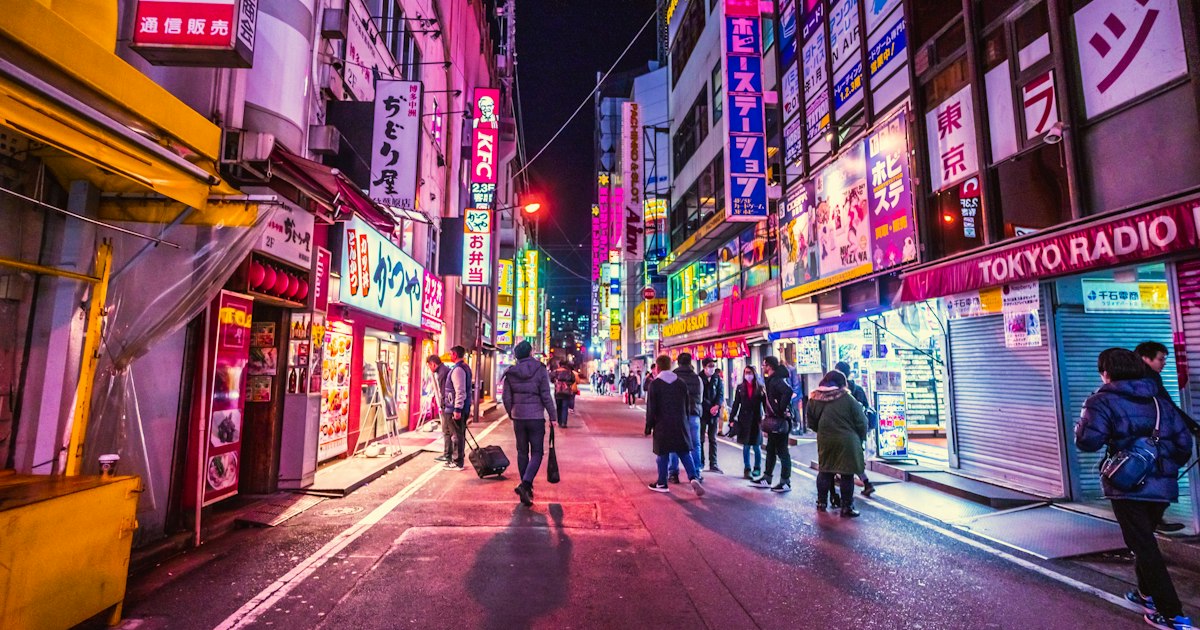
Photo by Jezael Melgoza on Unsplash
You step out of your Tokyo hotel with an address written in your notebook — something like “1-21-2 Shibuya” — and no street name in sight. The buildings nearby aren’t numbered in order. Your map app says you’ve arrived, but you’re standing in front of a parking lot. This moment happens to almost every first-time visitor to Japan, and it’s not because you’re bad at reading maps. Japanese addresses are genuinely built on a different logic than Western ones, and once you understand that logic, navigating the country gets dramatically easier.
Why Japan’s Address System Feels Backwards
Most Western addresses are organized around streets: a house number tells you where a building sits along a named road, and numbers usually run in order down the block. Japan does something different. Outside of a few grid-planned cities like Kyoto and Sapporo, streets historically weren’t the organizing unit — areas were. A Japanese address identifies a progressively smaller piece of land, not a position along a road. That’s why so many streets in Tokyo and Osaka have no name at all, and why GPS pins sometimes land a block or two off from where you actually need to be.
How the Numbers Actually Work
A typical full address looks like this: 〒150-0043 東京都渋谷区道玄坂2-10-7, or in romanized order, “2-10-7 Dogenzaka, Shibuya-ku, Tokyo 150-0043.” Reading it from largest to smallest unit:
- Postal code (7 digits, formatted 123-4567) — narrows things down to a small delivery zone.
- Prefecture (都/道/府/県) — Tokyo-to, Hokkaido, Osaka-fu, or one of the other prefectures.
- City or ward (市/区) — Shibuya-ku, for example.
- Neighborhood name (町 or 丁目) — Dogenzaka, a named district within the ward.
- Chome — a subdivision of that neighborhood, like “2-chome.”
- Block and building number — the final two numbers (10-7) identify a specific plot and then a specific building on it.
Here’s the part that trips people up most: block and building numbers are usually assigned in the order the buildings were constructed or registered, not in geographic sequence. Building 7 might sit right next to building 22 and nowhere near building 8. There’s no fix for this other than knowing it going in — don’t assume you can “count up” to find a number.
Reading and Writing a Japanese Address Correctly
If you need to write a return address (for a hotel reservation, a package, or a hanko registration), Japanese addresses are written largest-to-smallest when in Japanese script, but reversed to smallest-to-largest in English/romanized form — which is why the same address looks “backwards” between a Japanese envelope and an English one. When filling out English-language forms for hotels or shipping, always lead with the building/room number, then block-chome, then ward, city, prefecture, and postal code last.
Apartment and building names matter more in Japan than in many countries. Mail and deliveries are often routed using the building name (e.g., “Sunshine Mansion 3F”) rather than relying purely on numbers, so if you’re renting an apartment or using a delivery locker, write the building name exactly as given — don’t abbreviate it.
Getting Around Without Relying on the Address Itself
Because the numbering system isn’t sequential, locals navigate by landmarks far more than by address. Train stations, convenience stores, and kōban (small neighborhood police boxes) function as informal waypoints — it’s completely normal, and expected, to ask someone “near the Lawson by Exit 3” rather than quoting a block number. A few practical habits help:
- Use Google Maps or Apple Maps with the exact address pasted in rather than typed by hand — one digit off in a chome number can drop the pin streets away.
- Save the destination’s phone number too; many Japanese map and taxi-dispatch systems can route by phone number more reliably than by address alone.
- If you’re truly stuck, kōban police boxes exist specifically to give directions to confused pedestrians — it’s one of their most common daily tasks, and English maps are usually posted nearby in major cities.
- A pocket Wi-Fi rental (roughly ¥700–¥1,200 per day) or a local data SIM keeps map apps working reliably, which matters more in Japan’s address system than almost anywhere else.
Spring and autumn are the easiest seasons to be lost in — comfortable weather means you can afford to wander a few extra blocks figuring out which building is which. In August’s heat or a January cold snap, build in extra transit time precisely because address-finding can take longer than expected.
Common Mistakes First-Time Visitors Make
- Assuming numbers run in order along a block. They usually don’t — treat the final digits as an ID, not a position.
- Dropping the chome or block number when asking for directions. “Dogenzaka” alone covers a wide area; the full 2-10-7 is what actually narrows it down.
- Relying on a street name that doesn’t officially exist. Many “named” streets locals use (like Takeshita-dori) are informal nicknames, not part of the postal address — fine for asking a local, but don’t expect it in official paperwork.
- Forgetting the postal code format. It’s always 3 digits–4 digits (e.g., 150-0043), and taxi drivers, delivery apps, and official forms often want it entered that way.
When Addresses Matter for Shopping and Shipping
Addresses stop being an abstract curiosity the moment you need one for a transaction. If you’re buying from Yahoo! Auctions Japan, most sellers and forwarding services will ask for a precise Japanese shipping address, so double-check every digit of the chome-block-building sequence before confirming an order. The same precision matters if you’re registering a bicycle in Japan, since the registration sticker ties the bike to your residential or hotel address on file. And if you’re mailing souvenirs home rather than carrying them, it’s worth reading up on what you can actually bring back within duty-free limits before you ship, since customs paperwork asks for both the Japanese sender address and your home delivery address in full.
For short-term visitors, the budget option is simply writing down your hotel’s full address (including postal code) on a card to hand to taxi drivers — most hotel front desks will print this for free on request. Mid-range travelers get real mileage out of a local SIM or pocket Wi-Fi so map apps stay accurate throughout the trip. For longer stays or business travel, a splurge-tier option is a concierge or relocation service (often ¥10,000–¥30,000 for a package of services) that handles address registration, mail forwarding, and utility sign-ups entirely in Japanese on your behalf.
Once the logic clicks — postal code, prefecture, ward, neighborhood, chome, then block and building, largest to smallest — the system that looked chaotic on day one starts to feel just as navigable as any other. You’ll just be relying on landmarks and a good map app a little more than you’re used to, and that’s completely normal here.