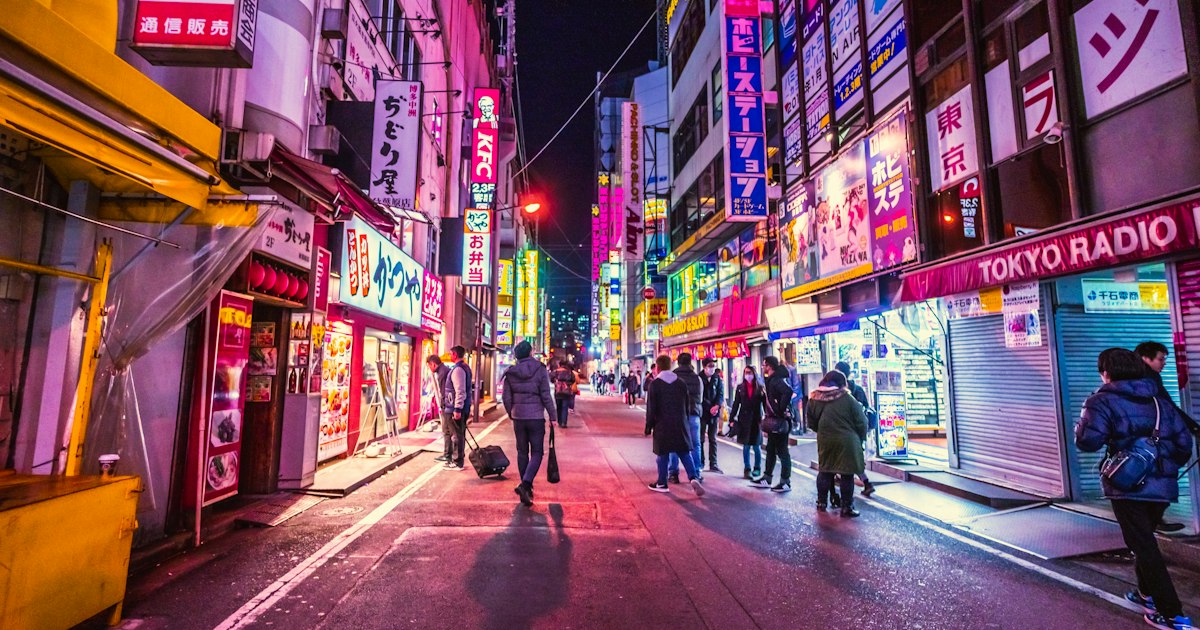
Photo by Jezael Melgoza on Unsplash
Every first-time visitor to Japan gets the same two names whispered to them: Bic Camera and Yodobashi Camera. Both are excellent, both are everywhere in Tokyo and Osaka, and both are, as a result, often packed with other tourists doing exactly what you’re trying to do. What most guidebooks leave out is that Japan has two other nationwide electronics chains — Yamada Denki and Edion — that are just as large, often cheaper on everyday appliances, and far less geared toward tour-bus traffic. If you’re shopping for a rice cooker, a hair dryer, a Nintendo Switch, or a suitcase-friendly camera, it’s worth knowing these names too.
Who are Yamada Denki and Edion?
Yamada Denki is Japan’s largest electronics retailer by store count, headquartered in Takasaki, Gunma, with well over 1,000 locations nationwide under various banners (LABI flagship stores, Yamada Denki standard stores, and the discount-focused Yamada Denki Tecc Life format in smaller towns). Edion is the Hiroshima-born chain that resulted from a 2002 merger of regional retailers Deodeo and Eidai, and it’s now the dominant electronics chain across western Japan — Hiroshima, Osaka, and the Chugoku region especially.
Neither chain built its business on tourist traffic the way Bic Camera’s Shinjuku/Shibuya flagships or Yodobashi’s Akihabara mega-store did. That’s precisely the appeal: prices are set for the local market, staff are used to local customers rather than tour groups, and you won’t be fighting through a crowd of people filming unboxing videos to reach the shelf you want.
What to actually buy there
These chains carry the same broad categories as Bic and Yodobashi — cameras, laptops, rice cookers, washlets, hair tools, game consoles — but their strength is everyday home appliances rather than duty-free luxury electronics. A Zojirushi or Tiger rice cooker that runs ¥15,000–¥35,000 at a tourist-zone store is frequently the same price or a bit less at a Yamada Denki LABI store, and local sales staff can usually point you to a 100V/overseas-voltage-compatible model without you having to ask twice.
Budget shoppers should look at small Yamada Denki Tecc Life or Edion branches for basics: travel adapters (¥500–¥1,500), compact hair dryers (¥2,000–¥4,000), and USB cables. Mid-range shoppers will find the best selection of rice cookers, electric kettles, and massage devices at the larger LABI or Edion flagship stores in city centers. For a splurge, both chains stock the latest mirrorless cameras and gaming laptops at prices comparable to Bic Camera, and LABI Shinjuku/Ikebukuro and Edion’s big Osaka or Hiroshima stores carry duty-free counters for tax-free purchases over ¥5,000, same as the bigger-name chains.
Where to find them and how to get there
Yamada Denki’s flagship LABI stores are concentrated in major hubs: LABI Shinjuku East Exit and LABI Ikebukuro in Tokyo, LABI Nanba in Osaka, and LABI Shinsaibashi are the easiest for visitors to reach on foot from major stations. Edion’s flagship is Edion Osaka (Namba), a multi-floor store a short walk from Namba Station, and its historic home turf is Hiroshima, where Edion Hiroshima Honten sits near Hondori, one of the city’s main shopping arcades — handy if you’re combining electronics shopping with a day trip out to Tomonoura or a Miyajima visit.
Outside the big cities, both chains run suburban “roadside” stores near train stations or along highways in nearly every prefecture, which is where you’ll find the best prices on bulky household items if you happen to be passing through smaller cities — useful to know if you’re doing a road trip around Japan and want to pick up a portable fan or space heater along the way rather than carrying one from Tokyo.
Hours, tax-free shopping, and payment
Most urban Yamada Denki and Edion stores open around 10:00am and close between 8:00pm and 9:00pm, seven days a week, with no fixed weekly closing day at the larger branches (smaller suburban stores sometimes close one weekday — check Google Maps listings, which are generally accurate and kept up to date by the stores themselves). Tax-free (duty-free) shopping works the same way it does at Bic and Yodobashi: spend over ¥5,000 before tax on consumables or general goods, show your passport at the dedicated tax-free counter (not the regular register), and the 10% consumption tax is deducted on the spot or refunded at checkout, with your purchase sealed in a tamper-evident bag if it’s a consumable. Not every branch has a tax-free counter — it’s standard at LABI flagships and big-city Edion stores, but patchy at small-town locations, so confirm before you commit to a large purchase.
Credit cards (Visa, Mastercard, JCB, and usually Amex) are accepted at all sizable branches, and most now take IC cards and smartphone payment apps as well. Keep your phone’s battery topped up while you compare prices across stores — a ChargeSPOT rental is a handy backup if you’re out all day price-checking between Bic, Yodobashi, and these regional chains.
Common mistakes to avoid
The biggest mistake is assuming all Japanese electronics are voltage-universal. Japan runs on 100V, and while most modern chargers and laptop adapters handle 100–240V automatically, appliances like hair straighteners, rice cookers, and kettles usually are not dual-voltage. Always ask staff directly: “Kaigai demo tsukaemasu ka?” (“Can this be used overseas?”) — they’re used to the question and can usually point you to export-compatible models or explain what you’ll need (a voltage converter, not just a plug adapter) if a model isn’t.
Second, don’t assume these chains are automatically cheaper than Bic or Yodobashi — on flagship camera and laptop lines, prices tend to converge across all four chains because manufacturers set minimum advertised prices. The real savings at Yamada Denki and Edion show up on appliances, small goods, and store-brand items, not big-ticket cameras.
Third, remember that warranties on electronics bought in Japan are typically valid only within Japan, and manuals, voice menus, and packaging will be in Japanese even for export-friendly models — factor that in if you’re buying something complex like a rice cooker with a lot of settings.
Best time to shop
Late December through early January (New Year clearance) and late June through July (bonus-season sales, timed to when Japanese companies pay seasonal bonuses) are when both chains run their deepest appliance discounts — sometimes 20–30% off rice cookers, fans, and seasonal items. If your trip lines up with either window, it’s worth checking a LABI or Edion flagship before heading to the tourist-zone stores, since stock and pricing are usually just as good and the lines at the register are shorter.