When Tokyo turns into a sauna in July and August, the capital’s elite have had a simple solution for over a century: get on a train and go up a mountain. Karuizawa, a resort town in Nagano Prefecture sitting at roughly 1,000 meters below the slopes of the active volcano Mt. Asama, has been Tokyo’s favorite cool-weather escape since a Canadian missionary named Alexander Croft Shaw built a summer cottage here in 1886. Japan’s imperial family still keeps a villa nearby — Emperor Akihito famously met Empress Michiko on a Karuizawa tennis court in 1957 — and today the town draws a mix of old-money summer residents, outlet shoppers, cyclists, and honeymooners. Here’s how to do it right as a day-tripper or overnight visitor.
Getting There: The Shinkansen from Tokyo
Karuizawa’s biggest advantage over other mountain destinations is speed: the Hokuriku Shinkansen connects Tokyo Station to Karuizawa Station directly, with no transfers. The fastest trains, called Kagayaki, take around 65–70 minutes; the slightly slower Asama trains, which stop more frequently, take about 75–80 minutes. One-way fares run roughly ¥5,500–6,500 depending on the seat type and train.
One detail that trips up rail pass holders: the Kagayaki service is excluded from the national Japan Rail Pass, exactly like the Nozomi on the Tokaido line. If you’re traveling on a JR Pass, you need to book an Asama (or Hakutaka) service instead — the ticket machine or JR staff can point you to the right train. A cheaper but much slower alternative is the highway bus from Shinjuku or Ikebukuro, which costs around ¥2,500–3,500 one way but takes closer to three hours, longer in weekend traffic.
Best Time to Visit
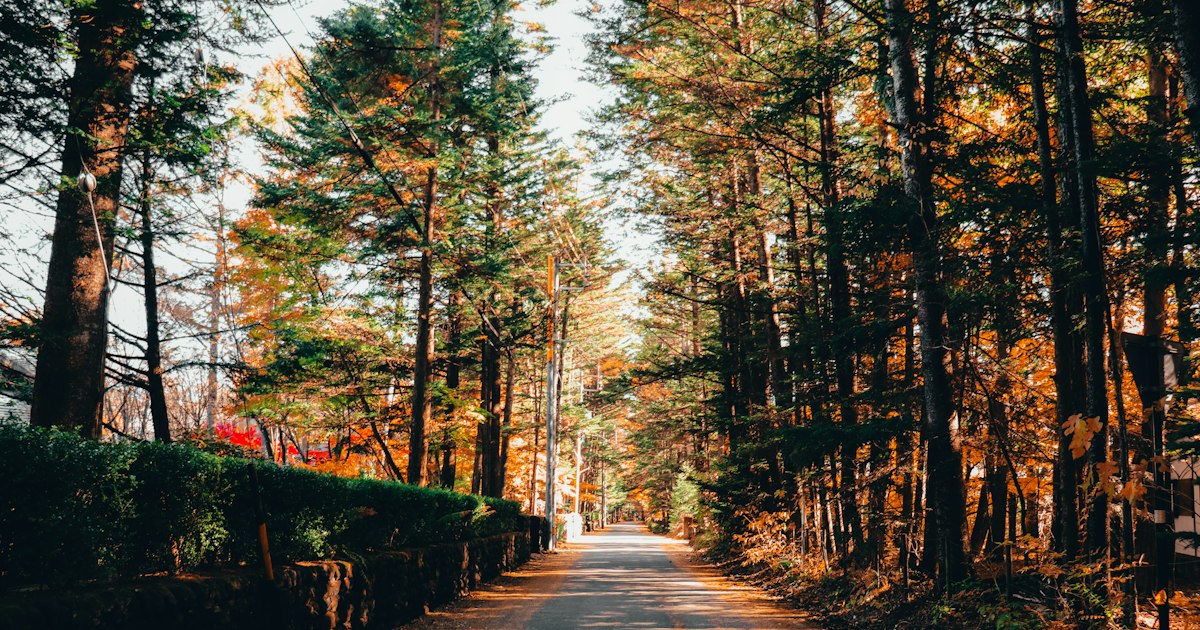
Summer (late June through August) is peak season for a reason: while Tokyo bakes in the mid-30s°C, Karuizawa’s daytime highs usually stay in the mid-20s. That comfort comes at a cost — Old Ginza and the outlet mall get genuinely crowded on August weekends and during Obon (mid-August), and the town’s narrow roads can jam with traffic. Autumn, roughly mid-October to early November, brings excellent foliage around Kumoba Pond and the Usui Pass with far thinner crowds. Winter turns Karuizawa into a modest ski destination, with the Karuizawa Prince Hotel Ski Resort operating from around December to March and doubling as one of the easiest beginner ski trips from Tokyo. Spring is quiet and green but many attractions, especially anything nature-focused, are at their least dramatic.
Old Karuizawa Ginza and the Outlet Mall
The town splits into two very different shopping experiences, both walkable from Karuizawa Station. Old Karuizawa Ginza, about a 15–20 minute walk (or a short bus ride) from the station, is a roughly 700-meter pedestrian-friendly street lined with jam shops, bakeries, souvenir stores, and small churches like the Shaw Memorial Church, built on the site of the original missionary cottage. Sawaya Jam, founded in 1949, is the classic stop for a jar of blueberry or plum jam to take home.
Right next to the station’s east exit is the opposite extreme: Karuizawa Prince Shopping Plaza, one of Japan’s largest outlet malls, with roughly 240 stores spread across several zones. Hours are typically 10:00–19:00, extending later in peak summer and shortening slightly in winter, so check the current season’s hours before planning a late visit. If you’re combining a shopping run with luggage you don’t want to drag around, the station itself has coin lockers — see our guide to coin lockers in Japan for sizes and pricing if you’re stashing bags before heading out to explore.
Outdoor Highlights Worth the Trip
Karuizawa’s best moments are outside the shopping streets. Kumoba Pond, nicknamed “Swan Lake,” is a free, short walk from Old Ginza and one of the prettiest autumn foliage spots in town. Shiraito Falls, a wide, curtain-like waterfall about 70 meters across but only 3 meters tall, is free to visit but sits roughly 25 minutes from the station by bus or car — it’s not walkable, so budget transit time. The same goes for the Usui Pass and its Meiji-era brick Eyeglass Bridge (Megane-bashi), a former railway viaduct now popular with hikers.
The town is genuinely flat and bike-friendly, and rental shops near the station rent bicycles for roughly ¥1,000–1,500 for a few hours or around ¥2,000 for a full day — often the most efficient way to link Old Ginza, Kumoba Pond, and the Hoshino area without waiting on buses. In the Hoshino area, Harunire Terrace offers riverside dining and shops, the free-to-enter Karuizawa Kogen Church is a popular wedding chapel worth a quiet look, and the Tonbo no Yu hot spring offers day-use bathing for around ¥1,350. If snow monkeys and hot springs are more your speed, Nagano Prefecture’s other famous cold-weather draw, Jigokudani Monkey Park, is elsewhere in the prefecture and worth knowing about if you’re building a longer Nagano itinerary rather than a single Karuizawa day trip.
Where to Stay: Budget to Splurge
For a budget visit, Karuizawa works well as a day trip — take an early Asama train, rent a bike, picnic by Kumoba Pond, and you can spend close to nothing beyond transport and food. Mid-range travelers will find pensions (Western-style guesthouses, a Karuizawa specialty since the Meiji era) and business hotels running roughly ¥8,000–15,000 a night, with the outlet mall and Tonbo no Yu onsen as easy add-ons. At the top end, Hoshinoya Karuizawa and the villa wing of the Karuizawa Prince Hotel offer forest-set luxury from around ¥40,000 a night and up, and are worth it if you want the “imperial retreat” version of the trip rather than the outlet-mall version.
Common Mistakes to Avoid
- Booking a Kagayaki with a JR Pass. It won’t be honored at the gate — use Asama or Hakutaka services instead.
- Visiting on an August weekend without a plan. Old Ginza and the outlet mall get packed, and road traffic can turn a 10-minute taxi ride into 40 minutes.
- Assuming everything is walkable. Shiraito Falls and the Usui Pass are several kilometers from the station — rent a bike, take a bus, or budget real transit time.
- Missing the last bus back. Local buses to Shiraito Falls and the Hoshino area run infrequently and often stop by early evening, especially outside summer — check the return time before you head out.
- Carrying only cards. Many small bakeries, jam shops, and cafes along Old Ginza are cash-preferred, so bring yen.
Karuizawa rewards a little planning more than most Tokyo day trips: get the train class right, pick your season deliberately, and split your time between the outlet mall and the quieter forest side of town, and you’ll understand exactly why it’s been Tokyo’s escape valve for well over a hundred years.