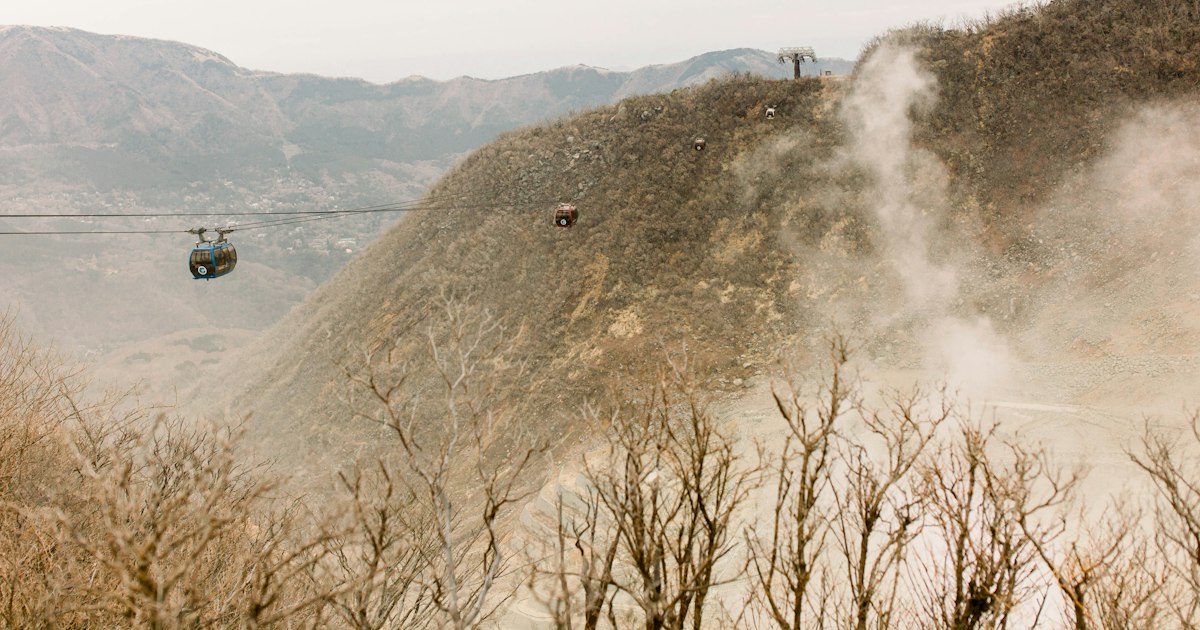
Photo by Jenna Neal on Unsplash
If you’re heading from central Tokyo to Hakone’s hot springs, lakes, and mountain views, the Odakyu Romancecar is the single best way to get there. It’s faster and far more comfortable than local trains, cheaper than a taxi or private tour, and on a clear day it gives you a front-row seat to Mt. Fuji without needing a car. Here’s exactly how to book it, what it costs, and the mistakes that trip up first-time riders.
What the Romancecar Actually Is
The Romancecar isn’t a special pass or a tour — it’s Odakyu Electric Railway’s limited express train service running between Shinjuku Station in Tokyo and Hakone-Yumoto, Odawara, and other stops on the Odakyu line. “Romancecar” refers to several train models (the GSE 70000, EXE/EXEα, and the newer VSE replacement), all of which feature wide reclining seats, large panoramic windows, and — on most services — forward-facing seats rather than the sideways bench seating of commuter trains. Unlike Tokyo’s commuter rail, every seat is reserved, so you’re guaranteed a spot and a specific seat number.
Total travel time from Shinjuku to Hakone-Yumoto is roughly 85–90 minutes on the fastest direct services, compared to well over two hours via local trains with transfers.
Routes, Schedule, and Which Train to Pick
Most tourist-bound Romancecars run the “Hakone” service from Shinjuku to Odawara and then on to Hakone-Yumoto, the gateway station for Hakone’s ropeways, Lake Ashi boats, and onsen towns. Trains depart roughly every 30–60 minutes during the day, starting around 7:00 AM and running until about 8:00–9:00 PM, though exact times shift seasonally — always check the live timetable on the Odakyu website or app before your trip, since schedules change a few times a year.
A few practical tips on seat selection:
- Odd-numbered car seats on the right side (facing Odawara) tend to offer better Mt. Fuji glimpses on clear days, roughly between Shin-Matsuda and Odawara stations — though this varies by train model and isn’t guaranteed.
- The GSE model (70000 series) has forward-tilted panoramic front-row seats that are extremely popular; these sell out first and can’t be booked more than a month ahead in most cases.
- Early morning trains (before 9 AM) are far less crowded than midday weekend departures, especially in spring and autumn.
How Much It Costs
You pay two separate fees: a basic fare based on distance, and a Romancecar specific “limited express” surcharge for the reserved seat.
- Shinjuku to Hakone-Yumoto (one-way): basic fare around ¥1,230, plus a Romancecar surcharge of roughly ¥1,200–1,300 depending on the train, for a total around ¥2,470 one-way as of recent pricing. Fares are revised periodically, so treat this as a close estimate and confirm current prices at booking.
- Shinjuku to Odawara (one-way): slightly less, since Odawara is a stop before Hakone-Yumoto.
Budget tip: the Hakone Freepass (sold at Odakyu stations and travel centers) bundles round-trip travel between Shinjuku/Odawara and the Hakone area with unlimited rides on local Hakone buses, the Hakone Tozan cable car, ropeway, and Lake Ashi pirate ships — but it does not include the Romancecar surcharge, which you still buy separately. For travelers planning several days of Hakone sightseeing with multiple bus and ropeway rides, the Freepass usually works out cheaper overall; for a quick day trip, paying fares individually may be simpler. If you’re comparing ticket options across Japan generally, it’s also worth knowing that discount ticket shops exist for other regional lines — see this guide to discount ticket shops — though Odakyu’s own Freepass is typically the better deal for Hakone specifically.
How to Book Your Seat
Reservations open 1 month in advance at 10:00 AM Japan time and can be made several ways:
- Odakyu’s official English booking site/app (EMot or the Odakyu Train Reservation site): the easiest option for foreign visitors — book and pay online, then show a QR code or pick up a ticket at the station.
- Ticket machines at Shinjuku Station: machines have an English interface; look for the Romancecar ticket counter near the Odakyu line entrance on the west side of Shinjuku Station.
- Staffed ticket counters: useful if the machines are sold out of your preferred train or you need help, though lines can be long on weekend mornings.
Note that the Japan Rail Pass does NOT cover the Odakyu Romancecar, since Odakyu is a private railway, not JR. This is the single most common point of confusion for visitors — don’t assume your JR Pass gets you on board.
Best Time to Ride
For Mt. Fuji visibility, winter (December–February) offers the clearest, driest air and the best odds of an unobstructed view, though mornings are generally better than afternoons year-round. Autumn (mid-November) brings foliage color to the Hakone mountains themselves, while spring (late March–early April) adds cherry blossoms around Odawara Castle, visible briefly from the train. Summer is the least reliable for Fuji views due to haze, but it’s also the least crowded season for booking.
Weekends and Japanese holidays (especially Golden Week in early May and the Obon period in mid-August) see the heaviest demand — book as early as the 1-month window allows if you’re traveling then.
Common Mistakes to Avoid
- Boarding without a reservation ticket: you cannot ride the Romancecar on a regular Odakyu line ticket or IC card (Suica/Pasmo) alone — you need the specific limited express ticket showing your car and seat number.
- Confusing Hakone-Yumoto with Odawara: Odawara is a larger transfer hub with the castle; Hakone-Yumoto is the actual onsen town gateway. Many travelers get off too early.
- Assuming all trains have panoramic front seats: only certain Romancecar models have them, and seat maps vary — check the train type when booking if window seats matter to you.
- Not checking luggage space: Romancecars have limited overhead and between-seat storage. If you’re traveling with large suitcases, consider shipping luggage ahead via a delivery service (takkyubin) to your Hakone ryokan, or book the oversized-luggage seats near car doors where available.
Where to Go Once You Arrive
From Hakone-Yumoto, local Hakone Tozan trains and buses (often covered by the Hakone Freepass) connect you to Gora, the Hakone Ropeway, Owakudani’s volcanic valley, and Lake Ashi’s pirate ship cruises with Mt. Fuji views on clear days. Hakone is also a major onsen destination, and if you’re traveling with a dog, it’s worth checking which ryokan and cafes in the area are pet-friendly before booking — our pet-friendly travel guide covers what to look for. And if you need a quick, reliable meal near Shinjuku Station before your departure, both Saizeriya and CoCo Ichibanya have branches in the station’s surrounding shopping areas — see our guides to Saizeriya and CoCo Ichibanya for how to order.
Whether you’re doing Hakone as a day trip or staying overnight, the Romancecar turns what could be a tedious transfer-heavy slog into a relaxing, scenic 90 minutes — book your seat in advance, pick a morning departure if Fuji views matter to you, and you’re set.