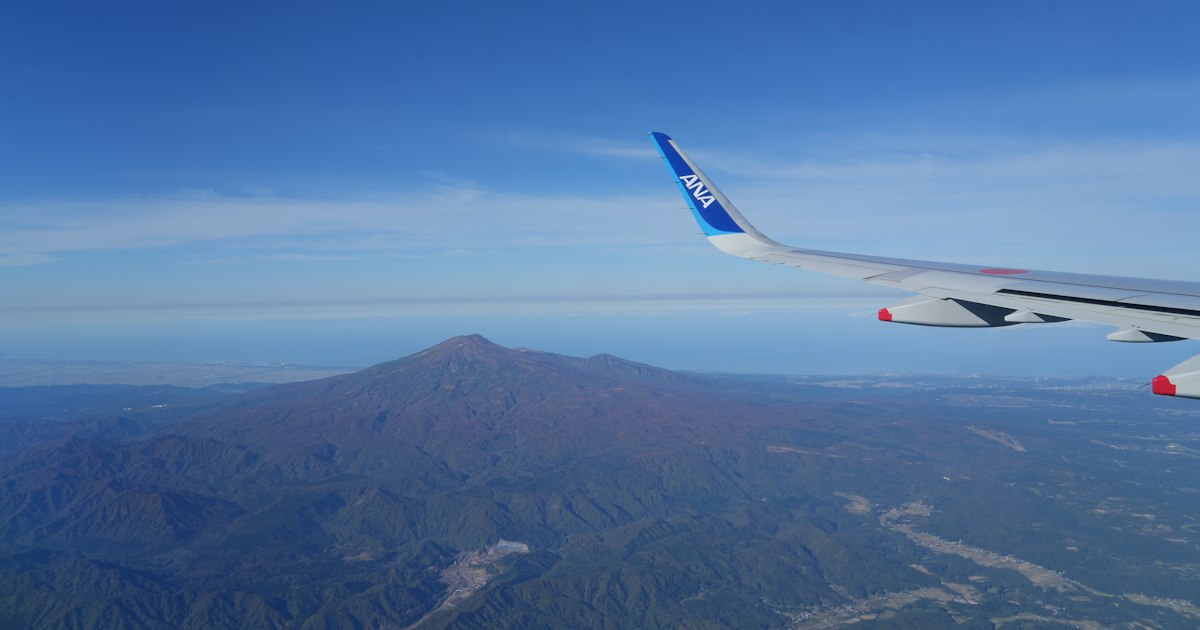
Photo by Yuriko Kurihara on Unsplash
Japan’s shinkansen network is justly famous, but it doesn’t reach everywhere — and on the truly long hops, like Tokyo to Okinawa or Tokyo to Sapporo, flying is almost always faster and often cheaper than the train. The tricky part is choosing between Japan’s budget carriers (Peach, Jetstar Japan, Spring Airlines Japan, Solaseed) and the full-service giants, JAL and ANA. Both can be the right call depending on the route, the season, and how much flexibility you need. Here’s how to decide.
Why Flying Beats the Train on Japan’s Longest Routes
Shinkansen is unbeatable for Tokyo–Osaka–Kyoto-style corridors, but once you’re looking at Tokyo to Fukuoka (about 5 hours by Shinkansen vs. 2 hours flying) or Tokyo to Sapporo (no bullet train option south of Hakodate, so it’s an 8+ hour slog by rail vs. a 1.5-hour flight), air travel wins decisively. Tokyo to Okinawa (Naha) has no rail option at all — it’s a roughly 2.5-hour flight or nothing. If you want the slower, scenic alternative for shorter or mid-distance legs, Japan’s sightseeing trains like those covered in Resort Shirakami and SL Hitoyoshi are worth it for the journey itself — but for Tokyo–Sapporo or Tokyo–Okinawa, you’re flying regardless of budget.
Meet the Players: Who Actually Flies Where
Japan’s main domestic LCCs are Peach Aviation (ANA-affiliated, hubbed at Kansai Airport with a strong Naha/Okinawa network), Jetstar Japan (JAL-affiliated, hubbed at Narita and Kansai), Spring Airlines Japan (Narita-based, routes to Hiroshima, Saga, Okinawa), and Solaseed Air (Kyushu-focused, out of Haneda and Miyazaki). One clarification worth making up front: Zipair, despite often being grouped with these, is JAL’s long-haul international budget arm — it flies to places like Honolulu, Bangkok, and Seoul, not between Japanese cities. If you need a cheap domestic hop, Zipair isn’t an option.
JAL and ANA, by contrast, fly almost entirely out of Haneda for domestic routes (plus some Narita and regional services), reach nearly every regional airport in the country — including tiny ones LCCs skip entirely — and generally offer more frequent daily departures on popular routes.
Price Comparison: What You’ll Actually Pay
On a route like Tokyo–Okinawa (Naha), booking 2-3 months out, Peach or Jetstar one-way fares typically run ¥6,000–¥13,000. JAL and ANA’s walk-up fares on the same route can hit ¥25,000–¥35,000 one-way — but both airlines run advance-purchase discount fares (JAL’s “Saki-yoyaku,” ANA’s early-bird fares) that, booked 45–75 days ahead, often land around ¥13,000–¥18,000. That narrows the gap considerably. The LCCs still usually win on rock-bottom sale fares, but the full-service carriers are far more competitive than their rack rates suggest if you book early.
Tokyo–Sapporo (New Chitose) and Tokyo–Fukuoka follow similar patterns: LCC fares from roughly ¥5,000–¥9,000 against JAL/ANA advance fares of ¥9,000–¥16,000.
The Narita Trap and Other Common Mistakes
The single biggest gotcha with LCCs flying out of Tokyo is that most use Narita, not Haneda. Haneda sits a 15-minute monorail ride from central Tokyo (around ¥500); getting to Narita costs ¥1,000–¥3,200 and takes 60-90 minutes depending on whether you take the Keisei line or the Narita Express. Factor that cost and time into your comparison, or the “cheap” LCC fare can end up costing you as much as JAL/ANA once you add transfers both ways.
Other mistakes to avoid:
- Not pre-paying for checked baggage online. Peach and Jetstar charge airport counter rates that can be double the online price — a bag that’s ¥1,500 if added at booking might be ¥3,500–¥4,000 at the airport.
- Ignoring carry-on weight limits. LCCs enforce a strict 7kg carry-on limit and will weigh your bag at the gate; JAL and ANA are more lenient and also include 1-2 checked bags up to 20-23kg free in economy.
- Booking non-refundable LCC fares for a tight itinerary. Change and cancellation fees on budget carriers are steep (sometimes close to the ticket price itself), while JAL/ANA’s standard fares usually allow date changes for a modest fee.
When JAL and ANA Are Worth the Extra Yen
Beyond flexibility and baggage, the full-service carriers earn their premium on remote-island routes. Some LCCs now reach Okinawa’s bigger outer islands directly — Peach flies to Miyakojima and Ishigaki, useful if you’re headed to the beaches covered in Miyakojima’s bridge-hopping island chain — but the tiniest airports are JAL-only territory. Yonaguni, Japan’s westernmost inhabited island and home to the underwater ruins divers come for, is served solely by JAL’s regional partner RAC out of Naha or Ishigaki — there’s no LCC alternative at all.
JAL and ANA also win if you’re collecting miles on a Oneworld or Star Alliance account, if weather disruption is a risk (typhoon season rebooking is far smoother on full-service carriers with more daily frequencies), or if you need a same-day return where a cancelled LCC flight could strand you overnight.
Booking Timing and Seasonal Spikes
LCC seat sales typically appear 2-4 months before travel and sell out fast on popular routes. JAL/ANA’s early-bird fares open around 75 days out and shrink in availability as the date approaches. Avoid booking late for travel during Golden Week (April 29–May 5), Obon (mid-August), or New Year (December 28–January 3) — fares on every carrier spike 2-3x and economy seats vanish well before departure. If your trip falls in one of those windows, lock in flights the moment your dates are fixed, regardless of which airline you choose.
Budget, Mid-Range, and Splurge: Tokyo–Okinawa as an Example
- Budget: Peach or Jetstar from Narita, booked 2+ months ahead, prepaid checked bag — roughly ¥9,000–�¥14,000 one-way all-in.
- Mid-range: ANA or JAL early-bird fare from Haneda — around ¥15,000–¥20,000 one-way, with free checked baggage, easier rebooking, and a far more convenient airport.
- Splurge: JAL or ANA flexible/full fare booked close to departure — ¥25,000–¥35,000, but fully changeable and refundable, which is worth it if your plans are still uncertain.
There’s no universally “right” carrier — just match the choice to the route and how much flexibility your itinerary actually needs. For short, firm-dated hops between major cities, the LCCs are hard to beat. For remote islands, bad-weather seasons, or itineraries still in flux, JAL and ANA’s extra yen usually pays for itself.