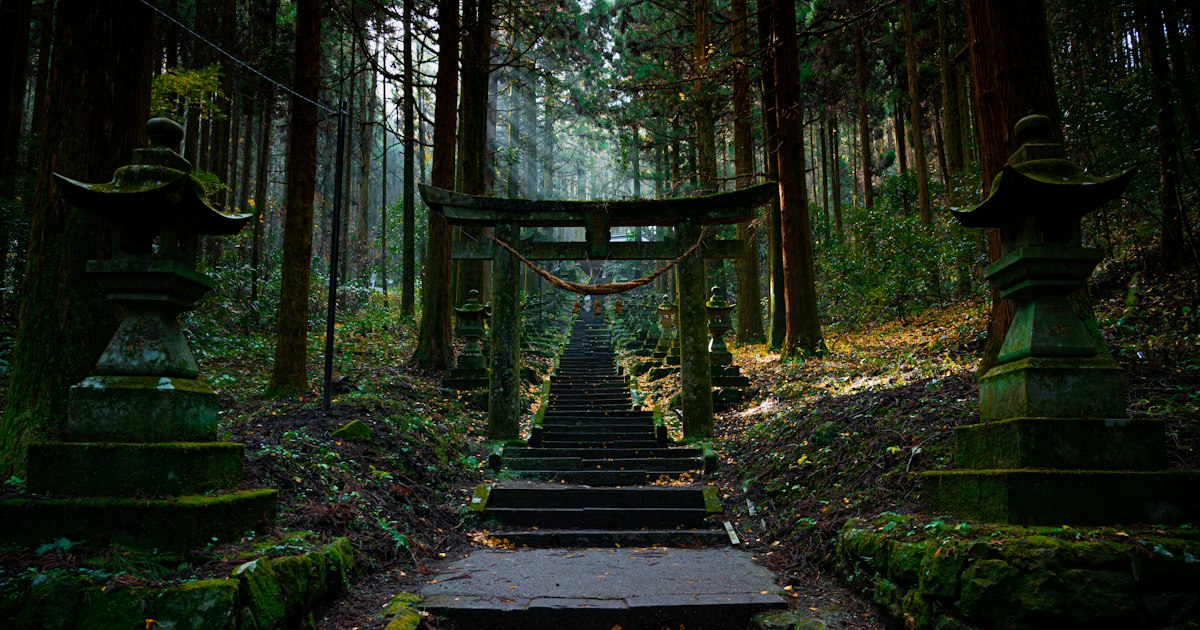
Photo by Samuel Berner on Unsplash
Less than two hours from Shinjuku, Mount Mitake (Mitakesan, 929m) delivers a genuine mountain pilgrimage without an overnight bag: a scenic cable car, a shrine guarded by stone wolves instead of the usual lion-dogs, a river gorge trail shaded by old-growth trees, and a cluster of mountain lodges that have been feeding hikers for centuries. It’s one of the best low-effort, high-reward escapes from central Tokyo, and dog owners in particular treat it as a pilgrimage site in its own right.
Getting to Mount Mitake from Tokyo
Take the JR Chuo Line (Special Rapid or Chuo Special Rapid) from Shinjuku to Ome Station, roughly 70 minutes, then transfer to the JR Ome Line for the five-stop ride to Mitake Station (about 15 minutes more). On weekends and holidays, the “Holiday Rapid Okutama” runs direct from Shinjuku through to Mitake and beyond, skipping the transfer — worth checking the timetable before you go. Total travel time is around 1.5–2 hours each way, and a standard IC card (Suica/Pasmo) works the entire route.
From Mitake Station, a Nishi Tokyo Bus runs to the Takimoto cable car base station in about 10 minutes (around ¥470); it’s also a steep 35–40 minute walk if you’d rather warm up your legs early. Drivers can reach Mitake via the Oume Kaido in roughly 1.5 hours from central Tokyo with light traffic — this is one of the rare Tokyo day trips where a small rental car actually makes sense, since parking at the base is plentiful and the surrounding roads are narrow and winding. If that appeals to you, see our guide to renting a kei car in Japan for backroad driving.
The Cable Car and the Walk to the Shrine
The Mitake Tozan Railway cable car climbs from Takimoto Station to Mitakesan Station (831m) in about six minutes, saving you a punishing 40-minute uphill slog. Fares are roughly ¥600 one-way / ¥1,130 round-trip for adults and about ¥300 / ¥570 for children, with departures approximately every 30 minutes from around 7:30am to 6:30pm (shorter hours in winter, and the cable car does close for scheduled maintenance days, so check the current timetable if you’re planning a weekday visit).
From the top station, it’s another 25–40 minute walk along a paved, lodge-lined approach — this stretch is where you’ll pass the shukubo (pilgrim lodges), souvenir stalls selling mountain vegetables and wasabi products, and a few soba shops — before a final stone stairway climbs to Musashi Mitake Shrine itself. Wear real walking shoes; the path looks tame on a map but has enough grade and uneven stone steps to trip up anyone in sandals.
The Wolf Shrine: Oinu-sama and Dog Charms
Musashi Mitake Shrine’s defining quirk is its guardians: instead of the usual komainu lion-dogs, stone wolves (Oinu-sama) flank the approach and the main hall. Legend holds that a white wolf guided the legendary prince Yamato Takeru safely down the mountain, and the shrine has venerated wolves as protectors against fire, theft, and disaster ever since. Practically, this makes Mitake one of the few shrines in Japan where dogs are explicitly welcomed as fellow pilgrims — you’ll see almost as many leashed dogs on the trail as people — and the shrine sells dog-specific omamori charms (inu no omamori) for pet safety, a genuinely unusual souvenir you won’t find at most Tokyo shrines. Admission to the shrine grounds is free.
Mitake Rock Garden and the Mountain Village
Below Mitakesan Station, the Mitake Rock Garden (Mitake Keikoku) is a roughly 1-hour loop trail following the clear Tama River through moss-covered boulders, ending at the small Nanayo-no-taki waterfall. It’s shaded, relatively flat, and a good counterpoint to the shrine climb — many visitors do the shrine first, then loop down through the Rock Garden back toward the cable car or Mitake Station. The gorge is also one of the Tokyo area’s established rock-climbing practice spots, so don’t be surprised to see climbers on the cliffs near Takimoto.
The village itself — a scattering of shukubo lodges along the shrine approach — is worth a slow look even if you’re not staying overnight. Several of these lodges have operated for generations as both inns and semi-religious guides for shrine visitors, a living remnant of Edo-period mountain pilgrimage culture similar to what you’d find on bigger pilgrimage mountains elsewhere in Japan.
Best Time to Visit and Common Mistakes
Autumn (mid-to-late November) brings the best foliage in the cedar and maple mix around the shrine, and summer is popular as a cool-air escape from Tokyo’s heat, since the summit sits a few degrees cooler than the city. Winter hiking is possible but trails can ice over on shaded stretches — microspikes aren’t a bad idea if you go after a cold snap. Some mountains near Tokyo, including Mitake, also draw a dedicated early-morning crowd for hatsuhinode, the first sunrise of the New Year; if that tradition interests you, our guide to hatsuhinode spots covers the logistics of a pre-dawn mountain visit.
The most common mistakes: underestimating total time (shrine plus Rock Garden is a genuine 4–6 hour outing once you add the village walk), missing the last cable car down (confirm the final departure time before you start hiking, since the walk down in the dark on stone steps is unpleasant), and assuming every shop and lodge takes cards — bring cash, as several of the smaller village businesses are cash-only.
Where to Eat and What to Budget
Budget travelers can get by on a bowl of mountain-vegetable soba (around ¥900–1,200) at one of the small shops along the shrine approach — Mitake is known regionally for its soba and for fresh wasabi grown in the valley. Mid-range visitors can add a grilled river fish set meal (iwana or yamame, roughly ¥1,800–2,500) at a lodge restaurant without needing a reservation. For a splurge, several shukubo offer overnight stays with a multi-course mountain vegetable and river fish dinner for roughly ¥10,000–15,000 per person including breakfast — a far quieter, more atmospheric alternative to a Tokyo hotel night if you want to catch the morning light on the shrine before the day-trip crowds arrive.
Mitake pairs naturally with other easy-access Tokyo nature escapes if you’re building out a longer itinerary — travelers who enjoy this kind of volcanic or mountain day trip often also look at Izu Oshima’s Mount Mihara volcano hike or the more remote Hachijojima getaway, both reachable from Tokyo without a flight abroad.