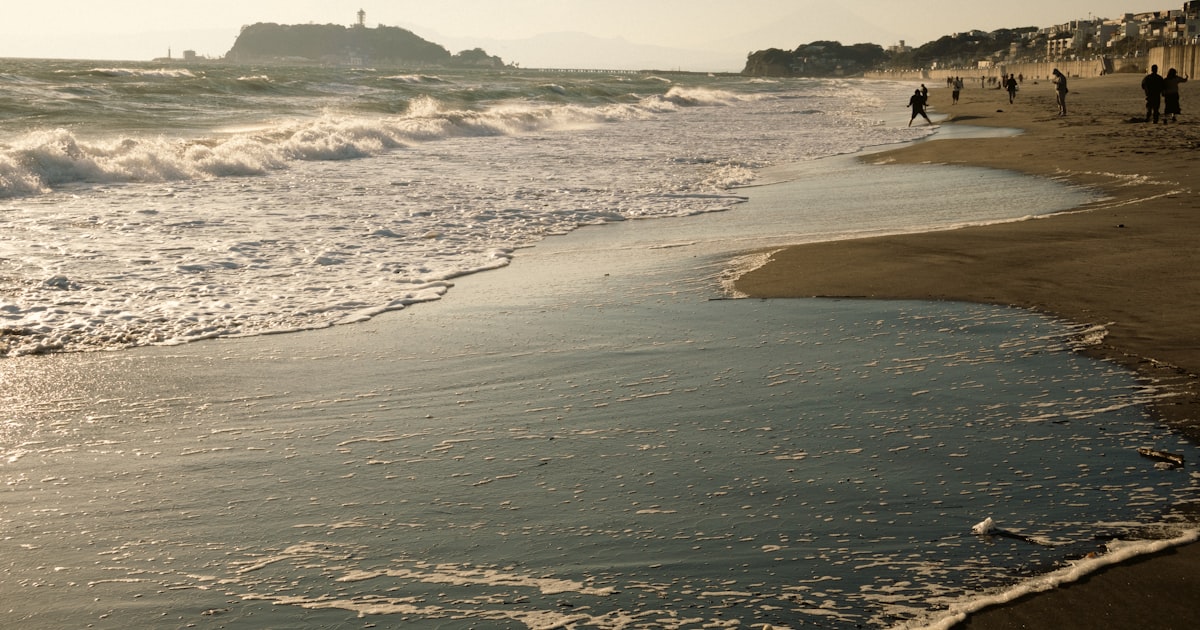
Photo by Kate Kasiutich on Unsplash
Enoshima is the island most Kamakura day-trippers only glimpse from the beach — a green, shrine-covered hump connected to the mainland by a footbridge, with sea caves at one end and a lighthouse-observation tower at the other. It’s compact enough to see in half a day but hilly enough that you’ll want good shoes, and it pairs naturally with a morning in Kamakura before you head back to Tokyo. Here’s what you actually need to know before you go.
Getting There
Most travelers combine Enoshima with Kamakura, and the easiest way to move between the two is the Enoshima Electric Railway (Enoden), a slow, single-track tram line that hugs the coast. From Kamakura Station, ride the Enoden about 25 minutes to Enoshima Station; the one-way fare is around ¥310. If you’ll be hopping on and off — Kamakura’s temples, Hase’s Great Buddha, and Enoshima all sit along this line — the Enoden’s one-day pass (“Noriorikun,” around ¥800) pays for itself after three or four rides.
Coming straight from Tokyo, the Odakyu Line runs from Shinjuku to Katase-Enoshima Station, about 70–90 minutes depending on the train, with a reserved-seat Romancecar option if you want to avoid standing. Odakyu also sells a combined Enoshima-Kamakura Freepass covering the round trip from Shinjuku plus unlimited rides on local lines in the area, which is worth pricing against individual tickets if you’re doing both destinations in one day. A third option, the Shonan Monorail, runs from Ofuna Station (on the JR Tokaido Line) to Shonan-Enoshima Station — useful if you’re starting from a JR line covered by a rail pass; see our guide to regional JR rail passes for what JR East coverage does and doesn’t include this far south of Tokyo. If you’d rather drive, note that Enoshima’s parking lots fill up and get expensive on weekends and holidays — our guide to renting a car in Japan covers what to expect on coastal roads like this one, but the train is genuinely less hassle here.
Whichever line you take, you’ll cross the Enoshima Benten Bridge on foot to reach the island itself — about a 10-minute walk from Katase-Enoshima or Enoshima Station.
Enoshima Shrine and the Escar
The island is essentially one hill, and Enoshima Jinja is spread across it in three parts: Hetsunomiya, Nakatsunomiya, and Okutsunomiya, connected by a steep stone path lined with souvenir shops and food stalls. The shrine is dedicated to Benzaiten, the goddess of music, wealth, and the sea, and one hall houses a nude statue of her — a design that surprises some first-time visitors but is a legitimate and centuries-old object of worship, not a novelty.
To skip some of the climbing, the Enoshima Escar is a series of outdoor escalators running up through the hillside in three sections, priced per section or as a combined ticket (roughly ¥360 for adults for the full run). It’s genuinely worth it in summer heat or if you’re short on time — you still walk plenty on the way back down and out to the far end of the island.
Samuel Cocking Garden and the Sea Candle
Near the top of the island, the Samuel Cocking Garden is a small botanical garden built on the foundations of a 19th-century British merchant’s greenhouses, worth a quick walk-through and especially pretty when seasonal flowers are out. Inside it stands the Enoshima Sea Candle, an observation lighthouse tower with a deck offering 360-degree views — on a clear winter day you can see Mount Fuji across Sagami Bay, which is the single best reason to time your visit for a cold, dry morning. Entry to the tower runs around ¥500 for adults, with a combined ticket for the garden and tower typically saving a bit over paying separately. At night the whole hillside sometimes hosts seasonal illumination events (most notably in winter), which draw bigger crowds and mean the last Enoden or Odakyu trains back matter more than usual.
Iwaya Caves
Keep walking past the garden and down the far side of the island and you’ll reach Chigogafuchi, a rocky tidal area with good sunset views, and eventually the Iwaya Caves at the island’s western tip — two shallow sea caves that were historically a pilgrimage site linked to the Enoshima Jinja legend. Admission is around ¥500 and includes a candle lantern, since the caves aren’t electrically lit. This is the far end of the island, roughly 30–40 minutes of walking from the bridge, so budget accordingly — it’s easy to underestimate how much of Enoshima is stairs and slope rather than flat path.
What to Eat
Shirasu (tiny whitebait) is the local specialty, caught in Sagami Bay and served raw, boiled, or dried over rice as shirasu-don at restaurants along the shopping street up to the shrine and in Katase. It’s genuinely a regional dish worth trying here rather than a tourist gimmick — prices for a bowl generally run ¥1,200–2,000. If you’d rather have sushi in a more familiar format, there are conveyor-belt chains around Fujisawa and Kamakura stations; our comparison of kaiten-zushi chains is useful if you want a reliable, budget-friendly fallback. For a quick snack on the shrine approach, tako-senbei (flattened, pressed whole octopus crackers) and grilled squid on a stick are the classic street food here. Note that the Enoshima Aquarium, one of the better aquariums in the Tokyo area, is actually on the mainland near Katase-Enoshima Station, not on the island — easy to combine with your visit if you’re traveling with kids.
Best Time to Visit and Common Mistakes
Weekday mornings are dramatically quieter than weekends, when the shrine approach and Escar lines can get genuinely crowded. Winter (December–February) gives you the clearest odds of seeing Mount Fuji from the Sea Candle, while summer brings heat, humidity, and beach crowds on the mainland side, plus fireworks displays in some years. The most common mistake is underestimating the walking and stairs — flat shoes matter — and the second is arriving late in the afternoon expecting to see everything; the caves and far side of the island genuinely take a few hours round-trip if you’re walking, not riding the Escar both ways. Plan on a half day minimum, and if you’re pairing it with Kamakura, do Kamakura’s temples first thing in the morning and save Enoshima for a slower, sunset-timed afternoon.