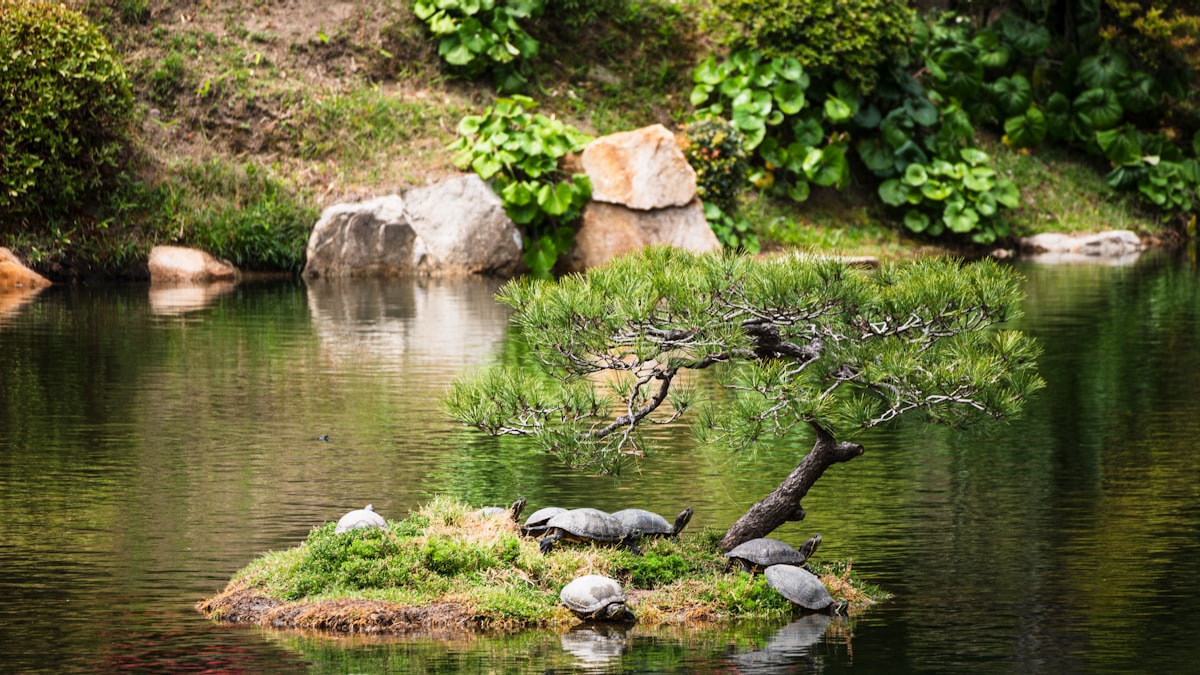
Japanese gardens are among the country’s most serene pleasures — carefully composed landscapes of moss, stone, water, and seasonal color. Here’s how to enjoy them and which are the most beautiful to visit.
Types of Japanese garden
- Strolling gardens (kaiyu-shiki) — large gardens designed to be walked, with a central pond.
- Zen rock gardens (karesansui) — raked gravel and stone, meant for quiet contemplation.
- Tea gardens (roji) — the mossy path leading to a tea house.
The most beautiful to visit
- Kenrokuen (Kanazawa) — one of Japan’s “three great gardens”; see our Kanazawa guide.
- Ryoan-ji & Saiho-ji (Kyoto) — the famous Zen rock garden and moss temple; more in our Kyoto guide.
- Korakuen (Okayama) and Kairakuen (Mito) — the other two great gardens.
- Adachi Museum & Ritsurin (Takamatsu) — stunning, less-crowded masterpieces.
- Shinjuku Gyoen (Tokyo) — a gorgeous city escape; see our Shinjuku guide.
How to enjoy them
- Go early for stillness and soft light; gardens reward a slow pace.
- Every season shines — cherry blossoms, summer green, autumn maples, and snow.
- Sit and take it in — many gardens have a tea house for matcha (see our green tea guide).
- Stay on paths and keep quiet — see our etiquette guide.
Tips
- Some famous gardens require timed entry or advance reservation (e.g. Saiho-ji).
- Combine garden visits with nearby temples and shrines.
Typical costs & hours
- Most famous gardens charge JPY 300-700 entry; Kenrokuen is JPY 320, the Adachi Museum garden (paired with its art collection) is JPY 2,500, and many smaller temple gardens are free or included in temple admission.
- Saiho-ji (the famous moss garden) requires advance postal or online reservation and a suggested donation of around JPY 4,000, which includes a short sutra-copying session before you’re allowed into the garden — budget extra planning time for this one specifically.
- Standard hours run 8:30am/9am to 5pm-ish, with seasonal night illuminations (often an extra ticket) during cherry blossom and autumn leaf season at gardens like Kenrokuen and some Kyoto temples.
Common mistakes to avoid
- Rushing through in 15-20 minutes — Japanese gardens are designed to be walked slowly, with views composed to unfold as you move; treat 45-90 minutes as a realistic minimum for a proper visit to a major garden.
- Visiting Ryoan-ji’s rock garden at midday in peak season — the small viewing platform gets crowded fast; early morning gives a genuinely different, quiet experience of the same 15 stones.
- Skipping the tea house — many gardens have a seated matcha service for a small additional fee, and pausing there is often the most memorable part of the visit, not an afterthought.
Best season for each garden
Kenrokuen is famous for its yukizuri (rope supports protecting pine branches from snow) in winter, a sight unique to that season; Ritsurin in Takamatsu peaks with autumn maples reflected in its ponds; and Shinjuku Gyoen offers a rare mix of Japanese, French, and English garden styles that make it worth a return visit across different seasons if you’re staying in Tokyo a while.
Combining gardens with a wider day
Many great gardens sit right beside temples or castles, so pairing them costs little extra planning — Kenrokuen sits next to Kanazawa Castle, and several Kyoto temple gardens are part of the same admission as the main hall. Building a garden into an existing temple or castle stop, rather than treating it as a separate destination, is usually the most efficient way to fit several into one trip.