Some links below are affiliate links. If you book through them, Japan Trove may earn a small commission at no extra cost to you.
Kyoto is Japan’s cultural heart — over a thousand temples and shrines, geisha districts, and gardens that define the seasons. It’s also busy, so a little planning goes a long way. Here’s what’s genuinely worth your time.
The essentials
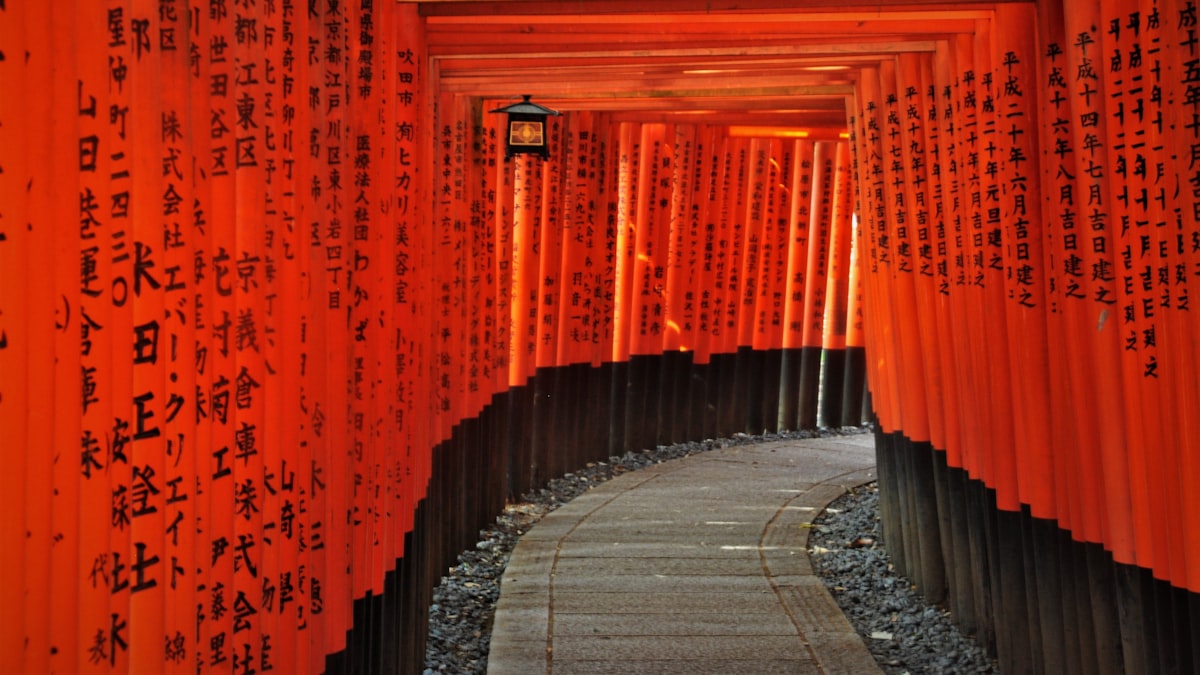
- Fushimi Inari Taisha — the endless red torii gates; go at sunrise to have them nearly to yourself.
- Kiyomizu-dera — a hillside temple with sweeping views; wander the old Higashiyama lanes below.
- Arashiyama Bamboo Grove — plus the monkey park and riverside; again, early is best.
- Kinkaku-ji — the Golden Pavilion, dazzling on a clear day.
- Gion — the geisha district; stroll the lantern-lit streets in the evening (respectfully — no chasing geiko for photos).
Beat the crowds
- Start at dawn. The famous spots are magical and empty before 8am.
- Go north. The moss temples and Ohara in the northern hills stay quiet.
- Pick a theme per day (east Kyoto, west Kyoto, north) to cut down on backtracking.
Experiences
- A tea ceremony or matcha experience — book in English on Klook .
- Kimono rental for a day of photos in Higashiyama.
- Nishiki Market for street food and — see our Japanese green tea guide — excellent tea to take home.
Where to sleep & how to get around
Kyoto relies on buses, so stay central — see where to stay in Kyoto. Coming from Tokyo, check whether the JR Pass is worth it; a Kansai regional pass is often better. And Kyoto pairs naturally with Osaka and Nara.
Slot it all into our 7-day Japan itinerary.
What things typically cost
- Most major temples charge JPY 400-600 entry; Fushimi Inari is free and open 24 hours, one of the best-value major sights in the entire country.
- A kimono rental for a Higashiyama photo walk runs JPY 4,000-8,000 for a basic half-day set, more with hair styling add-ons.
- A tea ceremony experience runs JPY 3,000-6,000 for a beginner-friendly session, typically including a sweet and a bowl of whisked matcha as part of the demonstration.
Common mistakes to avoid
- Trying to see all five essentials in one rushed day — Kyoto’s sights are spread across the city, and cramming Fushimi Inari, Kiyomizu-dera, Arashiyama, Kinkaku-ji, and Gion into one day means mostly transit time; grouping by geographic area across 2-3 days works far better.
- Visiting Arashiyama’s bamboo grove at midday — it’s one of the most crowded single photo spots in Kyoto by late morning; arriving at opening gives you a genuinely different, peaceful version of the same path.
- Approaching Gion hoping to photograph geiko or maiko up close — this is treated as harassment in parts of the district and some lanes now ban tourist photography entirely; admire respectfully from a distance or book a proper cultural performance instead.
Grouping sights by area to save time
A geographic day-by-day structure — east Kyoto (Kiyomizu-dera, Higashiyama lanes, Gion) one day, west Kyoto (Arashiyama, bamboo grove) another, and north Kyoto (Kinkaku-ji, quieter temples) a third — cuts backtracking dramatically compared to jumping between areas based on a list of “must-sees” without regard to location.
A quiet alternative to the big five
If the essential sights feel too crowded even with good timing, Kyoto’s northern hills around Ohara and the moss temples of the western hills offer a genuinely quieter, equally beautiful alternative — worth a half-day for travelers on a second or third Kyoto visit who’ve already covered the headline sights.