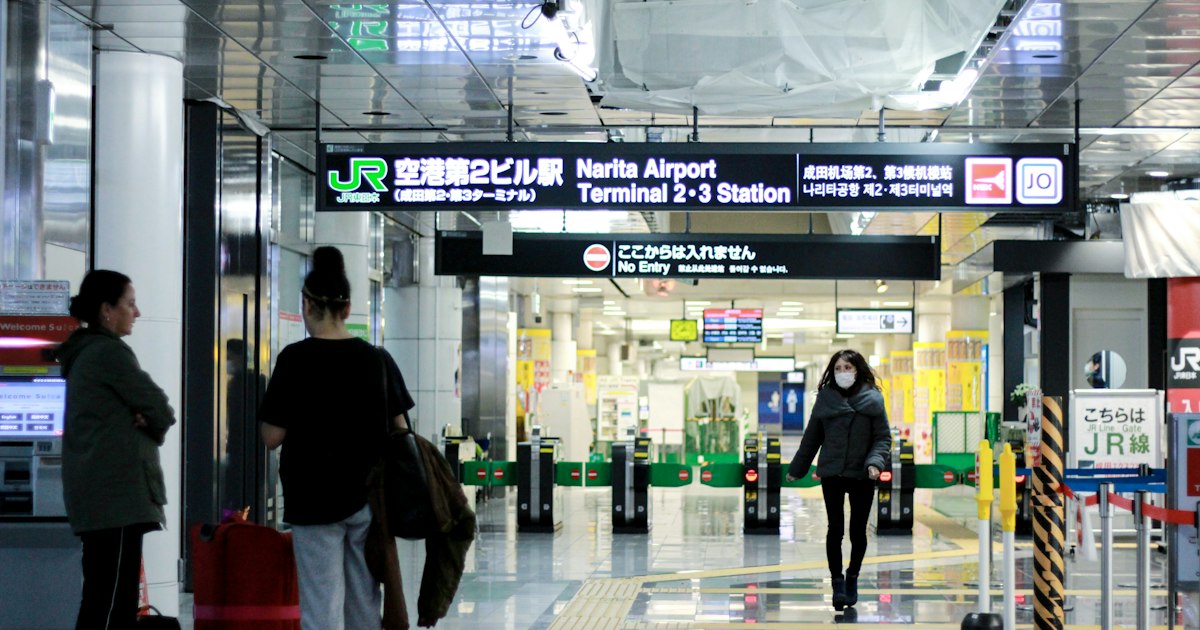
If your flight to Bali, Manila, or Sydney happens to route through Tokyo or Osaka, you’ve probably had a small moment of panic: do I need a Japanese visa just to sit in an airport for a few hours? The short answer is that most travelers don’t — but the rules depend on your nationality, whether you leave the airport, and how long your connection is. Here’s what actually happens at Japanese immigration during a layover, broken down so you’re not guessing at the transit counter.
The basic rule: staying inside the airport
If you remain within the international transit area and never pass through Japanese immigration, you do not need any visa, regardless of nationality. This is true at Narita (NRT), Haneda (HND), Kansai (KIX), Chubu Centrair (NGO), and Fukuoka (FUK). You’ll stay on the “airside” of the terminal, pass through a security recheck if you’re changing airlines or terminals, and board your connecting flight without ever touching Japanese soil in the legal sense.
This applies even to nationalities that would otherwise need a visa to enter Japan. A transit passenger from India or China connecting at Narita for 3 hours without leaving the sterile transit zone does not need a visa for that transit.
When you DO need a visa: leaving the airport
The moment you clear immigration and enter Japan proper — even just to grab a hotel room near the airport for an overnight layover, or to dash into Tokyo for a few hours — you are legally “entering” Japan, not transiting. At that point the normal entry rules apply:
- Citizens of visa-exempt countries (the US, UK, Canada, Australia, most EU countries, South Korea, and around 70 others) can simply enter on their passport for short stays, usually 90 days, the same as any tourist visit.
- Citizens of countries without visa-exemption agreements with Japan need a valid visa to leave the airport, even for a few hours. There is no special “transit visa” exception once you clear immigration — you need the same visa you’d need for a full visit.
In practice this means: if your passport lets you visit Japan visa-free for tourism, it also lets you leave the airport during a long layover. If it doesn’t, you’re confined to the transit area unless you’ve arranged a visa in advance.
Checking Japan’s visa-exemption list before you book
Japan’s Ministry of Foreign Affairs maintains the official list of visa-exempt countries and territories, and it does change occasionally (it was suspended for several countries during the pandemic and has since been reinstated for most). Always verify your specific passport against the current list before counting on visa-free entry — don’t rely on secondhand information from forums or what was true a few years ago. If your country isn’t on the list, you’ll need to apply at a Japanese embassy or consulate before you travel; it cannot be arranged on arrival.
How long is “too long” for an airport-only layover?
There’s no hard legal cutoff on connection time for staying in the transit zone — a 16-hour overnight connection staying airside is technically fine if facilities exist to support it. But practically:
- Under 5-6 hours: Stay in the transit area. Narita and Haneda both have adequate (if not luxurious) seating, restaurants, and in Narita’s case, day-use rest areas and capsule-style sleep pods in the terminal.
- 6-16 hours overnight: This is the gray zone where many travelers choose to formally enter Japan (if visa-free) to use an airport hotel rather than sleep in the terminal. Narita has several hotels a free shuttle-bus ride away; Haneda has options you can walk to without even needing a train.
- Over 16-24 hours: Almost nobody stays airside for this long voluntarily. If you’re visa-free, formally entering and spending the day in Tokyo is far more pleasant and costs nothing extra.
Keep in mind some low-cost long layovers are actually a great way to sample Japan without a full separate trip — see our guide to Ueno Zoo’s giant pandas if you’ve got a free afternoon near Haneda or central Tokyo, since Ueno is roughly 60-75 minutes from either airport by train.
What a same-day Tokyo excursion actually costs and takes
If you’re visa-exempt and have 8+ hours between flights, leaving the airport is very doable. From Narita, the fastest way into central Tokyo is the Keisei Skyliner (¥2,570 one-way, about 41 minutes to Ueno/Nippori) or JR Narita Express (¥3,250, about 55-60 minutes to Tokyo Station). From Haneda, the Keikyu line or Tokyo Monorail reach central Tokyo in 15-30 minutes for ¥300-500. Budget at least 3 hours round-trip from Narita (longer with immigration queues at busy times) and build in a solid buffer before your connecting flight — Japanese airport security recommends arriving at least 2-3 hours before an international departure.
A realistic 8-hour layover plan: clear immigration (30-45 min), train into Tokyo (45-60 min), 3-4 hours exploring or shopping, train back, and recheck-in with buffer. This isn’t enough time for a day trip to places like Nikko or the Fuji Five Lakes — those routes, covered in our guides to the Spacia Express to Nikko and the Fuji Excursion train, really need a dedicated day. Stick to central Tokyo — Ueno, Asakusa, or Ginza — for a layover excursion.
Common mistakes travelers make
- Assuming “transit” always means visa-free. It only means visa-free if you never clear immigration. Leaving the airport reclassifies you as an entrant.
- Confusing connecting-flight logistics with visa rules. Changing terminals at Narita (Terminal 1 to Terminal 2, for example) still happens within the transit zone via shuttle bus and does not require immigration clearance if you’re not checking into Japan.
- Not checking terminal separation. Some codeshare itineraries land you in one terminal and depart from another; confirm whether that requires an airside shuttle or a landside walk, since the latter means passing through immigration.
- Booking a layover too tight to safely leave, then rushing back and missing the flight. If in doubt, stay in the terminal — missing an international connection is worse than skipping a few hours in the city.
- Forgetting Japan’s visa-exemption status is nationality-based, not residency-based. It’s your passport that matters, not where you currently live or hold a visa for.
Quick reference by scenario
- Staying airside, any nationality, any layover length: No visa needed.
- Leaving the airport, visa-exempt passport, under 90 days cumulative: No visa needed, enter like a normal short-term visitor.
- Leaving the airport, non-exempt passport: Visa required in advance — cannot be obtained at the airport for this purpose.
- Overnight connection, want a hotel bed: If visa-exempt, formally enter and use an airport-area hotel; if not exempt, use terminal rest facilities or a capsule pod instead.
When in doubt, check your passport against Japan’s current visa-exemption list a few weeks before departure, not at the transit desk. It’s a five-minute check that saves you from either an unplanned confinement to the terminal or, worse, a denied entry.