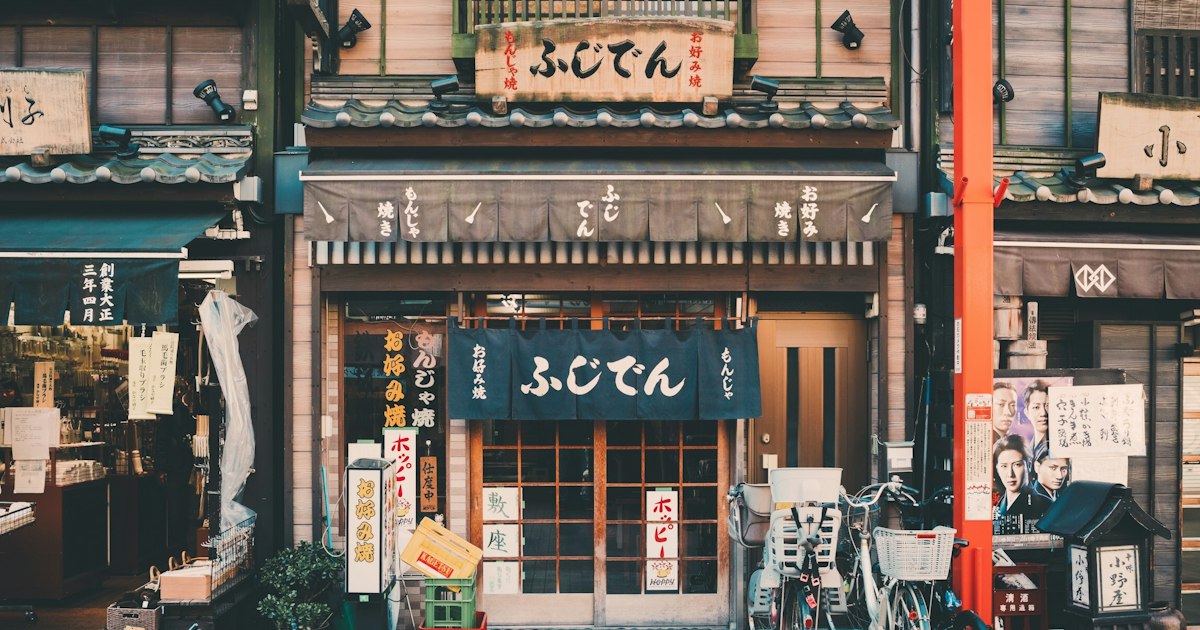
Photo by Clay Banks on Unsplash
Sandwiched between the political power of Nagatacho and the neon of Roppongi, Akasaka rarely makes a first-time visitor’s checklist — and that’s exactly why it rewards the ones who show up. This is where foreign embassies, the National Diet, and century-old geisha-district backstreets sit a five-minute walk from a Shinto-Buddhist shrine lined with hundreds of stone foxes. Add a dense cluster of serious sake bars and you have a neighborhood built for an unhurried evening, not a rushed photo stop.
Why Akasaka Is Different From Tokyo’s Other Nightlife Districts
Akasaka was one of Tokyo’s major hanamachi (geisha quarters) through the 20th century, alongside Shimbashi and Yanagibashi, and it later became the after-hours haunt of politicians and bureaucrats working in nearby Nagatacho. That history is still legible in the street layout: narrow lanes like Hitotsugi-dori and the backstreets around Akasaka-mitsuke are packed with small, counter-only restaurants and bars rather than the big chain izakaya you’ll see in Shinjuku or Shibuya. Since the 1960s, embassies — including the US Embassy, which borders the Akasaka Palace grounds — have clustered here too, giving the district a quieter, more international daytime character than its nightlife reputation suggests.
Toyokawa Inari Tokyo: The Fox Shrine Businesspeople Swear By
The neighborhood’s spiritual landmark is Toyokawa Inari Tokyo (officially Myogon-ji Temple’s Tokyo branch), a short walk from Akasaka-mitsoke or Nagatacho stations at 1-4-7 Motoakasaka. It’s technically a Soto Zen Buddhist temple, not a pure Shinto shrine, enshrining Dakiniten — a fox-associated deity of prosperity — which explains the hundreds of small stone fox statues packed into the grounds, many wrapped in red bibs left by worshippers.
Because it sits a few minutes from the Diet building, it has long attracted politicians, executives, and salarymen praying for business success before work, which gives it a very different energy from the tourist-heavy shrines in Asakusa. The grounds are open to visitors essentially from early morning until evening (roughly 6:00am–8:00pm), and admission is free. The small office selling omamori (charms) and goshuin (shrine stamps) typically operates from around 8:00am to 4:00pm — go before 9am if you want the grounds close to empty. Budget 20–30 minutes to walk the compound and photograph the fox statue rows.
Akasaka’s Sake Bar Scene
This is where Akasaka earns its keep for drinkers. Unlike Shibuya’s standing bars or Golden Gai’s tiny theme bars, Akasaka specializes in sake bars with real breadth — regional labels from Niigata, Akita, and Yamagata poured by staff who can actually explain the difference between junmai and honjozo.
- Budget (¥3,000–5,000 per person): Standing sake bars and small izakaya along Hitotsugi-dori pour by the glass from ¥600–900, with tasting flights of 3 small cups running ¥1,200–1,800. Food is simple — grilled fish, tofu, pickles — at ¥400–900 a plate.
- Mid-range (¥6,000–10,000 per person): Sit-down sake specialists near Tameike-sanno and Akasaka-mitsuke offer curated lists of 20–40 labels, often with a seasonal tasting course. Expect a cover or seating charge (seki-ryo) of ¥300–500 per person, common across Japanese izakaya and worth knowing about in advance so it doesn’t feel like a surprise on the bill.
- Splurge (¥12,000+): A handful of reservation-only counters pair rare, limited-release sake with kaiseki-style small plates. These typically require a same-day or advance phone reservation in Japanese — this is where a private guide or concierge booking service genuinely pays for itself, since many of these counters don’t take walk-ins or English bookings.
Before you drink, know the basics of serving and sipping etiquette — the same rules that apply to whisky and shochu service apply to sake, and getting the pouring order and glass-holding customs right makes a noticeably better impression on staff and fellow drinkers. You’ll also be handed a hot towel the moment you sit down at almost every bar here; there’s a right way to use it, covered in this guide to oshibori etiquette.
Getting to Akasaka
Three stations effectively bracket the district: Akasaka (Chiyoda Line), Akasaka-mitsuke (Ginza and Marunouchi lines), and Tameike-sanno (Ginza and Namboku lines). All sit within a 5–10 minute walk of both Toyokawa Inari and the main sake bar strips, so there’s no need to pick a “wrong” station. From Tokyo Station, the trip is roughly 15 minutes with one transfer; from Shinjuku, about 20 minutes via the Marunouchi Line direct to Akasaka-mitsuke.
Best Time to Visit
Go to Toyokawa Inari in the morning — before 9:00am on a weekday, you’ll often have the fox statues to yourself, and you may spot local office workers stopping in before their commute continues. For the bars, Akasaka’s crowd skews toward after-work salarymen and embassy staff, so the backstreets fill up fast between 7:00pm and 9:00pm on weeknights. Arriving at bar-opening time (usually 5:00 or 5:30pm) gets you a seat without a wait, especially at the smaller counter bars that can’t take reservations for solo or two-person groups. Weekends are noticeably quieter here than in Tokyo’s youth-oriented districts, since Akasaka’s identity is tied to the workweek.
Common Mistakes to Avoid
- Confusing it with a pure Shinto shrine. Toyokawa Inari is Buddhist, so the etiquette (how you clap, bow, and what you say) differs slightly from a Shinto jinja — staff are used to foreign visitors and won’t mind simple, quiet respect either way.
- Showing up to a reservation-based bar without calling ahead. Many of Akasaka’s best counters seat fewer than 10 people and are booked solid by regulars; walk-ins work fine at the standing bars and larger izakaya, but not at the splurge-tier spots.
- Skipping the seating charge line on the menu. The otoshi (a small starter dish you didn’t order) and seki-ryo cover charge are standard at Japanese izakaya and sake bars — not a scam, just local practice.
- Treating Akasaka as a quick stop between Roppongi and Ginza. The neighborhood’s appeal is in lingering — a rushed 20-minute visit misses both the shrine’s quiet morning atmosphere and the bars’ after-dark energy.
A Simple Half-Day Plan
Visit Toyokawa Inari first thing in the morning, then grab a set lunch at one of the teishoku counters that cater to the area’s office workers — if you haven’t ordered this way before, it helps to know how a teishoku lunch actually works before you sit down. Spend the afternoon wandering the embassy-lined streets toward Akasaka Palace’s exterior grounds, then return after 5:00pm for sake bar hopping along Hitotsugi-dori. It’s a low-key, walkable day that doesn’t require advance tickets — just a willingness to duck into places without English signage.