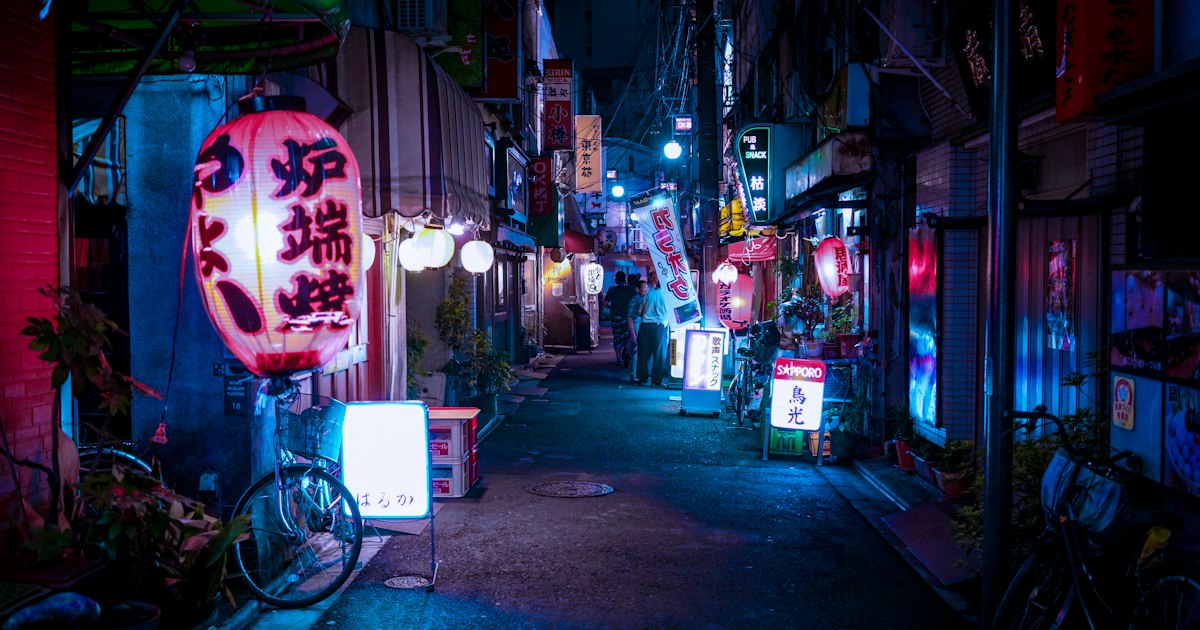
Photo by Alex Knight on Unsplash
Ask a Tokyoite where they go to drink without the Shibuya crowds or Shinjuku prices, and a surprising number will say Akabane. This unglamorous station town in the city’s north has no neon towers or viral photo spots — just dozens of standing bars, a shotengai arcade, and day-drinkers who’ve been coming since the 1970s. Locals only half-jokingly call it the “adult Disneyland” (otona no Disneyland), because once you’re inside the maze of alleys behind the station, you can hop from counter to counter for hours without ever needing to go outside. Here’s how to actually do that trip.
What Makes Akabane the “Adult Disneyland”
The nickname comes from the density and variety packed into a few square blocks: dozens of tiny bars, each with its own specialty, crammed close enough that bar-hopping feels like moving between rides. Unlike Shinjuku’s Golden Gai, which is largely a nighttime tourist curiosity now, Akabane’s scene is still driven by locals — retirees, office workers finishing an early shift, and regulars who’ve had the same seat for twenty years. Drinking often starts in the early afternoon rather than after dark, which is part of the appeal: you can do a full Akabane crawl and still catch the last train home at a reasonable hour.
Getting There: Trains and Timing
Akabane Station is served by the JR Keihin-Tohoku Line, JR Saikyo Line, JR Utsunomiya/Takasaki Lines, and the Tokyo Metro Namboku Line, which makes it easy to reach from most parts of the city without transferring. From Tokyo Station it’s roughly 20 minutes on the Keihin-Tohoku Line; from Ikebukuro it’s about 10 minutes on the Saikyo Line; from Ueno around 10 minutes. There’s no need for a taxi or a special IC card top-up strategy — just tap through with whatever Suica or Pasmo you’re already using.
The best time to go is a weekday from mid-afternoon (around 3–4pm) through early evening. Many standing bars open as early as 11am–12pm and fill with day-drinkers by mid-afternoon, so going earlier than a typical izakaya run actually gets you the full local atmosphere rather than a late-night tourist crowd. Weekends are busier and louder but still manageable; avoid major holidays when some smaller shops close for family time.
Where to Start: Ichiban-gai and the Yokocho Alleys
Walk out of Akabane Station’s east exit and you’ll hit Akabane Ichiban-gai, a covered shotengai (shopping street) lined with butchers, produce stalls, and small eateries that’s been largely unchanged for decades. This is a good warm-up lap before drinking: grab a skewer or croquette from a stand-up food shop for a few hundred yen while you get oriented.
From there, duck into the narrow lanes branching off the main street. These alleys hold the real draw: multi-tenant buildings where a single doorway opens onto six or eight tiny bars sharing a floor, each seating maybe 8–15 people at a counter. You don’t need a plan — walk until a menu board or the smell of grilled motsuyaki (grilled offal skewers, an Akabane specialty) pulls you in. Most places are standing-only or have a handful of stools, which keeps turnover fast and prices low.
How Tachinomi (Standing Bar) Culture Works
The backbone of Akabane’s drinking scene is the tachinomi, or standing bar. These are no-frills counters where you order, pay close to the time you order (sometimes a running tab, sometimes cash-as-you-go), and drink standing up, which keeps turnover high and prices low. Expect draft beer or a small glass of sake or shochu for roughly ¥300–500, and skewers, fried items, or small plates in the ¥100–400 range. A satisfying two-drink, three-snack stop at one bar often comes to under ¥1,500 per person.
Etiquette is casual but has a few unwritten rules: don’t linger at the counter once you’ve finished if there’s a line waiting, don’t expect English menus (pointing at what the person next to you is eating works fine), and tip nothing — it isn’t expected anywhere in Japan. If you want a calmer, seated alternative to compare against, Tokyo’s nightlife isn’t all standing-bar chaos — see our guide to navigating Kabukicho’s nightlife district safely for a contrast in scale and energy.
Budget, Mid-Range, and Splurge Options
Budget (under ¥2,000 total): Stick to one or two standing bars, order the house draft and a couple of skewers, and move on. This is how most Akabane regulars drink on a weekday.
Mid-range (¥3,000–5,000): Settle into a seated izakaya for a full meal — grilled fish, a hot pot, or a set course — plus a few rounds of drinks. Many of the sit-down spots around Ichiban-gai offer reasonably priced set menus in this range.
Splurge (¥6,000+): Akabane isn’t really a splurge destination, which is part of its charm, but a few longer-established restaurants near the station offer proper multi-course dinners with better sake lists if you want to slow down and eat well rather than crawl bars.
Common Mistakes First-Timers Make
- Showing up too late. Arriving after 9pm means missing the day-drinking atmosphere that makes Akabane distinctive, and some of the oldest standing bars close relatively early since they opened at lunchtime.
- Expecting card payment everywhere. Many standing bars and smaller stalls are cash-only. Carry enough yen before you arrive — the 7-Bank ATMs inside 7-Eleven stores near the station are the easiest way to get cash if you run short.
- Trying to sit down everywhere. Half the appeal of a tachinomi crawl is staying mobile. Treat each stop as a 20–30 minute visit rather than settling in for the whole evening at the first bar you like.
- Not checking where you can smoke. Street smoking is restricted across much of Tokyo, and Akabane is no exception — look for marked designated areas rather than lighting up outside a bar; our guide to designated smoking areas in Japan explains where those are and how the rules work.
Practical Tips Before You Go
Akabane is very walkable and low-risk compared to flashier nightlife districts — there’s little of the tout or overcharge culture found in parts of Kabukicho or Roppongi, since most bars are small, locally run, and have fixed, posted prices. Bring a basic phrase or two of Japanese (or a translation app) since English is rare here, and don’t expect a dress code; this is a jeans-and-work-clothes crowd, not a dress-to-impress one. A card with no foreign transaction fees is still worth carrying for the rare spot that takes plastic — see our roundup of no-foreign-transaction-fee credit cards for Japan trips — but plan your Akabane evening around cash. Go hungry, go early, and let the alleys decide your route; that’s the whole point of the adult Disneyland.