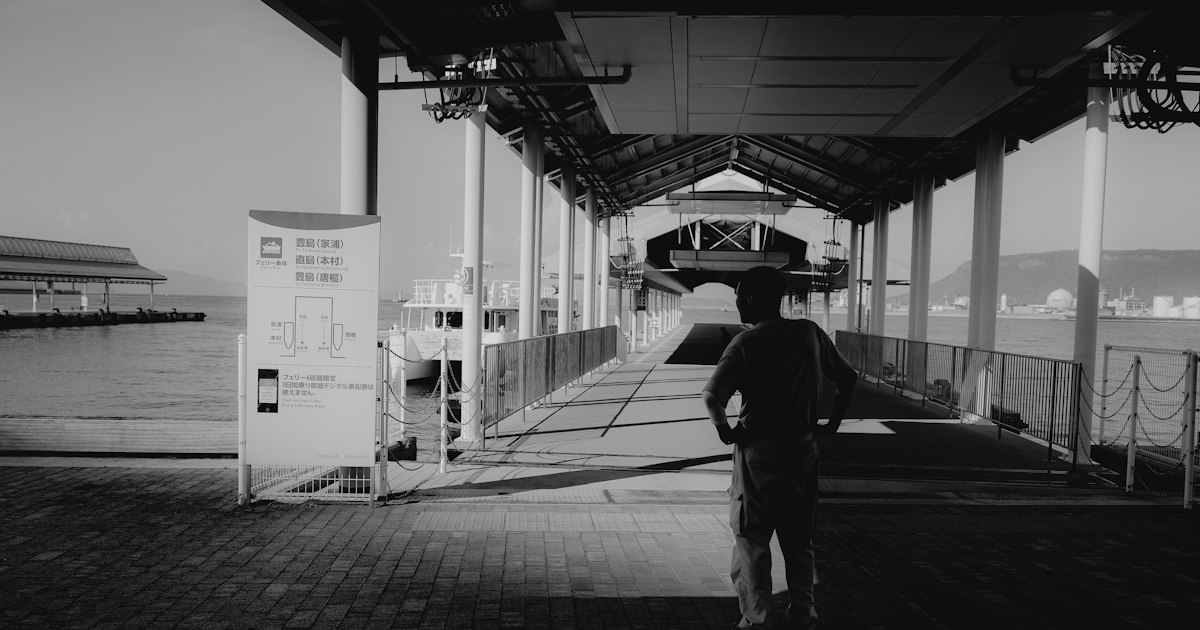
Photo by Johnny Ho on Unsplash
Most travelers fly between Japan and South Korea, but Fukuoka has a quieter option: a direct sea crossing to Busan that skips the airport entirely. The Korea Strait here is only about 200 km wide, which makes Hakata Port one of the few places in Japan where you can combine two countries into a single trip without ever touching a departure gate. Here’s how the route actually works, what it costs, and the mistakes that trip up first-timers.
Two Ways to Cross: Jetfoil or Car Ferry
Two companies run this route, and they’re genuinely different experiences, not just price tiers of the same service.
- JR Beetle — a high-speed jetfoil (hydrofoil) that skims across the strait in about 3 hours. It feels more like a short domestic flight than a boat ride: assigned airline-style seating, several sailings a day, and almost no sense of the ocean beneath you. It’s the faster, more expensive option and the one most tourists choose.
- Camellia Line — a conventional car ferry with open decks, a restaurant, and cabins. It runs a daytime sailing of roughly 5.5–6 hours and an overnight sailing of around 8 hours where you can sleep in a cabin instead of a hotel. It’s slower but noticeably cheaper, and it’s the only way to bring a vehicle across.
If you get seasick easily, know that the Beetle’s speed can make strait crossings feel bumpier in choppy weather than the heavier, slower Camellia ferry.
What It Actually Costs
Fares fluctuate with season and promotions, so treat these as ballpark figures rather than fixed prices:
- Beetle one-way, economy: roughly ¥13,000–15,000. Round-trip “saver” fares bring the per-leg cost down noticeably if booked together.
- Camellia one-way, economy: from around ¥9,000, with business class and private cabins costing more, especially on the overnight sailing.
- Port tax / terminal fee: a small departure fee (a few hundred yen) is added on top of the ticket price at both terminals.
Because this is an international service, ticket prices are not subject to Japan’s consumption tax the way most in-country purchases are — if you’re unsure why your shopping receipts in Fukuoka look different from this fare, it’s worth reading up on Japan’s consumption tax and why sticker prices don’t match checkout totals before you fly home with a pile of duty-free receipts.
Getting to Hakata International Terminal
The ferry terminal (Hakata Port International Terminal) is separate from Hakata Station and sits on the waterfront, about 2–3 km from the city center. From Hakata Station, a direct shuttle bus (often branded as a port connector bus) takes about 15 minutes and costs a few hundred yen; a taxi takes roughly the same time for around ¥1,000–1,500. From Tenjin, it’s a similarly short bus or taxi ride. There is no train line directly to the terminal, so budget extra time if you’re hauling luggage and relying on buses with limited frequency.
Check-in and immigration close well before departure — arrive at least 1 to 1.5 hours ahead for the Beetle and closer to 2 hours for the Camellia ferry, since car and cargo loading adds time. This is not like a domestic Shinkansen where you can sprint on five minutes before departure.
Immigration, Passports, and What to Bring
Because you’re leaving Japan and entering South Korea (or vice versa), full passport control applies on both ends — this is a genuine international border, not a regional hop. Most Western passport holders, along with many other nationalities, can enter South Korea visa-free for tourism, but check your specific requirement before booking, since rules vary and change. You’ll fill out an arrival card for Korea unless you’ve already registered through Korea’s electronic travel authorization system in advance. Bring your passport to the terminal counter even if you booked online — tickets are usually confirmed against passport details at check-in, and luggage is lighter to handle if you’ve already consolidated shopping into one bag.
Best Time to Sail
Spring (April–May) and autumn (October–November) offer the calmest seas and the most reliable schedules. Summer brings typhoon season (roughly August–September), when both the Beetle and Camellia services can cancel sailings on short notice due to high swells — the jetfoil is more sensitive to rough water than the ferry and cancels first. If you’re traveling in late summer, build a buffer day into your itinerary rather than booking a same-day flight connection in Busan or Fukuoka right after your crossing. Winter crossings are generally fine but occasionally choppy; dress warmly if you plan to stand on the Camellia’s open deck.
Common Mistakes to Avoid
- Assuming it’s as casual as a domestic ferry. You need a passport, you clear customs and immigration on both sides, and gates close earlier than you’d expect for a 3-hour hop.
- Booking the cheapest Camellia fare without checking the sailing time. The overnight sailing saves a hotel night but means losing a travel day to sleep; the day sailing is faster door-to-door if you want to actually see Busan or Fukuoka that same day.
- Underestimating transit time to the terminal. It’s not downtown Fukuoka, and taxis can be scarce during peak departure windows.
- Not checking weather alerts in typhoon season. Cancellations happen with little warning, and refund/rebooking policies differ by operator.
Before You Board: Make the Most of Hakata
Fukuoka’s Hakata district, right by the port, is one of the best food neighborhoods in Japan, so don’t treat the terminal as just a transit point. If you’ve got a few hours before departure, this is the home turf of mizutaki, Hakata’s delicate chicken hot pot, and a reliable teishoku set lunch near the station is a fast, satisfying way to eat before a multi-hour crossing without committing to a long sit-down meal. If you’re stitching together a more complex multi-country itinerary around this crossing, it may also be worth looking into hiring a private tour guide or concierge service to handle logistics on tight connections.
The Fukuoka–Busan ferry isn’t the fastest way between the two countries, but it’s a genuinely useful option for travelers building a Japan–Korea combination trip, avoiding airport transfers, or simply wanting to see the Korea Strait from the water instead of 30,000 feet above it.