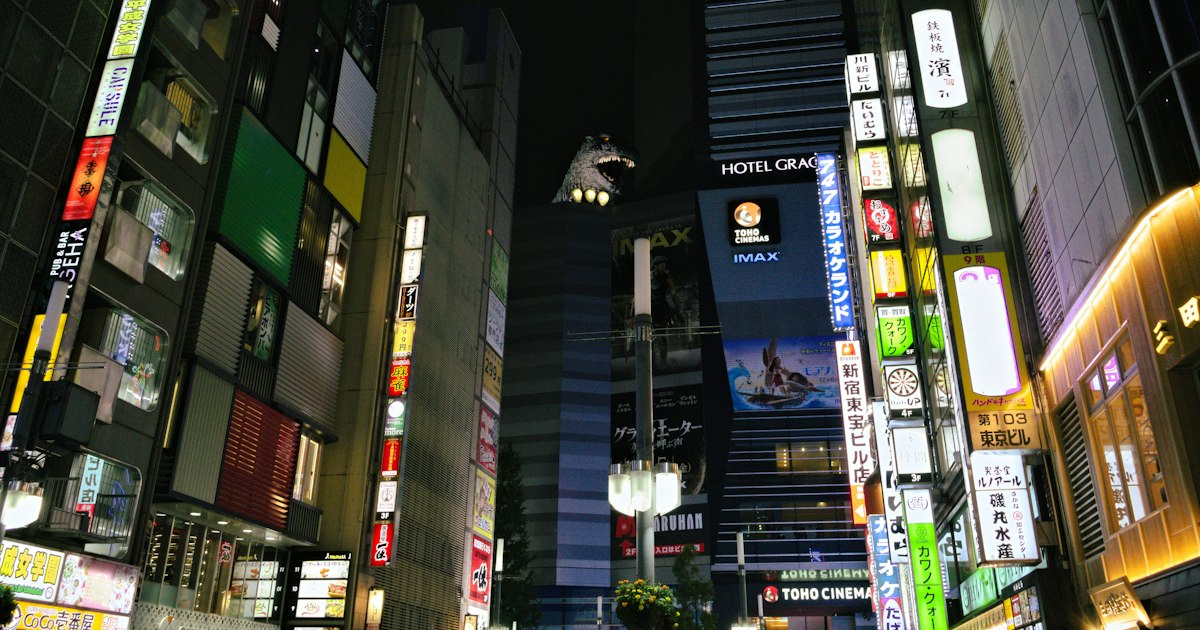
Photo by Rina Kemppainen on Unsplash
Catching a movie in Japan is one of the easiest ways to kill a rainy afternoon, cool off during a humid summer week, or just see how a different country does the moviegoing ritual. TOHO Cinemas, the country’s largest chain, runs the screens most tourists end up at — including the Godzilla-topped multiplex in Shinjuku’s Kabukicho — and nearly every Hollywood release there comes with Japanese subtitles rather than a dub. Here’s how to find the right screening, pay the right price, and avoid the mistakes that catch first-timers off guard.
Why TOHO Cinemas Is the Easiest Chain for Tourists to Navigate
TOHO Cinemas operates dozens of multiplexes across Japan, usually inside shopping malls or entertainment complexes, which means clean restrooms, food courts, and air conditioning are never far away. Compared to smaller independent theaters (mini-shiatā), TOHO’s booking site and in-app seat maps are more consistently laid out, and major locations in Tokyo and Osaka get the widest release slate, including subtitled prints of new Hollywood films day-and-date with — or within a few weeks of — their US release. Other big chains worth knowing are Aeon Cinema and United Cinemas, which follow similar pricing and subtitle conventions, so the advice below largely applies to them too.
Finding Subtitled Screenings: 字幕 vs 吹替
This is the single most important thing to understand before you book. Foreign live-action films in Japan are shown almost exclusively with Japanese subtitles (字幕版, jimakuban) — dubbing is rare for anything that isn’t aimed at young children. Foreign animated films, however, are usually offered in both a subtitled version (字幕版) and a Japanese-dubbed version (吹替版, fukikaeban), and theaters list these as separate showtimes. When you pull up showtimes on the TOHO Cinemas website or app, look for “字幕” next to the time slot; “吹替” means the dialogue has been re-recorded in Japanese with no English audio or subtitles at all. If a listing shows no label, it’s a live-action film and is safe to assume it’s subtitled — but double-check for kids’ animation, where the dubbed version often outnumbers subtitled showtimes.
Japanese Films With English Subtitles (Yes, They Exist)
If you want to watch a Japanese-language blockbuster rather than a Hollywood import, your options are narrower but real. Flagship Tokyo screens — particularly TOHO Cinemas Hibiya, TOHO Cinemas Roppongi Hills, and TOHO Cinemas Shinjuku — periodically run big domestic hits (major anime films, Studio Ghibli re-releases, popular live-action adaptations) with a dedicated 英語字幕版 (English-subtitled version) showtime, aimed squarely at tourists and resident expats. These showings are limited in number and tend to run for a few weeks after a title’s general release, so they won’t appear for every film or at every branch. The only reliable way to confirm one exists is to search the film’s name plus “英語字幕” on the theater’s site, or check the showtime grid for that exact label — regular showtimes of the same film will not have subtitles.
Ticket Prices and the Discount Days Worth Planning Around
Standard adult tickets at TOHO Cinemas run about ¥2,000, with university and college students (ID required) at roughly ¥1,500, and children from toddler age through junior high around ¥1,000. Seniors 60 and over get a discounted rate near ¥1,300. A few discount days make a real dent in the price:
- TOHO Cinema Day — the 1st of every month, all tickets drop to around ¥1,500 regardless of age.
- Ladies’ Day — Wednesdays, women pay a discounted rate (around ¥1,300–1,400) at most locations.
- Late Show / Early Show — the last screening after roughly 8pm and the first screening of the day are both discounted, usually to around ¥1,500.
- Couple discounts — if you’re traveling with a partner and your combined age is 100 or more, ask about the “husband and wife” discount, which brings two tickets to about ¥2,500 total.
Premium formats — IMAX, 4DX, Dolby Cinema — add a surcharge of roughly ¥600–1,000 on top of the base ticket, which is worth it for a big action or anime release but unnecessary for most dramas. Popcorn runs about ¥600–700 and a drink around ¥500, both noticeably cheaper than many Western chains.
Booking Your Seat: App, Website, and Kiosk
Every TOHO Cinemas screening uses assigned seating, selected at the time of booking — there’s no general-admission scramble for seats like at some older theaters. You can book through the TOHO Cinemas website, the TOHO Cinemas smartphone app, or a touch-screen kiosk in the lobby, all of which let you pick your exact seat from a map before paying by credit card or cash. Arriving even five minutes after showtime risks missing the opening minutes, since Japanese theaters start promptly and don’t tend to run long pre-show trailers. If you’d rather lock in a seat without fumbling through a Japanese-only kiosk screen, book online in advance and just scan your QR code or print voucher at the gate.
Getting There: Flagship Screens Worth the Trip
TOHO Cinemas Shinjuku, inside Shinjuku Toho Building in Kabukicho, is the one with the giant Godzilla head looming over the rooftop terrace — a free photo stop even if you’re not seeing a film, a two-minute walk from Shinjuku Station’s east exit. TOHO Cinemas Roppongi Hills, inside the Roppongi Hills Mori Tower complex, has some of Tokyo’s largest screens and is a five-minute walk from Roppongi Station. Suburban multiplexes attached to shopping malls are often the cheapest and least crowded option, especially on weekday afternoons, but they’re usually built around car access rather than train lines — if you’re driving out to one, it’s worth knowing the rules around coin parking lots and parking apps in Japan before you set off, since mall parking isn’t always free for cinema-only visits.
Common Mistakes to Avoid
The most frequent misstep is assuming a popular Japanese anime film will have English subtitles just because it’s playing at a tourist-friendly theater — check for the explicit 英語字幕 label rather than guessing. The second is confusing 字幕 (subtitled) and 吹替 (dubbed) when booking a foreign animated film, which can mean sitting through two hours of Japanese dialogue with no English support at all. Third, don’t show up expecting open seating; if you book a seat at the back and the theater is empty, you can’t simply move to the front — reserved seating is enforced. Finally, remember theaters here expect near-total silence during the film: no talking, and phones should be off rather than just on silent, since even the glow is considered disruptive in a dark room.
If you’re building out a full day of offbeat Tokyo entertainment around your movie, two solid pairings are a nazotoki escape room beforehand or a night of live puroresu wrestling afterward — both are the kind of distinctly Japanese experiences that make more sense once you’ve figured out how ticketing and reserved seating work at a place like TOHO Cinemas.