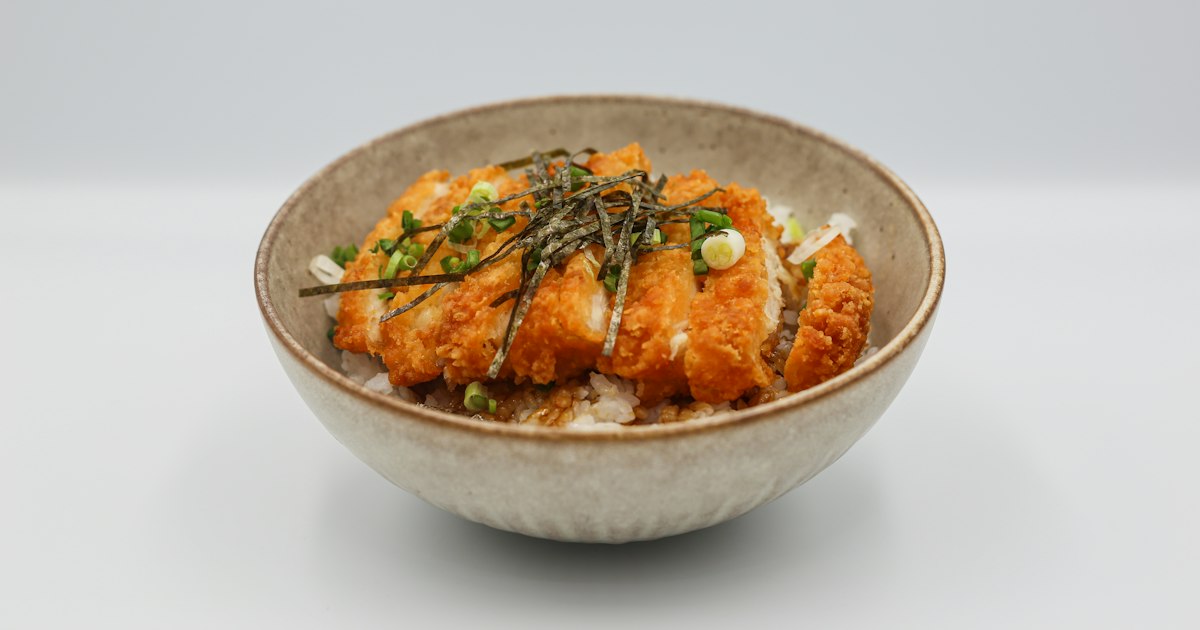
Photo by Xavier Chng on Unsplash
Long before ramen chefs anywhere else in Japan were simmering pork belly into submission, cooks in Nagasaki were doing it with soy sauce, sugar, and sake — and calling it kakuni (角煮). This cube-cut, falling-apart-tender braised pork belly is one of the clearest edible reminders that Nagasaki was Japan’s window to the outside world for over two centuries. If you’re planning a Kyushu trip, here’s what kakuni actually is, where it came from, and exactly where and how to eat it.
What Is Kakuni, Exactly?
Kakuni means “squared simmered,” referring to the thick cubes of pork belly it’s cut into before cooking. The pork is braised low and slow — often for two to three hours — in a mixture of soy sauce, sugar, sake, mirin, and ginger until the fat turns glassy and almost custard-soft and the meat pulls apart with chopsticks. It’s richer and sweeter than most mainland Japanese simmered dishes, and that sweetness is a direct legacy of Chinese cooking techniques brought into Nagasaki centuries ago.
Don’t confuse it with the kakuni-style toppings you’ll see on ramen in Tokyo or Fukuoka — Nagasaki’s original version is a standalone dish, usually served as a few thick cubes with a smear of karashi (hot mustard) on the side to cut the richness, or tucked into a bun.
Where Kakuni Came From: Dejima, Shippoku, and Chinese Nagasaki
From 1639 to 1859, Nagasaki was essentially the only port where Japan traded with the outside world, via the artificial island of Dejima (Dutch traders) and the nearby Chinese quarter. Local cooks absorbed Chinese braising techniques, Portuguese and Dutch ingredients, and Japanese seasoning into a fusion cuisine called shippoku ryori (卓袱料理) — course meals served family-style on a round red lacquer table, meant to be shared. Kakuni, closely related to Chinese dongpo pork, became one of shippoku’s signature dishes and later took on a life of its own as a standalone Nagasaki specialty.
That history is also why Nagasaki’s Shinchi Chinatown (新地中華街), a short walk from Nagasaki Station, is a logical place to go looking for kakuni alongside the city’s other famous Chinese-influenced dishes like champon and sara udon.
Kakuni Manju: The Everyday, Portable Version
For most visitors, the easiest and cheapest way to try kakuni is as kakuni manju — a thick slice of braised pork tucked inside a soft, steamed white bun, similar in concept to a Chinese gua bao. It’s sold as street food and takeout across the city, typically for around 350–500 JPY per bun, and makes a satisfying one-handed lunch while you’re walking between Nagasaki’s sightseeing spots.
Shops specializing in kakuni manju tend to sell out of popular flavors by mid-afternoon, so go earlier in the day if you want the classic version plus any limited specials (cheese or spicy variants show up seasonally). Most stands are open from around 10:00 to 18:00, with shorter hours or closures on irregular weekdays — it’s worth checking a shop’s hours the morning you plan to visit rather than assuming it’s open.
Shippoku Restaurants: The Full Sit-Down Experience
If you want kakuni in its original context, book a shippoku course at one of Nagasaki’s long-running restaurants. These multi-course meals arrive on a shared round table and include kakuni alongside dishes like fish, soup, and small Chinese-and-Japanese-style sides. Courses generally run from about 5,000 JPY to 15,000+ JPY per person depending on the restaurant and number of dishes, and reservations are strongly recommended — especially for dinner and especially in peak travel seasons, since many of these places are small, traditional, and seat limited groups per sitting.
These restaurants were historically built around entertaining guests slowly over a couple of hours, so don’t book a shippoku meal if you’re on a tight schedule between sightseeing stops.
Budget to Splurge: A Quick Price Guide
- Budget (350–800 JPY): A single kakuni manju from a street stand or bakery counter — best for a quick snack while sightseeing.
- Mid-range (900–1,800 JPY): A kakuni-don (rice bowl topped with braised pork and sauce) or a kakuni set lunch at a casual local restaurant in or near Chinatown.
- Splurge (5,000–15,000+ JPY per person): A full shippoku course dinner at a traditional restaurant, with kakuni as one dish among many, reservation required.
Getting There and Best Time to Visit
Nagasaki Station is the obvious base — the Nishi-Kyushu Shinkansen connects to Takeo-Onsen Station, where you transfer to a regular train from Hakata/Fukuoka, for a total journey of roughly two hours. Flying into Nagasaki Airport and taking the limousine bus into the city (about 45 minutes) is a reasonable alternative if you’re coming from Tokyo or Osaka. Once you’re in the city, Shinchi Chinatown and the surrounding downtown area, where most kakuni manju shops and shippoku restaurants cluster, are walkable from the station or a short tram ride away.
Kakuni isn’t seasonal — it’s a year-round comfort dish — but the Nagasaki Lantern Festival (held around Chinese New Year, typically late January to mid-February) turns Chinatown into a lantern-lit street-food destination and is an especially atmospheric time to eat your way through the neighborhood. Summer visits mean you’ll appreciate the dish’s richness less in the heat, so consider pairing a kakuni lunch with time in air-conditioned museums like the nearby Dejima historical site.
Common Mistakes to Avoid
- Assuming any “kakuni” on a menu elsewhere is the same dish. Kakuni toppings on ramen bowls outside Nagasaki are usually thinner, less sweet, and not the real shippoku-style version.
- Skipping a reservation for shippoku restaurants. These are small, traditional establishments, and walk-ins are often turned away for dinner.
- Filling up on champon or sara udon first. Chinatown’s noodle dishes are famous and tempting, but they’re large portions — save room if kakuni is your priority.
- Not asking about karashi mustard. It’s traditionally served alongside kakuni to balance the richness; if it doesn’t come with your order, you can usually ask for it.
Interestingly, kakuni is popular enough locally that it occasionally turns up as a regional specialty on school lunch menus in Nagasaki — a reminder of how embedded this dish is in everyday local life, not just tourist restaurants. If you’re curious how that works, our guide to Japan’s kyushoku school lunch culture explains where visitors can try the real thing.
If you’re building out a broader Kyushu or regional-food itinerary, kakuni pairs well with a day trip for another port town’s specialty — see our guide to Numazu’s kaisendon — or, closer to home in the braised-and-simmered category, our rundown of agedashi dofu and Japan’s deep-fried tofu dishes.