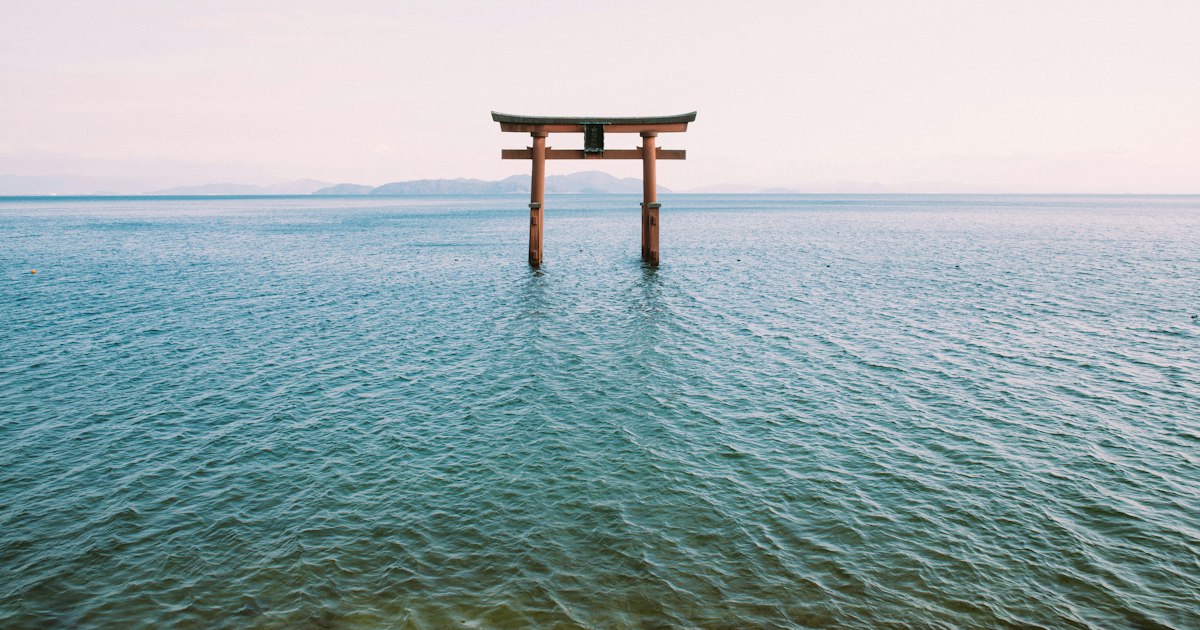
Photo by Wu Hsien Yu on Unsplash
Long before sushi meant a vinegared rice pillow with a slice of raw fish on top, it meant something closer to this: a whole crucian carp, packed in rice, and left to ferment for months or years until it turned sour, pungent, and almost cheese-like. That’s funazushi, a specialty of Shiga Prefecture and Lake Biwa that predates almost every other form of sushi in Japan. It isn’t easy to love on the first bite, but for travelers who want to understand where sushi actually came from — not just where to eat a good one — it’s one of the most rewarding detours in the country.
What Funazushi Actually Is
Funazushi (鮒寿司, literally “crucian carp sushi”) is made from nigorobuna, a subspecies of crucian carp found only in Lake Biwa, Japan’s largest lake. The fish — almost always females, caught and prized specifically for their roe — are scaled, gutted, and salted for one to three months. They’re then rinsed and repacked tightly in cooked rice inside wooden tubs or barrels, weighted down with a heavy lid, and left to ferment anywhere from six months to several years. The rice isn’t eaten in the traditional style; it acts purely as the fermenting medium, breaking down starches into lactic acid that preserves and sours the fish. What you eat is the carp itself, sliced thin, bones and all, along with its now-amber, custardy roe.
This method, called narezushi, is widely considered the ancestor of all sushi in Japan. Vinegared sushi only became common in the Edo period as a faster shortcut to the same sour flavor — funazushi is the slow original, and records of fermented fish tribute from the Lake Biwa area go back over a thousand years.
What It Tastes Like (and Why Some People Love It)
Be honest with yourself before ordering: funazushi smells strong, often compared to a ripe blue cheese or well-aged natto, and the flavor is intensely sour and umami-rich rather than fishy in the way sashimi is fishy. The texture is dense and slightly cheesy near the roe, firmer toward the tail. Most first-timers find a thin slice, eaten slowly with a sip of cold sake or green tea, far more approachable than a full piece. It’s traditionally served as an accompaniment to drinks rather than a main dish — think of it as Japan’s answer to a pungent aged cheese board, not a sushi roll. If you’ve tried other acquired-taste Japanese specialties before, the learning curve will feel familiar; our guide to hoya, Japan’s sea pineapple, covers a similarly polarizing dish and is worth reading if you’re building out a “brave eater” itinerary.
Where to Try Funazushi in Shiga
Lake Biwa is easy to reach as a day trip from Kyoto: the JR Biwako Line runs from Kyoto Station to Otsu in about 10 minutes and continues up the eastern shore to Omi-Hachiman (roughly 35–40 minutes) and Nagahama (about an hour). These two towns, along with Takashima on the western shore, are the historical centers of funazushi production and are your best bets for trying it fresh rather than vacuum-packed.
- Specialty narezushi shops — Look for storefronts near the old merchant districts of Omi-Hachiman and Takashima advertising 鮒寿司 (funazushi) or 馴れ鮓 (narezushi). Many sell whole or half fish to go, and some will slice a sample for tasting before you commit to buying.
- Local izakaya and Omi-cuisine restaurants — Restaurants around Otsu and Omi-Hachiman that specialize in Omi (Shiga) regional cooking frequently list funazushi as a small appetizer alongside other Lake Biwa specialties like wakasagi (pond smelt) and moroko.
- Depachika food halls — Vacuum-sealed, pre-sliced funazushi is sold in the basement food halls of major department stores in Kyoto, Otsu, and Osaka, making it an easy way to try (or buy as a souvenir) without a dedicated trip to the lakeshore.
- Roadside stations (michi-no-eki) — Several around Lake Biwa stock local producers’ funazushi alongside other Shiga farm and lake products, often at better prices than tourist-facing shops.
Budget, Mid-Range, and Splurge Options
Price scales heavily with the fish’s size and how long it was aged, since nigorobuna populations in Lake Biwa have declined over recent decades due to habitat loss and competition from invasive bass and bluegill — genuine nigorobuna funazushi is a limited, slow-made product, not a mass one.
- Budget (around ¥1,000–2,000): A few vacuum-packed slices from a depachika counter or roadside station, enough for a curious first taste without committing to a whole fish.
- Mid-range (around ¥3,000–6,000): A smaller whole fish or half portion from a specialty shop, typically aged a year or so — the most common way locals buy it for home drinking.
- Splurge (¥8,000 and up): A large, long-aged whole fish with intact roe, sometimes aged two to four years, sold as a gift-quality item in a wooden presentation box. These are genuinely special-occasion purchases in Shiga, comparable to a well-aged artisanal cheese back home.
Best Time to Visit and Practical Tips
Nigorobuna are traditionally caught in late spring to early summer (May–June) when they move into shallow water to spawn, which is when most of the year’s funazushi production begins. Because fermentation takes months to years, finished funazushi is sold year-round — there’s no single “season” for eating it, only for watching it get made. If you want to see the salting and rice-packing process in person, early summer is your best window; some shops are happy to explain the process to visitors even outside that period.
Shiga makes an easy half-day or full-day add-on to a Kyoto itinerary, but avoid cramming it into a single Obon-week visit if you can help it — that’s one of the most congested travel periods on Japan’s rail network, and regional trains around Lake Biwa fill up along with everything else. Our guide to traveling during Obon is worth a read if your trip overlaps with mid-August. Outside of that window, a Lake Biwa day trip is refreshingly uncrowded compared to central Kyoto.
Common Mistakes to Avoid
- Ordering a full portion on a dare. Ask for the smallest tasting size first. Many shops will cut a single thin slice for a few hundred yen so you can decide before buying a whole fish.
- Expecting it to taste like regular sushi. It won’t. Approaching it as a fermented, cheese-like delicacy rather than “fancy sashimi” sets the right expectations.
- Buying based on size alone. Age matters more than size for flavor and price — ask how long a specific piece was fermented, since a smaller, longer-aged fish can cost more than a larger, younger one.
- Skipping the roe. The roe is considered the most prized part by locals and is milder and creamier than the flesh — a good entry point if the carp itself feels intimidating.
- Assuming it travels well in luggage. Vacuum-sealed packs are fine, but an open or home-packed portion has a strong smell that can permeate a suitcase; buy it as close to your departure as possible if you’re bringing it home.
Funazushi isn’t a dish you order because it’s easy — it’s one you try because it connects a bowl of modern sushi rice back to something over a thousand years older. Pair a small taste with a walk around Omi-Hachiman’s canal district or a stop at Lake Biwa itself, and it becomes less a food dare and more a genuinely interesting piece of culinary history. If regional specialties like this are your thing, Hokkaido’s butadon pork rice bowl is a far gentler — but equally local — dish worth seeking out on the other end of the country.